News Broadcasting
Regulatory bill for TV channels soon, Govt tells SC


NEW DELHI: The Ministry of Information & Broadcasting is under intense pressure from the judiciary on the issue of a content code and has informed the Supreme Court that it is soon going to introduce a Broadcast Regulation Bill and Content Code.
The ministry has told the court that it has set up a committee comprising its own officials, as well as those from the ministries of women and child welfare, health and the trade body Advertising Standards Council of India to look into the issue.
The apex court had asked the ministry to respond to a writ filed on by Pilot Baba that a news sting show on him had been doctored and put him in a bad light, and asked what the government was thinking on these lines.

This is the third court order and suggestion on the sticky issue of content on news TV. The Delhi HC had already issued an interim order last month on media bodies and to the I&B officials to discuss the issue of stings and content, and report it to the HC within the next month.
Earlier, the Delhi HC had suggested that the ministry look into forming a committee to vet every sting operation before it is aired. Alhough that was not an order, indications from Shastri Bhavan in the wake of the SC case are that there could be little option now but to do something on these lines.
Government sources pointed out the Mumbai Police banning two channels for repeatedly showing the recent violence and distorting events in the process.
The violence let loose by Raj Thackeray’s MNS workers on the North Indians and Big B in Mumbai had taken place on Sunday last. But way through Monday, it was being shown on all channels, giving the impression that the violence remained uncontrolled.
Mumbai Police has said that this was a distortion because the violence had taken place for less than an hour and communal passions were being stoked by showing the same clippings throughout the day.
The ministry had already told Indiantelevision.com that the repetition of scenes of violence and distortion of time and the extent of such violence will not be tolerated and the editors of channels must take a call on that, but the recent reportage has again shown that the media is not listening, insiders said.
Insiders also said that the ministry had decided to give the News Broadcasters Association (NBA) some more time as the current thinking was to take the industry along for an inclusive Content Code. This seems to be the reason why the government has not taken any action when the NBA failed to send its own draft code as promised on 31 January.
However, the situation as it is panning out from the court’s mood is leaving the ministry with very little option but to usher in the Content Code and a regulatory mechanism.





News Broadcasting
Kamlesh Singh receives Haldi Ghati Award from MMCF
India Today Group editor honoured for three decades of journalism at Udaipur ceremony.
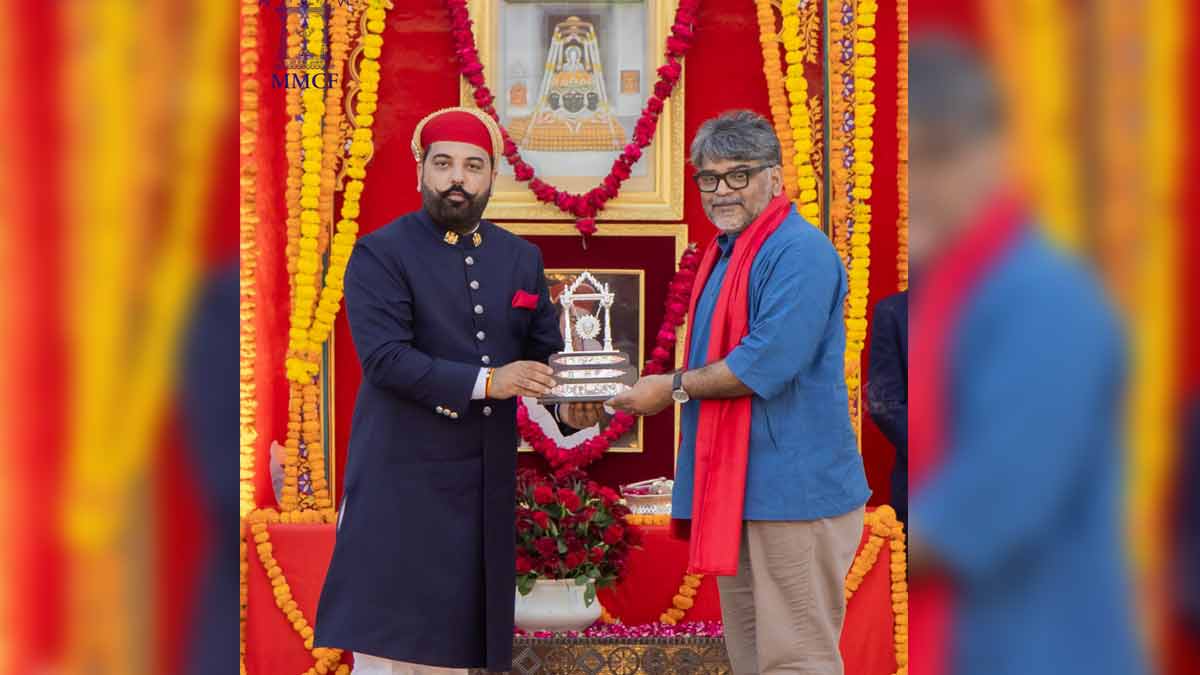
MUMBAI- Kamlesh Singh just turned a lifetime of sharp words into a shiny shield because when journalism wakes up a society, even the Maharana of Mewar wants to pin a medal on it.
The Maharana of Mewar Charitable Foundation (MMCF) conferred its prestigious Haldi Ghati Award on Kamlesh Singh, a senior editor at the India Today Group, during a ceremony in Udaipur on 15 March 2026. The national award, instituted in 1981-82, recognises “work of permanent value that initiates an awakening in society through the medium of journalism.”
Singh, who leads several editorial initiatives including Aaj Tak Radio, the Teen Taal community and The Lallantop, was presented the honour by Lakshyaraj Singh Mewar, Managing Trustee of MMCF. The citation highlighted his three decades of contributions to Indian media, innovations in digital journalism, mentoring young reporters, and his popular podcast persona “Tau” on Teen Taal, which fosters thoughtful public discourse.
The Haldi Ghati Award, named after the historic Battle of Haldighati symbolising valour and resilience, is one of four national awards given annually by MMCF. Past recipients include Tavleen Singh, Piyush Pandey and Raj Chengappa.
Other honourees this year included Padma Vibhushan Pt Hari Prasad Chaurasia, Vedamurti Devvrat Rekhe, Treeman of India Marimuthu Yoganathan, Vir Chakra Capt Rizwan Malik, and US-based researcher Molly Emma Aitken, who received the Colonel James Tod Award for contributions to understanding Mewar’s spirit and values.
In an era where headlines often shout louder than substance, the MMCF quietly reminded everyone that real journalism isn’t about noise, it’s about the quiet, persistent work that stirs society awake, one thoughtful story at a time.