GECs
Regulation has become totally opaque: Uday Shankar

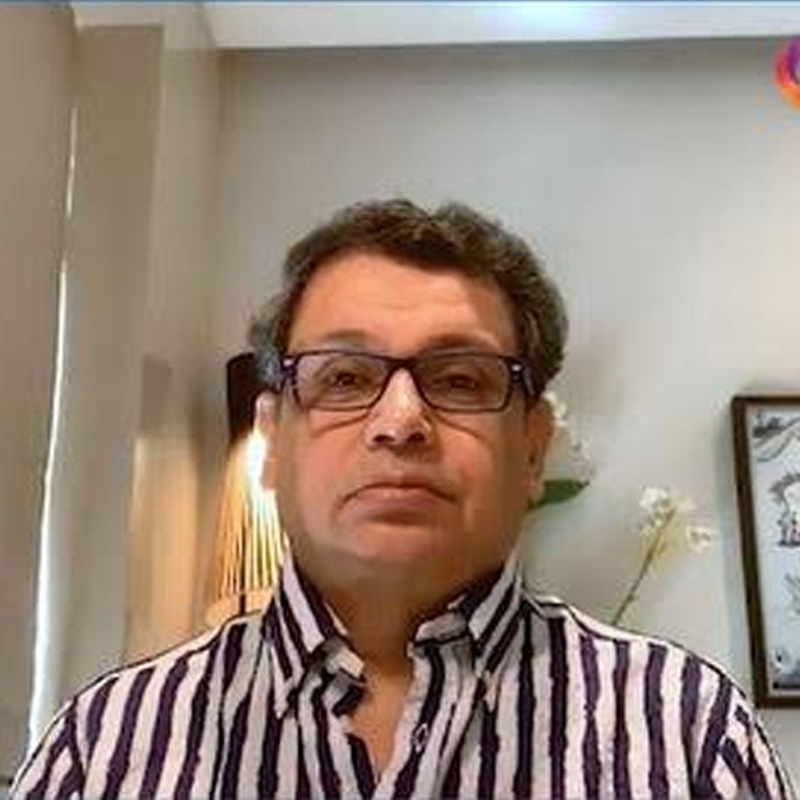
KOLKATA: One of the major issues which have been daunting the media and entertainment industry, especially the broadcast sector, is the regulatory burden. Although senior officials from the government have argued that there is no such burden, many stakeholders have expressed concern against the same from time to time. Media maven, The Walt Disney Company APAC chairman and Star and Disney India president Uday Shankar said his biggest disappointment with regulation is that it has become totally opaque.
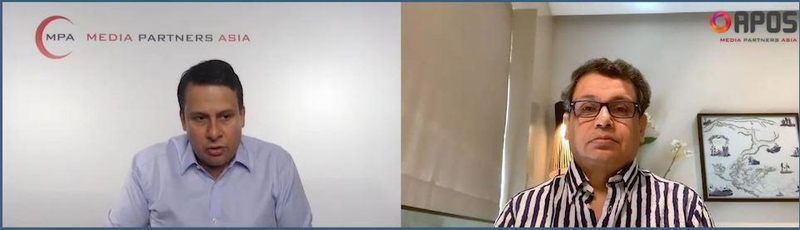
Participating in APOS 2020, Shankar, in a conversation with Media Partners Asia executive director and co-founder Vivek Couto stated that there is a lack of clarity on why the regulator is regulating something. Moreover, there is no consistency in the regulations. He also opined that the regulators need to have clarity and share that clarity publicly with both the media community and the public at large that what are they regulating, what’s the agenda and the vision. He reminded that regulation should not be for the sake of regulating something but to create a level playing field, promote growth and benefit consumers. He stated that sometimes it feels that in markets like India, regulation is only for creating hurdles in the growth of the business.
“Unless you have clarity on that and everybody understands exactly the boundary condition within which regulation will operate, it creates all kinds of confusions and setbacks to the industry. Media is such a sector that if the industry does not do well, the first victims are consumers. If you don’t have enough money to invest in content, at a business level, you can employ fewer people but create less value,” he added.

Shankar added that the industry also cannot completely disregard or operate in a vacuum. “It has to be aware of its social responsibilities and sensitivities in each market. I am a big believer in media and with freedom comes great responsibility as well,” he said.
Shankar also spoke on the streaming service Disney+ Hotstar which is off to a great start. “We decided to take advantage of the early days of this crisis. We launched Disney+ Hotstar right in the middle of the crisis, in the month of April, when the whole country was in lockdown. Advertising was interrupted, we could not make our critical marketing plan, the live sports we planned to leverage for Disney+ Hotstar was not available and yet we launched and we are the biggest streaming service in India by far,” he said.
For Disney+ Hotstar, the only benchmark is that the platform can compete with TV channels in terms of its reach, delivery and consumption. According to him, if streaming has to become mainstream eventually, it has to serve the local population at scale and has to be sustainable. That’s the only metric everybody has to follow. While its ambitions are to compete with TV, Shankar noted that Disney+ Hotstar has to relentlessly work on cutting-edge technology.
Shankar mentioned that while 150-160 million homes are connected to TV in India, smartphones and video-enabled devices can reach the number of 700-750 million in a few years. Hence the screen universe is much bigger than TV. According to him, streaming, if done right, has the potential to be bigger than TV purely in terms of the number of consumers and the amount of time they spend. However, he also stated that TV, too, has a fair road ahead but it needs to fix the business model going through a correction.
“We (Disney+ Hotstar) should be able to rapidly get to a number similar to frontline mass-market entertainment channels in the country through reach and access,” he concluded.






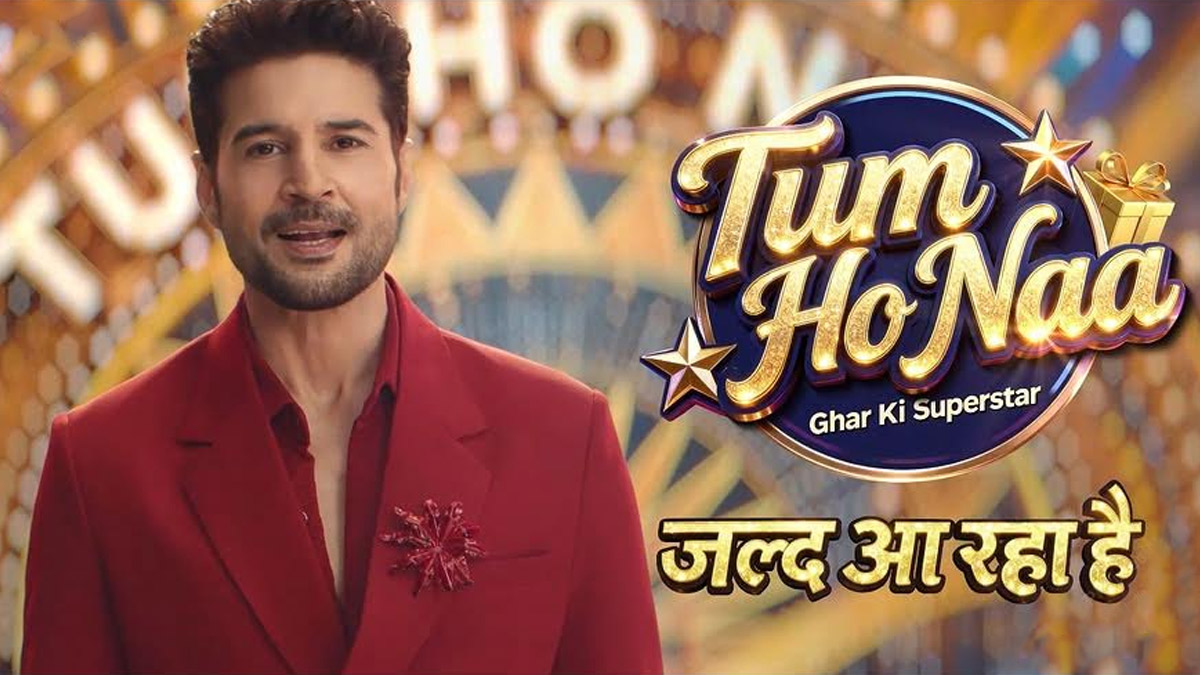
MUMBAI: Lights, camera… connection because this time, the game isn’t just about winning, it’s about who’s with you. Sony Pictures Networks India is gearing up to launch a new reality game show, Tum Ho Naa, expanding its unscripted slate with a format that promises both emotion and engagement.
The show will premiere soon on Sony Entertainment Television and stream on Sony LIV, with Rajeev Khandelwal stepping in as host. Known for his measured screen presence and selective choices, Khandelwal’s return to television adds a layer of familiarity and credibility to the upcoming format.
While specific details of the gameplay remain under wraps, the positioning suggests a reality format that leans as much on emotional resonance as it does on competition, an increasingly popular blend in Indian television, where audiences are gravitating towards content that offers both stakes and storytelling.
Khandelwal, reflecting on his return, noted that his choices have often been guided by instinct rather than convention, describing Tum Ho Naa as a project that feels “close to the heart”. His association also signals Sony’s continued focus on anchoring new formats with recognisable faces who bring both relatability and depth.
The launch comes at a time when broadcasters are doubling down on original non-fiction formats to drive appointment viewing, even as digital platforms expand parallel reach. By placing the show across both linear television and OTT, Sony appears to be aiming for a dual-audience strategy capturing traditional viewers while engaging digital-first consumers.
As the countdown to premiere begins, Tum Ho Naa positions itself not just as another game show, but as a reminder that sometimes, the biggest prize on screen isn’t the jackpot, it’s the journey shared along the way.






