Event Coverage
Regional TV: The land of opportunities and challenges


MUMBAI: For national broadcasters, having a regional footprint is becoming imperative as it is growing at a furious pace compared to its matured richer brother that is more than double its revenue size.
Pegged at Rs 140 billion, regional TV media grew at a whopping 70 per cent in 2011 compared to the industry growth of around 12 per cent. Deeper penetration of cable & satellite (C&S) homes, rise in per capita income, emerging middle class and high consumption expenditure are fuelling this growth.
Asianet managing director K Madhavan calls regional the new “National” as the language entertainment channels compare strongly with the Hindi GECs on critical parameters like viewership and reach.

“Regional has become the new national. In 2011, the regional space grew at 70 per cent compared to the national growth of 11-12 per cent. Overall, the television industry is pegged at Rs 300 billion while the regional is Rs 120-140 billion. Regional channels have a strong captive audience. One of the reasons for this high growth rate is the emerging new middle class with increased purchasing power in the Tier I and Tier II cities; the positive impact of this could be huge and bigger. The per capital income of Southern states is almost 80 per cent higher than the Northern states.”
In recent years, as national markets have slowed down, advertisers have shown renewed interest in regional television.
Says Zee Entertainment Enterprises Ltd (Zeel) EVP regional channels Sharda Sunder, “Growth in the regional sector is largely due to a few factors like size of population. The top nine regional states form 50 per cent of the population and the per capita income in these states is higher than the national average. Consumption expenditure is, thus, higher than the national average.”
Regional broadcasters, however, do have their own set of problems that need to be dealt with on a long-term and short-term basis. These range from lack of quality content coupled with rise in cost of content to monetisation. Carriage fee is also a huge concern.
Says Sunder, “Subscription revenues need to drive in. New media is also a challenge.” She was speaking at Ficci Frames 2012.
The regional market mainly consists of six states – Tamil Nadu, Andhra Pradesh, Karnataka, Kerala, West Bengal and to a lesser extent Maharashtra. “Tamil Nadu has the lion’s share with a revenue size of Rs 12 billion, followed by Telugu and Bengali which accounted for Rs 8.5-9 billion each. Kannada and Malayalam rake in revenues of Rs 6 billion while the Marathi genre is estimated at Rs 3.5-4 billion,” says Madhavan.
He also pointed out that the penetration of cable as well as DTH is growing in the South; regional channels have also increased. The quality of local content has improved due to competition.
“Of the total C&S penetration, we had one-third in the South, while DTH has conquered 30 million connections out of the total 42 million. Time spent in non-metros is growing and should catch up with the metros in two to three years. Currently, time spent in non-metros is two hours and three hours in metros. Due to competition with national channels, the quality of local content has increased considerably. The contribution of revenues from overseas market is 10-12 per cent,” he averred.
Another challenge is the movie-driven GRP, with almost 35 per cent of regional GRPs coming from movies. “The problem is that the cost of movies has gone 200-300 per cent up in the last 2-3 years. There is difficulty of good content and the shortage of skilled talent specially to cater to 100 plus regional channels has become a big issue.”
Since movies drive ratings for regional channels, both Madhavan and Sunder are of the opinion that financing film related content could be a preferred option. Channels, in fact, need to look at getting into movie production.
Madhavan said the cost of producing a show has gone up considerably. While it used to cost Rs 100,000-150000 to produce a local show, it has increased considerably. A case in point is the Tamil version of Kaun Banega Crorepati (KBC).
“KBC, which we are producing in the South, costs Rs 2.5-3 million per episode. The big question is whether regional media will be able to absorb this cost. Earlier, 90 per cent of the software was available locally. Now by default we are forced go to national producers like Endemol,” he pointed out.
While Madhavan concurred with Sunder that digitisation is good for the industry, he was skeptical about its reception in the semi-urban and rural areas as set-top box costs were high. He also said that the carriage fee for regional channels has gone up.
Madhavan also termed the recent decision of the Tamil Nadu government to impose heavy tax on DTH service as a dampener for the industry since it had emerged as a major source of pay revenue for the broadcasters.
“Recently the Tamil Nadu government imposed a tax of 32 per cent on DTH services, so that is going to impact pay revenues. Advertisement rates are the lowest in the country because of the unhealthy competition in the regional markets. We are selling at 8-10 per cent of the national channel rates,” he stressed.



Event Coverage
Anime India announces Amazon MX Player as co-presenting partner for Anime India Kolkata 2026
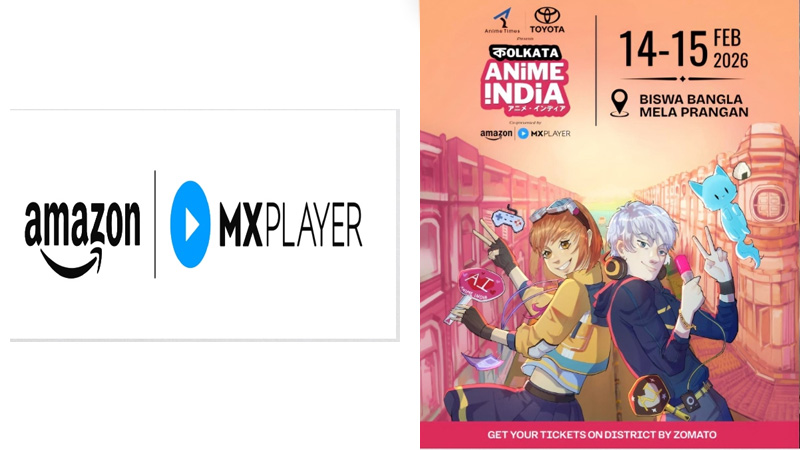
MUMBAI: Riding high on the success of its blockbuster Mumbai debut, Anime India is accelerating its nationwide expansion with the announcement of Amazon MX Player as the co-presenting partner for Anime India Kolkata. The partnership marks a significant step forward in the festival’s mission to deliver large-scale, accessible, and fan-first anime experiences across the country.
Scheduled for 14 and 15 February 2026 at the iconic Biswa Bangla Mela Prangan, Anime India Kolkata will launch the first regional chapter of what is set to be a year-long, multi-city tour. As the curtain-raiser for the 2026 circuit, the Kolkata edition aims to fuse the energy of global Japanese pop culture with India’s fast-growing community of anime, manga, and pop-culture fans.
A household name in digital entertainment, Amazon MX Player brings unmatched reach and cultural relevance to the Anime India platform. With its expanding focus on anime and youth-driven content, Amazon MX Player’s involvement as co-presenting partner reinforces Anime India’s vision of making anime culture more inclusive breaking barriers of language, geography, and accessibility to connect with fans nationwide.
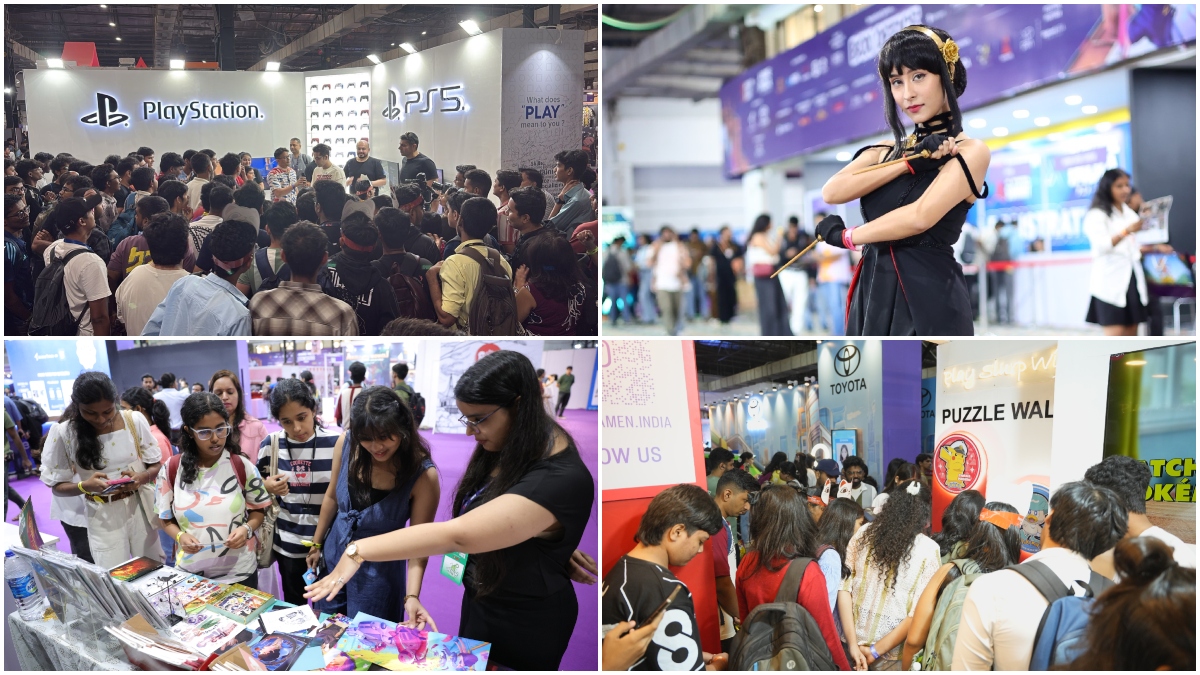
Anime India Kolkata 2026 will showcase cosplay competitions, interactive zones led by the Indian Gunpla Community, India-39 Vocaloid Community, The Japan Curry, and Adda-o-Otaku by The Otaku Guild. Fans can join tournaments across fighting games, Pokémon VGC, and more. Acclaimed Japanese director Susumu Mitsunaka (Haikyu!!) will attend as guest of honour, appearing in panels and live sessions. Positioned as an immersive celebration of fan culture and industry collaboration, the Kolkata edition marks the beginning of Anime India’s nationwide expansion.
Sharing their perspective on the partnership, Amazon MX Player director Aruna Daryanani expressed, “Anime in India has evolved from a niche interest into a mainstream cultural movement, driven by an increasingly engaged and passionate fanbase. At Amazon MX Player, our focus is on expanding access by bringing anime to audiences across the country for free and in multiple local languages. Our association with Anime India reflects our commitment to supporting the growth of anime in India and deepening connections with fans, while continuing to build Amazon MX Player as a trusted destination for free, high-quality entertainment.”
“Anime India Kolkata is a celebration of how anime has grown beyond entertainment into a powerful cultural and creative force. By bringing fans, creators, and industry leaders onto one shared platform, the festival is helping define the future of pop culture in India,” said Anime India co-founder and director Neha Mehta.
The debut edition of Anime India 2025 in Mumbai attracted over 29,000 fans, quickly cementing its status as a landmark celebration of anime and Japanese pop culture. Riding on this overwhelming response, the Kolkata chapter is projected to draw more than 40,000 visitors across two days, positioning it as one of the biggest anime conventions ever held in eastern India.
Anime India is focused on bringing together fans from across the country to create a truly pan-India celebration of anime, manga, cosplay, gaming, and Japanese culture. With plans to expand into four key metropolitan hubs in 2026—east (Kolkata), north (Delhi), west (Mumbai), and south (Hyderabad)—the festival seeks to deliver globally benchmarked experiences while supporting and uplifting creators, artists, and fan communities throughout India.






