News Headline
Regional to be at the forefront of content

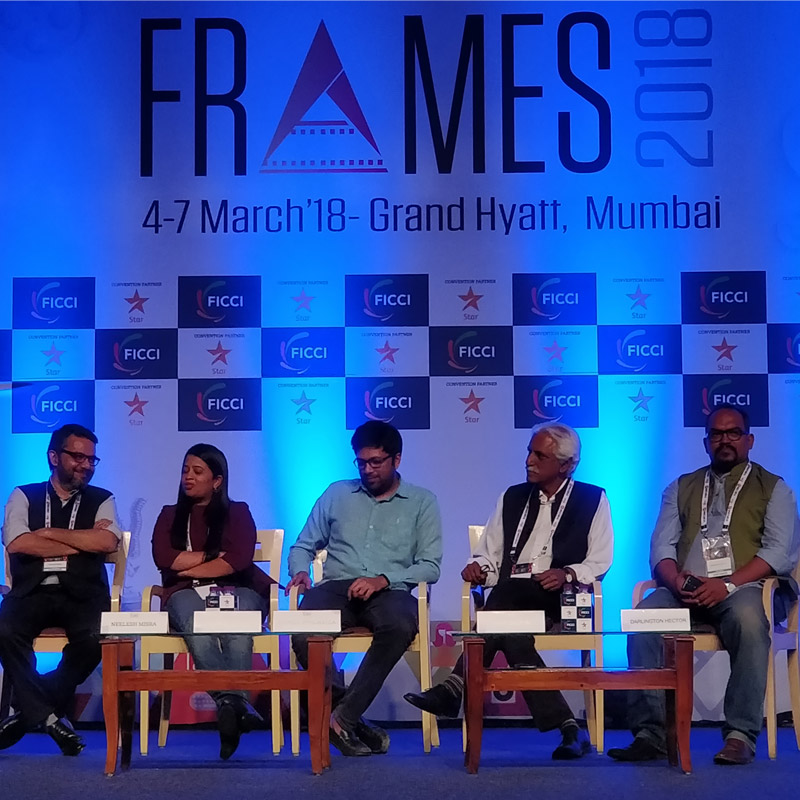
MUMBAI: The regional space in India is the new target for everyone. But what exactly is it that pulls content creators to divide themselves into India’s varied languages and will this fad stay in the future, too? The question was discussed in a FICCI Frames 2018 session titled ‘regional is the new mass media.’
The News Minute managing editor Dhanya Rajendran said that any market outside of Mumbai and Delhi is considered regional, which the national media has ignored for a long time while underestimating its potential. “In the last two years, with the advent of digital media, more and more media houses have started realising that there is a lot of readership not because of good journalism, but because they know that there are consumers in places such as Bengaluru, Vijayawada, Madurai and Vishakhapatnam consuming all kinds of content,” he said adding that he hoped that more digital spaces would spring up in Goa, Maharashtra, Gujarat and Bihar in the next two to three years. “Our mainstream media will be forced to follow-up news stories that they were keeping in the backburner and looked down upon as regional stories,” he said.
Eminent sports columnist and journalist Ayaz Memon pointed out that sports was the classic example of a mass media product. “Football is the biggest sport in Europe, but there is a difference between the French, the Dutch and the English viewing the same match. Look at the regional newspapers like Manorama, Matrabhumi and Anand Bazaar Patrika. At one time, they were larger selling newspapers than the English ones. The easiest to penetrate has been sports because the language of sports is universal. The language of consumption of sports may differ from Tamil, Telugu and Kannada and consumers enjoy consuming the content in the language they easily understand.”

Network18 has been prominent in venturing into the digital space. Its group president Avinash Kaul said, “Regional is dominating the entire space, the regional wave is here to stay and will continue to grow. We have around 270 regional channels out of 500 channels overall in BARC. The regional viewership is higher than the Hindi viewership and has a market share of 47 per cent. General entertainment channels (GEC) being the biggest attraction, regional GECs have 30 per cent more viewership than Hindi GECs. If we take a look at the advertisers, the regional market has seen an increase of 20 per cent in the last two years and around 3500 advertisers are exclusive to the regional market.”
Your Story managing editor Darlington Hector said that the news platform decided to branch out into the regional market in 2012-13 with Hindi, Tamil and Bangla. He said that in the late 90s, the English content consumption was around 80 per cent globally and the next decade around 2007-08 it dropped to about 27 per cent. English as a preferred language of consumption has been dropping in importance every decade and he sees that happening in the future as well. “The reason for this is the loss of credibility in the last few years and a good opportunity now for online digital platforms to express better. People do connect emotionally with the regional media today, which I am not seeing with the national media today. The television anchor has played a big role in destroying the credibility. The next 25 years will be the golden period for the regional languages of India, especially online,” he concluded.
Both broadcast and online platforms are vehemently marching into the country’s various languages. Hindi and English, which till now were the holders of the mediums, will slowly see viewership shift to people’s language of choice.
Also Read :
Stakeholders highlight need for sports education
OTT platforms discuss need for regulation



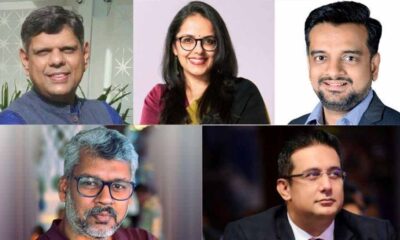



NEW DELHI: Hamdard Laboratories gathered a cross-section of India’s achievers in New Delhi on Friday, handing out the Hakeem Abdul Hameed Excellence Awards to figures who have left their mark across healthcare, education, sport, public service and the arts.
The ceremony, attended by minister of state for defence Sanjay Seth and senior officials from the ministry of Ayush, celebrated individuals whose work blends professional success with a sense of public purpose. It was as much a roll call of achievement as it was a reminder that influence is not measured only in profits or podiums, but in people reached and lives improved.
Among the headline awardees was Alakh Pandey, founder and chief executive of PhysicsWallah, recognised for turning affordable digital learning into a mass movement. On the sporting front, Arjuna Awardee and kabaddi player Sakshi Puniya was honoured for her contribution to the game and for pushing women’s participation onto bigger stages.
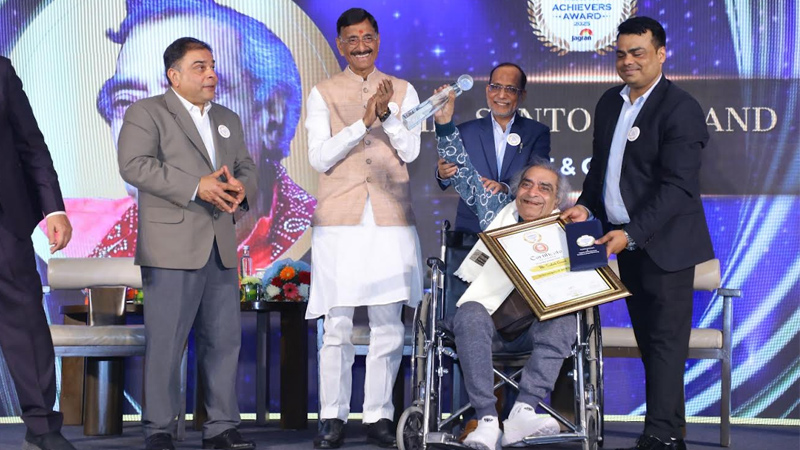
The cultural spotlight fell on veteran lyricist and poet Santosh Anand, whose songs have echoed across generations of Hindi cinema. At 97, Anand accepted the honour with characteristic humility, reflecting on a life shaped by perseverance and hope.
Healthcare honours spanned both modern and traditional systems. Manoj N. Nesari was recognised for strengthening Ayurveda’s place in national and global health frameworks. Padma shri Mohammed Abdul Waheed was honoured for his research-backed work in Unani medicine, while padma shri Mohsin Wali received recognition for his long-standing contribution to patient-centred care.
Education and social development also featured prominently. Padma shri Zahir Ishaq Kazi was honoured for decades of work in education, while former Meghalaya superintendent of Police T. C. Chacko was recognised for public service. Goonj founder Anshu Gupta received an award for his dignity-centred rural development initiatives, and the Hunar Shakti Foundation was honoured for empowering women and young girls through skill development.
The Lifetime Achievement Award went to former IAS officer Shailaja Chandra for her long career in public healthcare and governance, particularly in the traditional systems under Ayush.
Speaking at the event, Hamdard chairman Abdul Majeed said the awards were a tribute to those who combine excellence with empathy. “These awardees reflect Hakeem Sahib’s belief that healthcare, education and public service must ultimately serve humanity,” he said.
Minister Seth struck a forward-looking note, saying India’s young population gives the country a unique opportunity to become a global destination for learning, health and wellness by 2047.
The ceremony also featured the trailer launch of Unani Ki Kahaani, an upcoming documentary starring actor Jim Sarbh, set to premiere on Discovery on 11 February.
Instituted in memory of Unani scholar and educationist Hakeem Abdul Hameed, the awards have grown into a national platform that celebrates those building a more inclusive and resilient India. For one evening at least, the spotlight was not just on success, but on service with substance.






