News Broadcasting
Redefining Television : MIS 2023

Mumbai: On February, media experts were gathered at the Media Investment Summit 2023, hosted by Indiantelevision.com, to discuss the topic ‘Television gets going’. They had a discussion on how television has been growing despite predictions of its decline.
ITV founder and editor-in-chief Anil Wanvari started the conversation with the need to redefine ‘Television’. The speakers for the session were Marico media & digital marketing (India & global center of excellence) head Ankit Desai, Dentsu creative India chief strategy officer Sumeer Mathur, Kantar South Asia growth and digital transformation head Prasun Basu, Nilon’s Foods chief marketing officer Kiran Giradkar and TAM Media Research CEO LV Krishnan.
“There is a device, a screen, and the content and device accessed by the audience that defines engagement and experience,” said Kantar South Asia growth and digital transformation head Prasun Basu.

“The world is ruled by devices in one way but even more so by content, TV screens today bring different types of content and we should look at that unified view of content and then go from there, “ He added.
When viewed through the eyes of Gen Z, according to LV Krishan, “they look at TV differently and for them, the screen is a device and it decides the content they want for them, wherever they find content that is engaging them and that they believe, they search for medium for the content they need to consume then they just move on to that particular screen.”
The device you’re using also affects the audience’s interaction with that screen and their experience. Prasun continued, “There is a significant difference between the smaller screen and the bigger screen, and we need to keep that in mind because the same content delivered to the smaller screen will have a different impact on the consumer or the audience than it will on the bigger screen.”
Nilon’s Foods chief marketing officer Kiran Giradkar spoke to the audience about how measurements should be taken on the ground rather than on spreadsheets.
He believes for FMCG TV to become significant and collective experience on linear TV matters for brands.
“When you go into the market and you face the consumer the story is very different, when you go into the market and when you see India as a very different India while we are connected on a CCTV but when you go down to the market and you see those 50 minutes of discussions will tell you about what is happening.
“There is a habit of these consumers in tier two and tier three towns having informal Kitty parties where you get to know discussion points, they discuss what they saw together as a family last night be it Anupama or whatever it is now this discussion is a real measurement of your advertisement and in contrast to this when I see a cricket match or whatever on my CTV or my mobile phones you see differently you don’t speak that because that’s not a collective experience.”
Marico media & digital marketing (India & global center of excellence) head Ankit Desai believes that the type of content dictates the screen that the audience will choose; consumers have already decided on the content and the device on which they want to watch it.
“Consumers already made choices and the content has helped them make those choices,” he said.
He added, “For broadcasters, and they’ve realized that it’s not about screens, but about content, they need to figure out which pipe serves the best; as advertisers, we’ve been a little slow on the update because we’ve tried to almost segregate this into TV versus Mobile versus other screens.”
He further added, “The truth is that even as an advertiser, there are questions about effectiveness, but first we need to think about reach, and if we are looking at reach in the right way, are we planning for the HML, as we have traditionally called it, right there are heavy, medium, and light users, on every medium, are we actually planning for that today and the environment has enabled it.”
Dentsu creative India chief strategy officer Sumeer Mathur said they found out that discovery works on people, and personalisation of digital ads works on people as well.
“The context has completely changed; previously, we used to say that the medium is the message; now, the medium is the message in many ways, but there is more personalisation; there are many formats available; what matters is what the message is and who you want to reach out to,” said Mathur.
While concluding this discussion Desai said, “Effectiveness a lot more than what we do today but there is ample scope for brands to start looking at the way you’re planning already there is enough on the table for us to do, for the consumer they’ve already made the transition it’s it’s now for us to quickly catch up.
Giradkar further added, “The problem is then we are looking for A against B, it’s always A and B together which actually coexists and how we leverage it, that’s the most important thing and as a brand marketer thankfully the technology is there we can tap into both and that’s the way to go.”
“You have to arrive at a solution there is as we’ve seen today there is no one-size-fits-all or one answer which everybody can blindly follow and there are so many more choices available so you’ll have to arrive at a solution figuring out what works for you what works for your brand what works for your target audience,” said Basu.
Krishnan commented, “There is sufficient headroom for digital and mobile, but there is also sufficient headroom for television once we achieve unified measurement, which includes not only off-screen effects but also effects on brand and sales. Television has been ruled by content and marketing to some extent, but the distribution companies are the ones to watch out for now because they are the ones who are pipelining all content from an OTT to a linear Channel with the same hybrid box.
“That hybrid box is also sending data back now, and if he combines the power of his distribution pulled that is connecting with the end consumer and the data he holds from the data box that is coming to the data that is coming out of the box, he will be the next king in this marketplace,” Krishnan concluded .

News Broadcasting
CNN-News18 rolls out Battle for the States ahead of key polls
Multi-format election coverage tracks voter mood across five battleground states
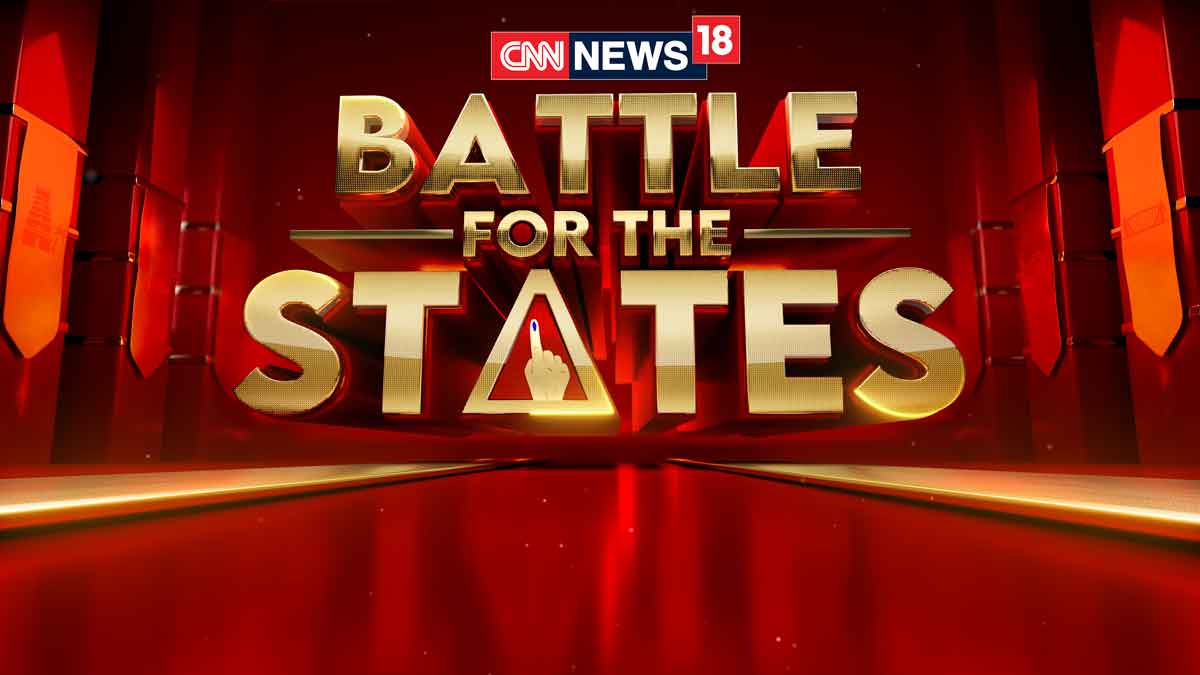
NEW DELHI: CNN-News18 has launched a special election programming initiative titled Battle for the States, as India gears up for high-stakes Assembly elections across West Bengal, Tamil Nadu, Kerala, Assam and Puducherry.
Built around the theme ‘Road to Power’, the multi-format coverage aims to follow the entire electoral journey, from campaigning and polling to results and government formation. The network is leaning into on-ground reportage and data-backed storytelling to decode voter sentiment across regions where local issues often shape the narrative.
The programming line-up includes ‘Vote Tracker’, a three-part series developed in collaboration with survey agency Vote Vibe. The show blends survey insights with expert commentary and field reporting, using augmented reality graphics to present complex electoral data such as vote share, seat projections and leadership preferences in a more accessible format. It will air every Monday evening until April 6.
Adding a cultural lens to political reporting is ‘So Saree!’, a ground-driven segment where women anchors travel across constituencies dressed in traditional handwoven sarees from each state. The format uses attire as a storytelling device, highlighting regional identity while capturing grassroots voices.
Meanwhile, ‘Unfiltered Kaapi’ and ‘Chai-Niti’ bring a more conversational tone, drawing inspiration from everyday political discussions in tea stalls and coffee corners. These segments aim to break down key issues through candid, fast-paced exchanges between anchors and reporters, tailored to regional sensibilities.
For viewers seeking deeper insights, the weekend docuseries ‘Reporters Project’ takes a longer view, with correspondents travelling across constituencies to map voter concerns and political shifts on the ground.
“Elections are about people, their aspirations, identities and the issues that matter to them, and every state tells a different story,” said CNN-News18 editorial affairs director Rahul Shivshankar. He added that the initiative focuses on understanding “the sentiment on the ground and what’s driving voter choices”.
Echoing the emphasis on credibility, Network18 CEO – English and business news Smriti Mehra said the network aims to combine on-ground reporting with data-led insights to deliver clear and timely coverage as the elections unfold.
With a mix of data, culture and grassroots reporting, CNN-News18 is positioning Battle for the States as a comprehensive window into one of India’s most closely watched electoral cycles, where every vote carries a story waiting to be told.