GECs
Reality bites: Format shows catching on


MUMBAI: Perhaps reality is stranger than fiction, after all. Though the weepy soaps still rule primetime on many channels, format shows have been gaining ground in the country.
In fact, going by the success of shows like Antakshari on Zee, Kaun Banega Crorepati on Star and Indian Idol on Sony, media analysts predict that reality is going to be the next big thing on mass entertainment channels. And as the search for the next big Business Baazigar begins on Zee this month, it’s time to take a closer look at the whole genre of format shows.
The session on ‘Building successful formats,’ at Ficci Frames 2005, revolved around understanding the business of format shows and what makes them tick across the world. The hugely successful Indian Idol was used as a case study for the discussion. What are the reasons for the success of the Indian Idol? Apart from the simplicity and high level of interactivity with viewers, it was also the ability of the show to create memorable characters from the real world.

Sharing his experiences Sanjeev Sharma of Optimystix said, “Although we say that a format show is a non-drama format, it actually succeeds because it has a lot of drama in it. We have worked on various other format shows like Khulja Sim Sim, an adaptation of the American show, Let’s make a deal. This succeeded because the viewer could play along and participate in the show. Then there was Kismey Kitnaa Hain Dum, adapted from the UK format, Night Fever, which had a Karaoke band and was a lot of fun because it revolved around filmi songs. I would say Indian Idol worked because each episode takes the viewer to a high level of interactivity and the beauty of the concept really evolves over episodes.”
Adding to this, Gavin Wood, Director of Production, Freemantle Media said, “The pop idol is one such show which has a record success rate across all the countries. It has given historical ratings across the world and shown a rapid and sustained growth for channels. It’s all about a good unscripted drama which unfolds in front of the viewer. To sum up the psychology of the show, it’s not just about dreams coming true but also about shattering thousands of dreams to which the audience is a witness.”
As for the channel, the format show definitely turned out to be a unique property. Apart from strengthening the Thursday and Friday band, the show raked in more than 5.5 crore votes and TVR’s peaked at 20. But there are many who believe that more than Indian Idol, one has to really take a look at indigenous products like Antakshari on Zee to analyse the success of format shows. Tarun Mehra, representing Zee TV said, “Antakshari on Zee can really be called the longest running format show in the country with about 600 episodes and more than a million people across the world having auditioned for it. Then, of course, Zee has also tasted success with Sa Re Ga Ma and Cinestars Ki Khoj. And now our next big reality show is going to be Business Baazigar which will cut across all TGs.”
But the journey hasn’t been so easy and simple for many in the business. Says, Nikhil Alva, CEO Miditech, “It was in 2000 that we did a reality show called Hospital for BBC. And after that too, it’s been a rough journey trying to change the mindset of broadcasters. Many still believe that reality TV is too depressing and real people don’t make for good viewing. But with Indian Idol we have been able to change the mindset to some extent.”





GECs
EPIC Company unifies all brands under single EPIC identity
IN10 Media rebrand aligns TV, digital and films into one ecosystem
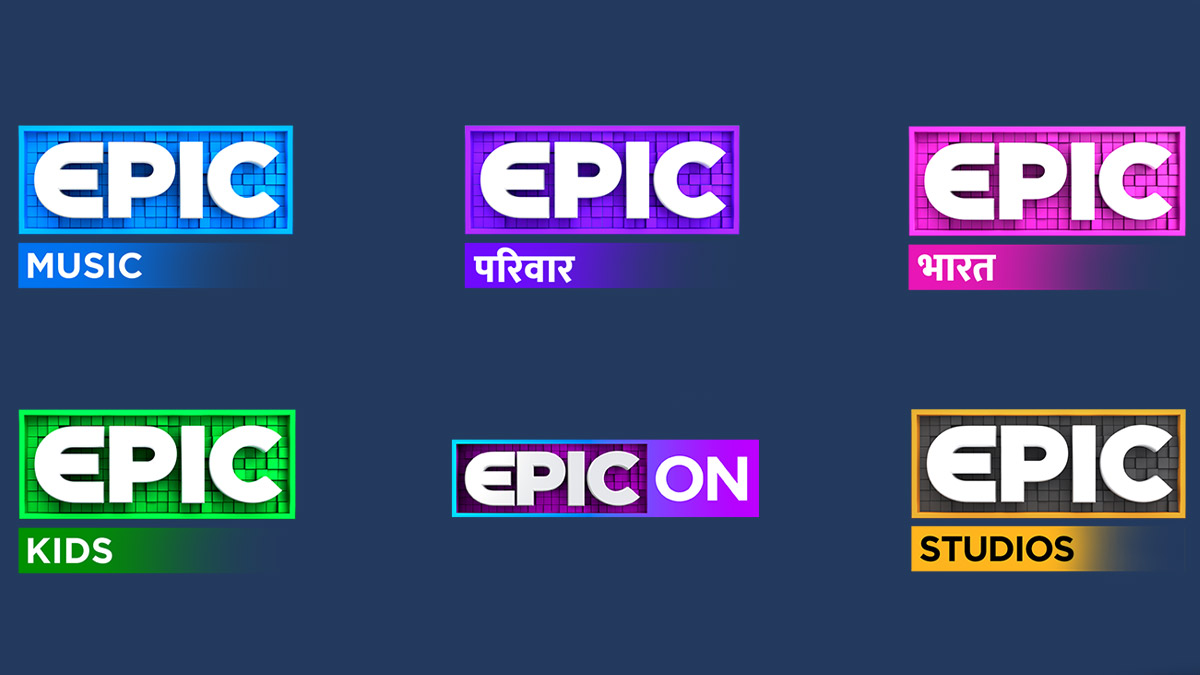
MUMBAI: The EPIC Company, formerly known as IN10 Media Network, has announced a sweeping brand consolidation, bringing its television channels, digital platforms and content IPs under a single identity, EPIC.
The move is aimed at simplifying the company’s structure while creating a more connected content ecosystem spanning television, digital and films. By aligning multiple verticals under one umbrella, the company is looking to present a sharper, more cohesive face to both audiences and partners.
As part of the transition, several channels have been rebranded to align with the EPIC identity. EPIC will now operate as EPIC TV, while Nazara becomes EPIC Bharat, Filamchi is now EPIC Bhojpuri, Gubbare transitions to EPIC Kids, and ShowBox is reintroduced as EPIC Music. Ishara will continue under the identity EPIC Parivaar, maintaining its core positioning.
The company has also refreshed EPICON, its streaming platform, to reflect a more unified and modern brand experience. The overhaul is designed to improve content discovery and create a seamless experience across platforms.
This consolidation follows the recent launch of EPIC Studio, a unified production arm that brings together Juggernaut Productions and MovieVerse Studio, as the company expands its footprint across films, OTT and television.
The EPIC Company managing director Aditya Pittie said, “As our scale has grown, it has become important to simplify how we operate and how we present ourselves to the ecosystem. This consolidation gives us a clearer, more future-ready structure to partner, invest, and build at scale, while ensuring that for viewers, the experience is more seamless and intuitive.”
With the rebrand, The EPIC Company is positioning itself as a platform-agnostic content network, focused on scale, simplicity and integrated storytelling. By bringing everything under one banner, it is aiming to make its content universe easier to navigate and harder to ignore.






