News Broadcasting
Ramoji Rao ventures into joint Marathi-Gujarati production

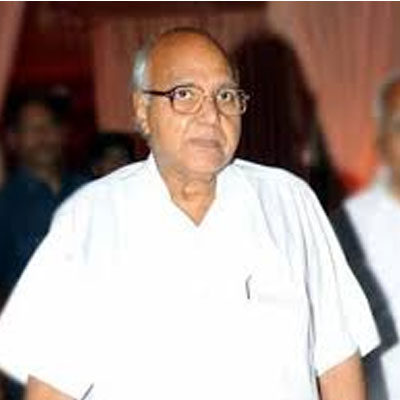
After Marathi television serials, South Indian media mogul Ramoji Rao is venturing into less trodden territory.
Beginning 10 April, the producer will flag off the shooting of a film that will be made simultaneously in Marathi and Gujarati. The film, to be made at a budget of Rs 8 million, will have distinct dialogues, cast and music, adapted suitably for both languages. This is the first time a film with the same script and music is being created in two languages simultaneously, say industry observers.
The film, a comedy written by Ashok Upadhyay, is titled Bin Paishacha Tamasha in Marathi and Wala Aave to Saachu bolin Gujarati. To be shot in a tight schedule of 45 days at the Ramoji Film City in Hyderabad, the film is slated for a Diwali release, says Chetan Dubey, who will edit both films.

To be directed by Vinay Laad, who has five Marathi films to his credit so far, the films will be shot in cinemascope, a rarity for regional films. Some of the cast, which includes Marathi actors Avinash Kharshikar, Vijay Chavan and Pallavi Subhash, will be repeated in both versions.
The music, scored by Nishikant Sadafule, sets another trend in that the songs are all western style numbers, two of which are common for both versions. The entire central cast of both films totalling nearly 20 is already assembled at RFC, ready to begin shooting for the film which will be done shot-wise, say sources.




News Broadcasting
Network18 channels lead YouTube news viewership in March 2026
CNN-News18, News18 India and CNBC channels top categories with record views

MUMBAI: When the world hit refresh on breaking news, Network18’s channels were already streaming ahead. As geopolitical tensions and war-driven headlines fuelled a surge in global news consumption, the network’s digital playbook delivered big clocking record Youtube viewership across English, Hindi and business news categories in March 2026.
At the forefront was CNN-News18, which emerged as the clear leader in the English news segment with 130 million live and video-on-demand views. The channel edged past competitors such as Times of India (126.5 million), Times Now (101.1 million), India Today (88.2 million) and NDTV (77.5 million), according to Databeings data for March.
In the Hindi news arena, News18 India delivered a commanding performance, racking up a staggering 3,297 million views on YouTube. The channel comfortably outpaced NDTV India, which recorded 3,119 million views, underlining its deep reach and consistent engagement with mass audiences, as per Playboard data.
The network’s dominance wasn’t confined to general news. In the Hindi business segment, CNBC Awaaz topped the charts with 92 million views, narrowly ahead of Zee Business (90 million) and well ahead of ET Now Swadesh (57 million). Meanwhile, its English counterpart CNBC-TV18 posted a strong 58 million views, reinforcing the network’s cross-category strength.
The spike in viewership reflects a broader shift in audience behaviour, with viewers increasingly turning to digital platforms particularly Youtube for real-time updates and in-depth coverage during high-intensity news cycles. For Network18, the numbers signal more than just scale; they underline the effectiveness of a multi-platform strategy that blends speed, credibility and continuous coverage.
In a month where the news never paused, it seems viewers chose to stay tuned where the stream never stopped.






