News Broadcasting
Radio buzz is low, but FM fairly crackles – NRS 2002


Has television killed the radio star in India?
Marginally, if the National Readership Survey 2002 is to be believed. While urban radio reach has dipped from 27 million homes to 24 million homes in the last three years, rural radio reach has taken a lesser beating – standing at 30 million homes today as against 31 million homes in 1999.
Private FM players can however take heart at the thought that the decline has not been in the top eight metros in the country, but instead in the smaller one to five lakh population towns. As a matter of fact, among the 48 million adults who listened to radio in the last three months, 31 per cent or 15 million tune on to any FM station – an increase of six per cent since 2001. While the audience base of radio listeners widens, the AIR primary audience base has decreased from 48 per cent to 42 per cent in the last three years, says the survey.

NRS monitored audiences during January and March 2002, during which Bangalore noted an increase of 15 per cent in radio listenership, while Lucknow detected a 20 per cent increase. But it is the smaller cities like Jaipur and Vishakhapatnam, apart from Pune and Ahmedabad which have recorded a stupendous increase in radio listenership. The typical radio listener, says the survey, is a male (15-24 year old) from the SEC A and B categories, mostly a student (21 per cent) or a young executive (19 per cent), reads English publications – particularly sports and business magazines, is addicted to the Net (13 per cent) and loves to watch Channel V and MTV. He prefers his own set of wheels, owns an upmarket house, a PC and of course, a cell phone.
NRS also studied his listening habits and found that places like Lucknow even switch on FM during TV prime time hours. The average tuning time stays at two hours in the morning, and ditto in the evening, the study notes. NRS 2002, which also tracked the changing face of the ‘urban gharwali’, noted that while her radio consumption has gone down from 71 to 64 minutes, her access to FM has shot up from the earlier 19 per cent to 25 per cent.






News Broadcasting
CNN-News18 to host Fury in the Gulf conclave on West Asia crisis
Three-hour summit to unpack geopolitical fallout and impact on India
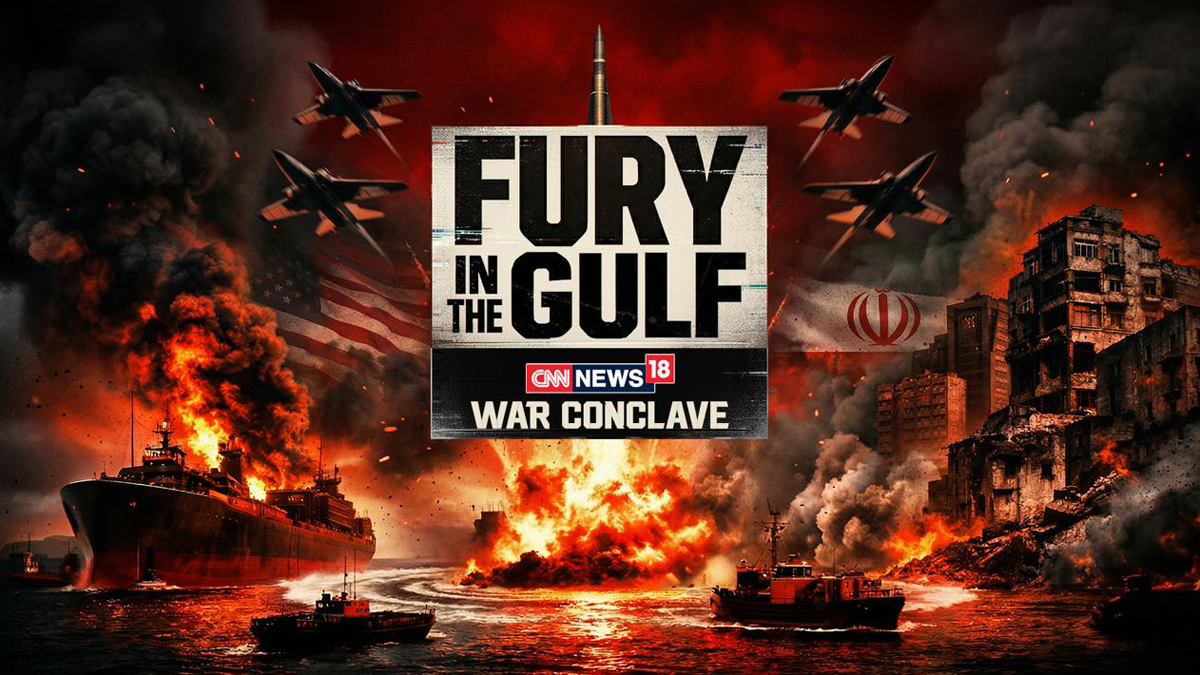
MUMBAI: CNN-News18 is set to host a special three-hour broadcast, Fury in the Gulf – War Conclave, on April 7, aiming to decode the escalating West Asia crisis and its far-reaching implications for India.
Scheduled from 4:00 PM to 7:00 PM, the conclave comes at a time when tensions between Iran and the United States are reshaping global geopolitics and triggering economic uncertainty. With India’s deep energy ties, trade links and large diaspora in the Gulf, the developments carry significant domestic relevance.
Built around the theme ‘Conflict, Consequences, and The Future,’ the programme will feature six curated sessions combining one-on-one interviews and panel discussions. The focus is to cut through the clutter and offer viewers a clearer understanding of the fast-evolving situation.
Key sessions include ‘Diplomacy in Times of War’ featuring Shashi Tharoor, and ‘World After the Iran Conflict’ with voices such as Ram Madhav, Reuven Azar, representatives from the European Union and the Iranian Deputy Envoy. Another session titled ‘Another Dunkirk?’ will bring together K. J. S. Dhillon and Jitin Prasada among others.
CNN-News18 editorial affairs director Rahul Shivshankar said, “In times of war, clarity becomes the most powerful tool. Fury in the Gulf – War Conclave brings together credible voices to address the questions and confusion that arise amid an overwhelming influx of information.”
He added that the initiative is aimed at delivering “facts, perspective, and insight” at a time when misinformation can easily cloud public understanding.
Echoing the sentiment, CNN-News18 CEO– English and business news Smriti Mehra said the conflict marks a defining global moment, with consequences that extend well beyond the region. She noted that the conclave seeks to present the crisis with “depth, nuance and responsibility” so audiences can better grasp its real-world impact.
As geopolitical tensions continue to dominate headlines, the conclave positions itself as an attempt to bring order to the noise, offering viewers a structured, insight-led look at a complex and rapidly shifting global situation.






