Hindi
Raanjhanaa: A love triangle with a twist

|
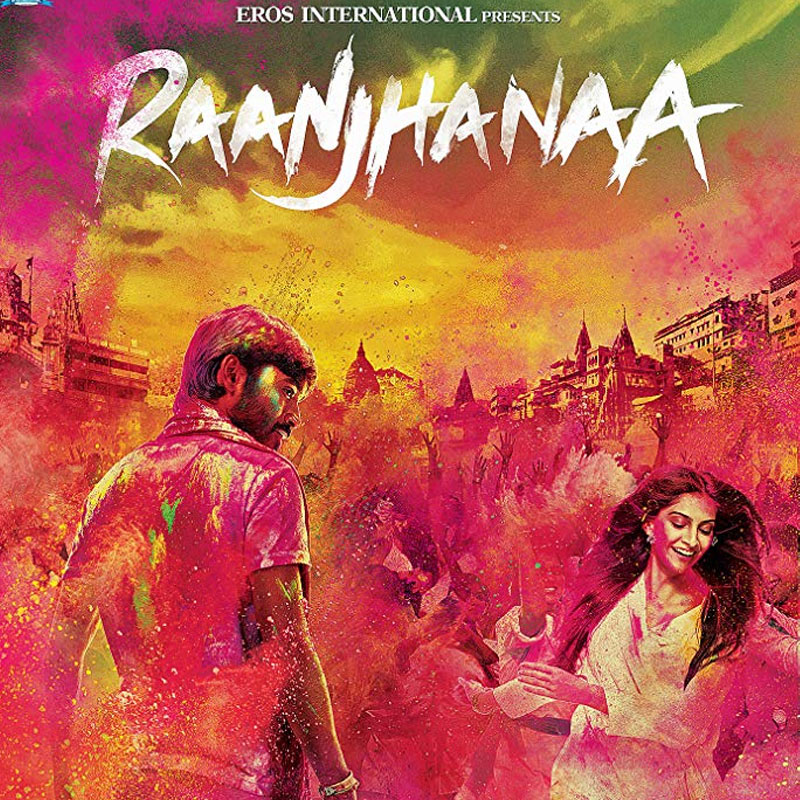
MUMBAI: If you remember Ranjha, the legendary romantic of the Heer Ranjha story, you are expected to know the meaning of Raanjhanaa, burdened heavily with extra As, thanks to more faith in numerology than its content. Raanjhanaa means one who is madly in love with all the attributes of Ranjha. The film crams in four stories and puts too mach baggage on the fragile shoulders of Sonam Kapoor and Dhanush. Dhanush‘s family was brought to Banaras by the king 200 years back and appointed as temple priests. The tradition continues as Dhanush‘s father holds the post while he does his schooling and generally loafs around town. That is till he sets eyes on Kapoor, a Muslim girl. The puppy love matures into real love but, obviously, is not approved by the girl‘s parents. She is soon dispatched to her aunt‘s house in Meerut to complete her schooling. While away, as Kapoor outgrows her infatuation, but for Dhanush, pining for her every moment, it has only turned into deep-rooted love. From Meerut, Sonam proceeds to Delhi to do her graduation and returns to Banaras after eight long years. Dhanush‘s dream of picking up their romance from where they left off eight years back is shattered. Not only has Kapoor forgotten him and also overcome her childhood romance, she has found her true love in college in Abhay Deol. Left with no alternative and being the only one kapoor considers close, Dhanush agrees to make her marriage with Deol possible after convincing her father. But, come the wedding day, Dhanush who has made the marriage possible is the one who becomes instrumental in breaking it when he reveals that Deol is not a Muslim but is posing as one only to marry Kapoor. Deol is beaten up mercilessly, to fatal consequences, while Sonam comes to hate Dhanush.  Sonam decides to go back to Delhi and take up Deol‘s incomplete task of leading the college youth through the political outfit built by Deol. Their approach is radical with plans to foil authorities‘ attempts at exploiting the poor in the guise of various schemes. Dhanush follows to win back her love or to atone may be. While he can‘t win over Sonam, he sure gets all the party members to follow his ideas. From accompanying the outfit to serve tea and wait on them, he turns into its leader thanks to his native instinct and negotiation skills on various occasions. A time comes when the party can be headed by only one leader and either Kapoor or Dhanush has to go. The seed of this idea is planted in Sonam‘s mind by the local Chief Minister who foresees this youth party starting off with a seat or two in the ensuing elections. Sonam has many reasons for Dhanush to go: him replacing her as the rightful heir to Deol‘s party is one and the death of Deol is the other, more important one. Raanjhanaa has quite a few stories told in one film: the childhood love of Sonam and Dhanush, college romance of Sonam and Deol, the return to Banaras, wedding day murder of Deol and, finally, the second half which has little connect with the first half and goes totally on politics and youth movement. So much so the second part comes across as the sequel to the Raanjhanaa of the first part! The initial parts of childhood romance between Dhanush and Sonam are fun to watch followed by sequences with Deol. Post these parts, the film goes off track; neither romantic nor entertaining, running away from itself. While Dhanush is a natural, at ease with all kinds of situations, Sonam does well as girl in love, which is until she is projected as a leader. Deol emits a pleasant feel while he is there. Swara Bhaskar supports very well. Direction is smooth during initial parts and during college phase but loses control thereafter. Musically, the film has three good numbers in Tum tak…, Banarasiya…. and Tu mun shudi… Dialogue is effective. Editing is slack while the photography is good. Raanjhanaa has taken an average opening and may find a bit of improvement over the weekend but not enough to justify its cost. Shortcut Romeo: A story of love, greed and deceit Shortcut Romeo is the remake of maker Susi Ganeshan‘s own Tamil film Thiruttu Payale (2006). The film explores the age-old theme of vice and greed. The film is about the straying of a woman with a doting husband and about a ruffian who wants a shortcut to wealth and worldly pleasures by exploiting the situation. Neil Nitin Mukesh is a footloose and fancy-free lad with a streak of violence in him due to which he is dispatched off to Mumbai to live with his maternal uncle to whom he is very attached. Neil was a studious and honest boy in Goa who goes wayward as his inspector father involves him in collecting bribes on his behalf. The boy soon learns to pilfer some money to enjoy with his friends. Now a grown man in Mumbai, Neil spies a man and woman playing golf and soon going behind the bushes and having sex. Next time, Neil is ready with a video camera and catches the couple in the act, the woman being Ameesha Patel with her husband‘s best friend. Neil now possesses an ATM card without limit with this video. Instead of one time settlement with Patel, he decides to milk the situation piecemeal; making demands at whim. After starting with demanding cash, next he asks for an all-expense paid trip to Africa with his friends. He poses as a millionaire businessman and happens to meet Puja Gupta, who is a daughter of a millionaire too. By the second meeting, they are in to janam janam ka love. But, Patel has decided not to take her exploitation lying down. Neil and his friends are attacked by the local tribesmen; while his friends are killed, Gupta is kidnapped. Of course, Patel is responsible. Back in India, Neil realises that Gupta was no millionaire‘s daughter but is the daughter of Patel‘s greedy servant who was sent after Neil to trap him in her love. But, it is too late now because that pretence of love has turned into real love. It is time for some new players to join the game played by patel and Neil. The former‘s husband feels something is bothering his ‘vulnerable‘ wife and adds the third angle. After all, he is the moneybags. He settles all scores, destroys any track that leads to his family and we have one James Hadley Chase kind of thriller ready. The film loses its grip after the African episode. Everybody is a sinister schemer and yet starts crying at the drop of a hat. Parts which are shot on scenic outdoors are worth watching but that is about all. Musically, a couple of songs have appeal, with the best being Khali salaam dua… Direction is average. Rest of the aspects are routine. Shortcut Romeo holds no promise at the box office. |
|
|
|
|
|
Enemmy is Mithun Chakraborty‘s home production where he plays a pivotal role but it projects his son Mahakshay Chakraborty in a prominent role buffered by other actors, Suniel Shetty, Kay Kay Menon and Johnny Lever. With such veterans in the cast, the film can‘t be a romance; it should be and is an action with a fair amount of suspense. It is about a triangle formed by politicians, underworld (drug dealers) and police and a search for Rs 500 crore of missing drug money. Gang wars have broken out across Mumbai as Zakir Hussain and Sharat Saxena‘s men are on a killing spree eliminating each others‘ members. The minister concerned gives the police a free hand to stop these killings. The media is full of reports of these crimes. The quartet of Shetty, Menon, Lever and Mahakshay get into action. The inseparable four complement each other well and usually carry out all their operations as a team. While Hussain is locked up in jail, the killings don‘t stop. The reason: Hussian‘s huge cache of funds goes missing from the expressway while in transit. The money was meant for financing the coming elections in the state. Akshay Kapoor, the politician in the capital, who is expected to go a long way in politics, deputes a special CBI agent, Mithun, to go to the roots of the events in Mumbai. Mithun narrows down on who stole the money but needs the proof. He also finds out where the money was destined to go. All rules are shelved as the only priority the politicians have is to get the money back, no care whose head rolls, cops‘ or gangsters‘. All are guilty in this game but those with courage to own up win in the end. The film has a decent idea but the script is developed in a very old fashioned way as it leads to a climax which could well be out of any 1970s/80s film. Also, the need for logic has been done away with. The music has no scope in the proceedings. Performances are generally good as the film boasts of all seasoned artistes. Mahakshay has shed his excess weight and developed a well toned body and has improved a great deal in acting. Akshay Kapoor in a small role makes his mark. Enemmy has not had an auspicious start with dearth of audience to welcome it. |






In a music industry that often rewards speed, spectacle, and instant recall, Navjot Ahuja’s journey feels refreshingly different. His story is not built on noise. It is built on patience, discipline, emotional honesty, and a quiet commitment to becoming better with every passing year. After 14 years of struggle, learning, performing, and writing, Navjot stands today as an artist whose success has not changed his centre. If anything, it has only made his purpose clearer.
For Navjot, music has never been about chasing fame alone. It has always been about expression. It is about writing more truthfully, singing more skillfully, understanding himself more deeply, and becoming a kinder human being in the process. That rare clarity is what gives his journey its beauty.
Where It All Began: A Writer Before a Singer
Indian singer and songwriter Navjot Ahuja’s musical journey began in the most familiar of places: school assemblies. But even then, what was growing inside him was not only the desire to sing. It was the need to write.
Long before he saw himself as a performer, he had already discovered the emotional release that writing offered him. For Navjot, words became the first true channel for feeling. Songwriting came before singing because writing was the only way he could let emotions flow through him fully. That inner pull shaped his artistic identity early on.
Like many young musicians, he sharpened his craft by creating renditions of popular songs.
Those experiments became his training ground. But the turning point came in 2012, when he wrote his first original song. That moment did not just mark the beginning of songwriting. It marked the beginning of self-definition.
A Calling He Did Not Chase, But Accepted
What makes the latest Indian singer-songwriter Navjot’s story especially compelling is the way he describes his relationship with music. He does not frame it as a career he aggressively pursued. In his own understanding, music was not something he chose. It was something that chose him.
There was a time when he imagined a very different future for himself. He wanted to become a successful engineer, like many young people shaped by ambition and conventional expectations. But life had a different script waiting for him. During his college years, around 2021, music entered his life professionally and began taking a firmer shape.
That shift was not driven by image-building or industry ambition. It came from acceptance. Navjot embraced the fact that music had claimed him in a way no other path could. That sense of surrender continues to define the artist he is today.
An Artist Guided by Instinct, Not Influence
Unlike many singers who speak openly about idols, icons, and musical role models, Navjot’s creative world is built differently. He does not believe his music comes from imitation or inherited influence. He listens inward.
He has never considered himself shaped by ideals in the traditional sense. In fact, he admits that he does not particularly enjoy listening to songs, especially his own. His decisions as a songwriter and singer come from instinct. He writes what feels right. He trusts what his inner voice tells him. He positions his music according to what he honestly believes in, not what trends demand.
That creative independence gives his work a distinct emotional sincerity. His songs do not feel calculated. They feel alive.
The Long Years of Invisible Struggle

Every artist carries a chapter of struggle, and Navjot’s was long, demanding, and deeply formative. One of the biggest challenges he faced was building continuity as the best new indian singer songwriter in an era where musical collaboration is increasingly fluid.
For emerging singers, especially those trying to build with a band, consistency can be difficult. Instrumentalists today have more opportunities than ever to freelance and perform with multiple artists. While that growth is positive and well deserved, it can make things harder for singers who are still trying to establish a steady team and sound around their work.
For Navjot, one of the most difficult phases came during 2021 and 2022, when he was doing club shows almost every day. It was a period of relentless performance, but not always personal fulfillment. He was largely singing covers because clubs were not open to original songs that audiences did not yet know.
For a new Indian singer and songwriter, that can be a painful compromise. To perform constantly and still not have the freedom to share your own voice requires not just resilience, but restraint.
“Khat” and the Grace of Staying Unchanged
After 14 years of effort, Navjot’s new love song Khat became a defining milestone. Professionally, he acknowledges that the song changed how society viewed him as a musician. It strengthened his place in the public eye and altered his standing in meaningful ways.
Yet personally, he remains unchanged.
That is perhaps the most striking part of his story. Navjot says his routine is still the same. His calm is still the same. His writing process is still the same. He does not want success or failure to interfere with the purity of his art. For him, emotional detachment from public outcomes is essential because the moment an artist becomes too attached to validation, the writing begins to shift.
His joy comes not from numbers, but from the attempt. If he has tried to improve his skill today, if he has written his heart out more honestly than before, then he is at peace.
Growth, Not Glory, Remains the Real Goal
Even now, Navjot is not consumed by labels such as singles artist, performer, or digital success story. His focus remains deeply personal. He wants to sing better. He wants to play instruments better. He wants to understand himself more. And he wants to become a kinder person.
That is what makes Navjot Ahuja’s journey so moving. It is not simply the story of a musician finding recognition. It is the story of an artist who continues to grow inward, even as the world begins to look outward at him. In an age obsessed with applause, Navjot reminds us that the most meaningful success often begins in silence, honesty, and the courage to remain true to oneself.






