News Headline
QALAM 2001 SIGNS OFF WITH A FLOURISH

The second and concluding day of Qalam 2001 saw a variety of well known film and television personalities holding forth on a variety of issues related to the art and commerce of scriptwriting in Mumbai’s western suburb of Andheri, the venue of the first ever TV scriptwriters’ workshop in India.
The day started with film magazine Screen editor Bhavna Somaya and Screen TV section editor Piroj Wadia speaking on media and scriptwriting. Journalists, Wadia pointed out, were uniquely blessed with daily interactions with a variety of personalities who can be effectively used as script characters. In a comment that soothed budding scriptwriters in the audience, Somaya noted that even established writers have to face several hurdles before their work is approved.
TV talk show hostess Kiran Joneja, who followed, spoke about the exhaustive applied and selective research that goes on behind the success of chat shows. “The director, writer and the anchor all have an equal responsibility of making the show a success”, she said. Unfortunately, talk shows are still treated as fillers in India and not accorded the importance they are in the West, she noted. An admirer of the Oprah Winfrey Show, Joneja said tight budgets often hampered the making of truly quality serials in the country.

Veteran scriptwriter Sandhya Divecha followed with an interesting interactive session on scriptwriting a docudrama with participants pitching in with storylines, plots and scenes and shot possibilities. “It is important to know the different points of view, characters’ backgrounds and focus of the story before fleshing out the script”, she said.
Well known actor turned producer Soni Razdan held forth on the producer’s perspective towards scriptwriting. Reiterating that the key to a serial’s success lay with the producers, writers as well as directors, Razdan maintained that every scriptwriter should approach the producer with a kitty of possible storylines, do their research beforehand, think up a USP for the script and finally, be flexible to possible changes in the script. “The only way to succeed is to be open to feedback constantly”, she added. It was also necessary that writers be paid development money for the time that the serial is under production so that he does not suffer financially, she noted, a suggestion taken up enthusiastically by other speakers.
Dr Achla Nagar, a scriptwriter with a vast radio, film and TV background, spoke on the necessity of respecting Indian sensibilities while scripting serials for an Indian audience. “One has to experience emotions oneself in order to convey them to viewers”, she said, adding that writers should keep their eyes open to changes in society and adapt themselves constantly. “Mumbai is not the whole of India”, she pointed out, maintaining that writers should write for the vast multitudes who live in small towns and villages too.
Scriptwriter Sridhar Raghavan, who spoke on developing thrillers as a genre, regaled audiences with his experiences in the field, and also gave some guidelines to budding writers. “Check your ideas thoroughly, try and innovate within existing structures, do variations of story outlines and counter criticism constructively”, he said. Stressing on the importance of research, he said a writer has to think about practical aspects involved in the actual making of a serial while visualizing scenes. Tools specific to the thriller genre include timing your script well, increasing the pace to create the necessary drama, creating false drama to keep up the suspense within a scene, using hooks and teasers like dramatic opening sequences and keeping twists and turns for the ad breaks all go to make good thriller serials, he said.
A writer, he said, needs to ‘boil a scene’, meaning keeping a scene at simmering point just enough to hold viewer interest by extracting the maximum dramatic potential out of a scene.
Director Vivek Agnihotri who spoke after Raghavan, said that often the best source of stories is newspapers, history, myths and legends, family and childhood stories and travel. Dreams too are a rich source of potential stories, he said. “A well crafted plot should have a series of rising and falling action, tensions and climaxes … a good suspense plot is a roller coaster ride”, he said.



NEW DELHI: Hamdard Laboratories gathered a cross-section of India’s achievers in New Delhi on Friday, handing out the Hakeem Abdul Hameed Excellence Awards to figures who have left their mark across healthcare, education, sport, public service and the arts.
The ceremony, attended by minister of state for defence Sanjay Seth and senior officials from the ministry of Ayush, celebrated individuals whose work blends professional success with a sense of public purpose. It was as much a roll call of achievement as it was a reminder that influence is not measured only in profits or podiums, but in people reached and lives improved.
Among the headline awardees was Alakh Pandey, founder and chief executive of PhysicsWallah, recognised for turning affordable digital learning into a mass movement. On the sporting front, Arjuna Awardee and kabaddi player Sakshi Puniya was honoured for her contribution to the game and for pushing women’s participation onto bigger stages.
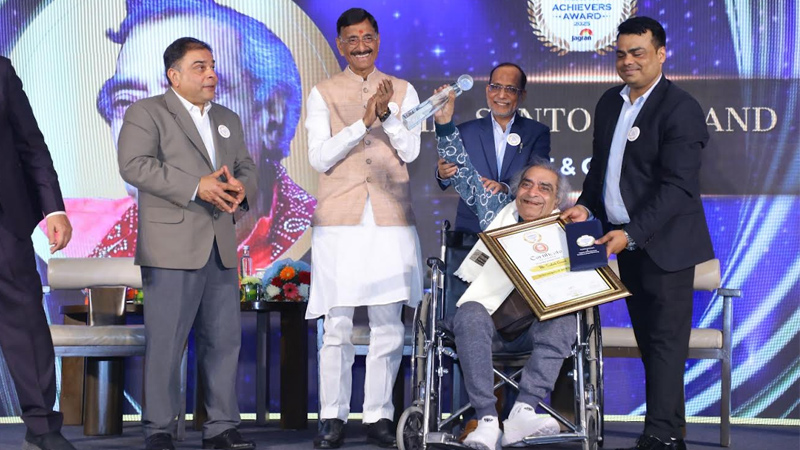
The cultural spotlight fell on veteran lyricist and poet Santosh Anand, whose songs have echoed across generations of Hindi cinema. At 97, Anand accepted the honour with characteristic humility, reflecting on a life shaped by perseverance and hope.
Healthcare honours spanned both modern and traditional systems. Manoj N. Nesari was recognised for strengthening Ayurveda’s place in national and global health frameworks. Padma shri Mohammed Abdul Waheed was honoured for his research-backed work in Unani medicine, while padma shri Mohsin Wali received recognition for his long-standing contribution to patient-centred care.
Education and social development also featured prominently. Padma shri Zahir Ishaq Kazi was honoured for decades of work in education, while former Meghalaya superintendent of Police T. C. Chacko was recognised for public service. Goonj founder Anshu Gupta received an award for his dignity-centred rural development initiatives, and the Hunar Shakti Foundation was honoured for empowering women and young girls through skill development.
The Lifetime Achievement Award went to former IAS officer Shailaja Chandra for her long career in public healthcare and governance, particularly in the traditional systems under Ayush.
Speaking at the event, Hamdard chairman Abdul Majeed said the awards were a tribute to those who combine excellence with empathy. “These awardees reflect Hakeem Sahib’s belief that healthcare, education and public service must ultimately serve humanity,” he said.
Minister Seth struck a forward-looking note, saying India’s young population gives the country a unique opportunity to become a global destination for learning, health and wellness by 2047.
The ceremony also featured the trailer launch of Unani Ki Kahaani, an upcoming documentary starring actor Jim Sarbh, set to premiere on Discovery on 11 February.
Instituted in memory of Unani scholar and educationist Hakeem Abdul Hameed, the awards have grown into a national platform that celebrates those building a more inclusive and resilient India. For one evening at least, the spotlight was not just on success, but on service with substance.