News Headline
Qalam 2001 gets off to exciting start

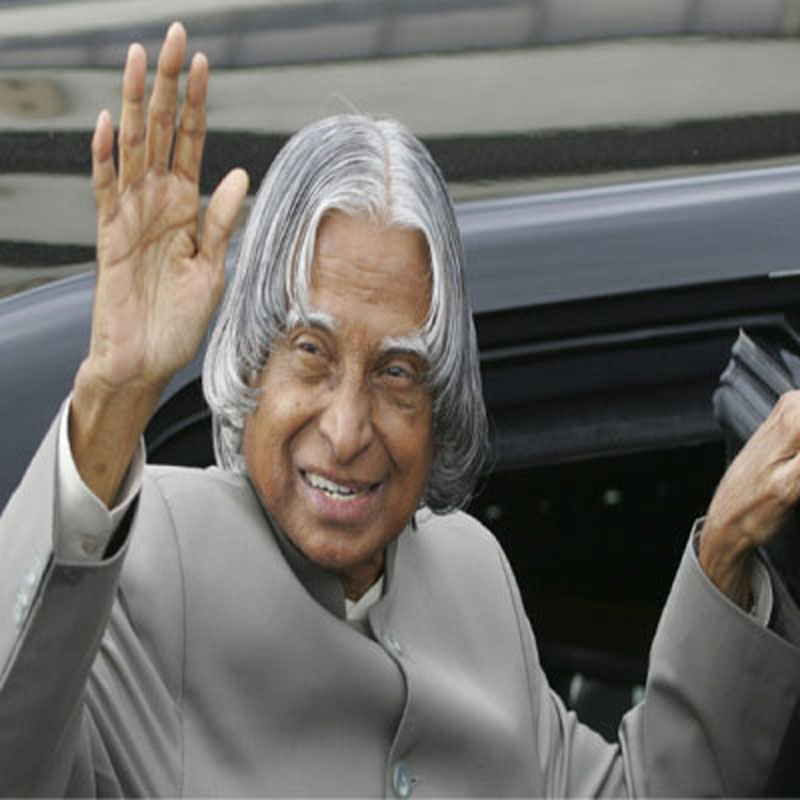
Veteran, established and aspiring scriptwriters from all over Mumbai converged in a meeting of minds at India’s first ever TV scriptwriters’ workshop Qalam 2001, in Mumbai’s western suburb of Andheri on Thursday.
The first day of the two-day workshop was marked by a wealth of information from the speakers, plenty of interactivity with participants and insights into the art of writing for television. Speakers included former Sony programming head Rekha Nigam, Tracinema creative head Vinta Nanda, eminent scriptwriters B M Vyas, Mir Muneer and Vipul D Shah and writers’ association representatives. The cohesive force in the two-day workshop is Joyce Thierry, a scriptwriter and instructor from the Vancouver Film School, Canada.
The morning session commenced with Rekha Nigam charting out the ten commandments of scripting –

-
Know and respect thy target audience
-
Write for the medium
-
Learn to present your work
-
Never go to a channel with just one concept
-
Thou shalt not flog a formula
-
Innovate. Innovate. Innovate.
-
Thou shalt recharge your batteries.
-
God is in the details.
-
To thine own self be true.
-
Go forth and multiply.
She spoke about the necessity of reaching viewers on their wavelength and language, constantly innovating and exploring new genres, keeping in touch with changing viewer tastes and the importance of presentation of a concept or story to a channel or production house.
Joyce Thierry, who conducted the next session, explored the anatomy of a TV programme, maintaining that on television, characters matter more than the personality of actors, unlike in movies, where the hero often overshadows his reel character. Good research skills and an interesting point of view are, hence, an important component of any good script, she said.
Among the suggestions that were thrown up during the course of the workshop, it was felt that channels should form focus groups for channel executives to help them feel the pulse of the viewers. The dearth of availability of scripts also hampered the study of earlier scripts by established and aspiring writers. While fear of theft of concepts often hinders a free exchange of ideas. speakers agreed that a writers’ guild, like ones in the US and Canada, would go a long way in protecting writers’ interests. The need for writers’ training institutes was also expressed by many participants in the workshop, while the need for policing channels to weed out detrimental material was also felt.
The need for patience in a scriptwriter’s career was brought home by a budding participant who pointed out that most writers are often turned away from production houses at the gate itself. His lament about how was a security guard expected to judge the worth of his work (which is as far as he has been able to get thus far with the various production houses in the city).
Vinta Nanda, best known as the writer behind the marathon serial Tara, spoke of the degeneration of content in television soaps and programmes. Social commitment, she said, need not necessarily mean making documentaries, but being sensitive to viewers’ tastes and thinking about the impact of their writing on the multitudes who watch TV. Television currently portrays a society that is non-existent, she said. Social workers have to spend days undoing the damage wreaked upon gullible audiences by regressive soaps, she pointed out.
BM Vyas, in a lighter vein, pointed out that the most ordinary lives have a lot of drama in it. Speaking on the hows and whys of a serial, he said that bringing out this drama is as important as the story structure and communication techniques. Asserting the need to keep a balance when dealing with channels, he said a positive outlook was important. An antagonistic attitude would often mean the writer’s work not being given an airing while if the writer was willing to work within the constraints of the system there were myriad ways of subtly getting across positive messages, was how he saw it.
Continuing the lighter note, Vipul D Shah noted that a writer should seek out characters from among his surroundings and then develop them with one’s imagination. “The characters have to be unique as well as identifiable”, he said. Comedy serials stipulate that the protagonists have a unique peculiarity, a certain style and a background, on the basis of which interrelationships and his reactions in adverse situations can be fleshed out.
In his address on developing a comedy, Shah said that the genre is yet to get its due in a developing television industry like the Indian one, accounting for the high incidence of slapstick comedy current here.
Participants also got an insight into the legal aspects of scriptwriting from Film Writers’ Association’s Rajbir Singh, who spoke of the problems faced by Indian scriptwriters. Most do not sign contracts with production houses, are often not given credits, and are sometimes not paid on time.
Maintaining that scripts are a writer’s intellectual property, Singh said that the association safeguards interests of writers by getting producers to give writer their dues on time.
The association registers screenplays, concepts and dialogues of writers and updates members about laws and changing regulations. Writers cannot be changed midway through a serial, he informed, without the permission of the earlier writer. Again, production houses have just one year’s rights on the writer’s script, after which it can be reclaimed, he said.
Saans and Chunauti writer Mir Muneer stressed the need for budding writers to soak up literature, both English and Indian, in order to hone their writing skills. “One can start with adaptations of English plays, as a stepping stone to good scripts”, he said.



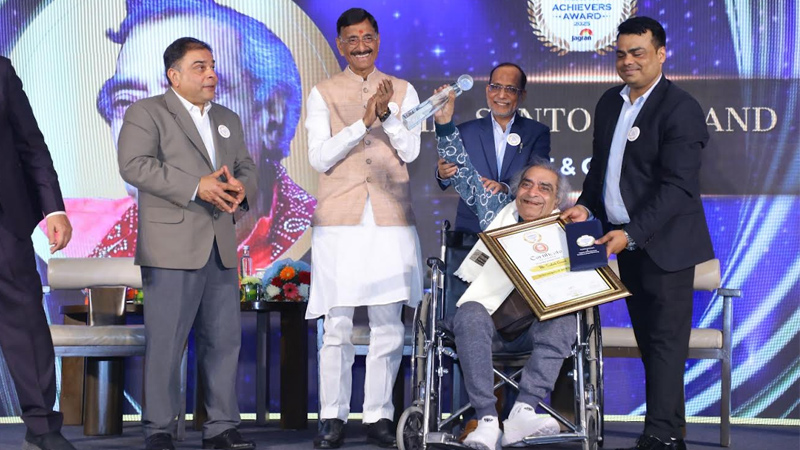
NEW DELHI: Hamdard Laboratories gathered a cross-section of India’s achievers in New Delhi on Friday, handing out the Hakeem Abdul Hameed Excellence Awards to figures who have left their mark across healthcare, education, sport, public service and the arts.
The ceremony, attended by minister of state for defence Sanjay Seth and senior officials from the ministry of Ayush, celebrated individuals whose work blends professional success with a sense of public purpose. It was as much a roll call of achievement as it was a reminder that influence is not measured only in profits or podiums, but in people reached and lives improved.
Among the headline awardees was Alakh Pandey, founder and chief executive of PhysicsWallah, recognised for turning affordable digital learning into a mass movement. On the sporting front, Arjuna Awardee and kabaddi player Sakshi Puniya was honoured for her contribution to the game and for pushing women’s participation onto bigger stages.
The cultural spotlight fell on veteran lyricist and poet Santosh Anand, whose songs have echoed across generations of Hindi cinema. At 97, Anand accepted the honour with characteristic humility, reflecting on a life shaped by perseverance and hope.
Healthcare honours spanned both modern and traditional systems. Manoj N. Nesari was recognised for strengthening Ayurveda’s place in national and global health frameworks. Padma shri Mohammed Abdul Waheed was honoured for his research-backed work in Unani medicine, while padma shri Mohsin Wali received recognition for his long-standing contribution to patient-centred care.
Education and social development also featured prominently. Padma shri Zahir Ishaq Kazi was honoured for decades of work in education, while former Meghalaya superintendent of Police T. C. Chacko was recognised for public service. Goonj founder Anshu Gupta received an award for his dignity-centred rural development initiatives, and the Hunar Shakti Foundation was honoured for empowering women and young girls through skill development.
The Lifetime Achievement Award went to former IAS officer Shailaja Chandra for her long career in public healthcare and governance, particularly in the traditional systems under Ayush.
Speaking at the event, Hamdard chairman Abdul Majeed said the awards were a tribute to those who combine excellence with empathy. “These awardees reflect Hakeem Sahib’s belief that healthcare, education and public service must ultimately serve humanity,” he said.
Minister Seth struck a forward-looking note, saying India’s young population gives the country a unique opportunity to become a global destination for learning, health and wellness by 2047.
The ceremony also featured the trailer launch of Unani Ki Kahaani, an upcoming documentary starring actor Jim Sarbh, set to premiere on Discovery on 11 February.
Instituted in memory of Unani scholar and educationist Hakeem Abdul Hameed, the awards have grown into a national platform that celebrates those building a more inclusive and resilient India. For one evening at least, the spotlight was not just on success, but on service with substance.






