Cable TV
PwC sees strong merger and acquisition growth in US entertainment and media industry


MUMBAI: Merger and acquisition activity in the US entertainment and media (E&M) market is on a strong growth trajectory, and this year is projected to reach levels not seen since 2001.
A report 2006 M&A Insights — US Entertainment and Media Industry has been published by PricewaterhouseCoopers’ E&M Transaction Services Practice.
The report notes that increasing levels of industry consolidation and deconsolidation activity are being driven by a number of trends and are being led by the convergence of media, communications and technology. There is also shifting consumer media consumption habits; and the increasing involvement and influence of private equity firms in deal making activity.

Also fuelling this activity is a move by some global conglomerates to separate or divest non-core assets in an effort to increase shareholder value, according to the PwC report.
At $72 billion, 2005 disclosed deal value increased 17.5 per cent during 2004 while disclosed deal volume increased two per cent to 252. The casinos, broadcasting and cable segments proved most active in terms of high profile transactions and highest deal value.
PwC notes that based on activity seen so far, it appears that the industry is on a fast track to achieve greater deal volume and higher deal value in 2006 than in 2005.
In addition to mega-deals with the potential to change the competitive landscape in entertainment and media, PwC expects middle-market deals of all sizes and across all sectors, to see increased activity in both value and volume. Adding to this growth are private equity firms, which are increasing their activity and investment level in entertainment and media and related industries. This is expected to evolve as conglomerates tighten their business focus, providing additional attractive investment opportunities.
PwC’s analysis has revealed five factors as key to understanding the forces that are driving consolidation in E&M segments including casinos & gaming, broadcasting, cable, motion pictures/audio visual, Internet software and services, publishing, and advertising & marketing:
— Convergence: Consumers continue to gain more control over when, where and how they consume content. In response to consumers’ needs and desires, media, communications, and technology industries will increasingly converge. As a result, PwC expects to see significant transactions, including deals ranging from strategic acquisitions of niche distribution technologies to large, non-traditional mergers that cross traditional industry boundaries.
— Shifting content consumption: In traditional media sectors, consumers’ shifting content consumption activities will cause media audiences to fragment and advertising spending to grow more slowly. Conversely, in the online and interactive markets (Internet paid search and sponsorship, video games, etc.), advertising will increase more rapidly.
Consequently, PwC expects to see increased acquisitions by advertisers and advertising-based publishers that are attempting to preserve their core revenue streams by acquiring the ability to reach consumers online with rich media, full-motion video, and e-commerce applications.
— Rise of consumer-created content and communities of interest: This trend will offer consumers alternative media options and simultaneously provide advertisers with access to a “sticky” and potentially profitable environment of large audiences. As traditional content providers adapt to this changing landscape, they can seize opportunities to acquire companies that offer specialised content or technology serving the social network media space.
— Continued impact of private equity firms: It is very likely that private equity firms will maintain and grow their significant presence, thus influencing the E&M industry. Increasingly, both the major global private equity firms and smaller, niche-oriented players are taking lead roles on the deals that are shaping and re-shaping the entertainment and media landscape. Private equity firms will continue seeking deals in solid, cash-flow-rich media companies and sectors that can generate strong shareholder returns.
— Analysts and shareholders raising questions about global entertainment and media conglomerates: Both analysts and shareholders alike are increasingly questioning whether global conglomerates have become too large and complex to manage effectively, and companies are reacting. As a result, during the past two years, a significant trend in conglomerates looking to separate their organisations and/or divest non-core assets has occurred. (e.g. Clear Channel, IAC/Expedia and Liberty Media/Discovery in 2005; Viacom, Disney/ABC Radio Network and Stations, Cendant and Time
Warner book publishing in 2006).
This trend appears to be accelerating. So more E&M conglomerates deconsolidating and shedding additional non-core assets should occur in 2006. This trend presents opportunities for existing players to strengthen their holdings through strategic acquisitions, and for private equity players to craft investment platforms in a wider array of entertainment and media sectors.







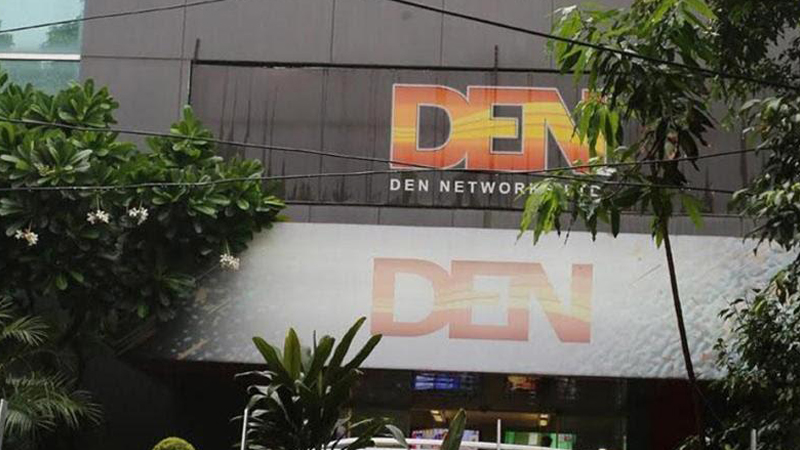
MUMBAI: When margins wobble, liquidity talks and in Q3 FY25-26, cash did most of the talking. Den Networks Limited closed the December quarter with consolidated revenue of Rs.251 crore, marginally higher than the previous quarter but down 4 per cent year-on-year, even as profitability stayed resilient on the back of strong cash reserves and disciplined cost control.
Subscription income softened to Rs.98 crore, slipping 3 per cent sequentially and 14 per cent from last year, while placement and marketing income offered some cheer, rising 15 per cent quarter-on-quarter to Rs.148 crore. Total costs climbed faster than revenue, up 7 per cent QoQ to Rs.238 crore, driven largely by higher content costs and operating expenses. As a result, EBITDA dropped sharply to Rs.13 crore from Rs.19 crore in Q2 and Rs.28 crore a year ago, pulling margins down to 5 per cent.
Yet, the bottom line refused to blink. Profit after tax stood at Rs.40 crore, up 15 per cent sequentially and only marginally lower than last year’s Rs.42 crore. A healthy Rs.57 crore in other income helped cushion operating pressure, keeping profit before tax at Rs.48 crore, broadly stable quarter-on-quarter despite the tougher cost environment.
The real headline-grabber, however, sits on the balance sheet. The company remains debt-free, with cash and cash equivalents swelling to Rs.3,279 crore as of December 31, 2025. Net worth rose to Rs.3,748 crore, while online collections accounted for 97 per cent of total receipts, underscoring strong cash discipline across operations, including subsidiaries.
In short, while Q3 showed signs of operating strain, the financial backbone remains solid. With zero gross debt, steady profits and a formidable cash war chest, the company enters the next quarter with flexibility firmly on its side proving that in uncertain markets, balance sheet strength can be the best growth strategy.