News Broadcasting
PubNation: Are paywalls the future of digital news?


MUMBAI: Covid2019 has impacted industries across the board but it also gave a massive fillip to digital adoption. People are using digital more than ever for most of their requirements – from buying groceries, to reading news, and seeking entertainment.
The massive change in consumption habits has not gone unnoticed by media organisations and while some may think that the print industry is on the cusp of a digital revolution, the truth is that they have been preparing for this for a while now; upgrading their capabilities by investing in technology, video, content formats, creating properties and, most of all, training editorial teams.
In order to understand the new form of print media, its relevance as an advertising medium, the content that will define print publications in future, and technology that will shape the copies of tomorrow, Indiantelevision.com is hosting a two-day-long summit – PubNation (print and digital) in partnership with Quintyoe Technologies and Gamezop.

One of the virtual panels focused on the convergence of print and digital, and how news will evolve and be consumed in the next three years. The panel was moderated by Omdia content strategies senior principal analyst Tim Westcott and included ET Online editor Deepak Ajwani, Moneycontrol editor Binoy Prabhakar, HT digital streams chief content officer Prasad Sanyal, Amar Ujala Ltd state editor Uttrakhand Sanjay Abhigyan, and Mathrubhumi assistant editor-online K A Johny.
Abhigyan opened the session by sharing that till recently, Amar Ujala was known as a print maven, but the organisation has adopted digital at a rapid speed. It has a vibrant online presence in the form of a website, YouTube and Facebook pages. In current times, content diversification is of utmost importance, he stated.
But going digital also raises the question of modes of monetisation. Will the future of the digital news content be obscured behind paywalls?
The Hindu strategy & digital editor Sriram Srinivasan shared that the group was one of the first ones in the country to figure out that getting into a subscription model was inevitable. “We identified it a few years ago, before we even did it. We all saw where the online advertising was going and a lot of publishers were struggling to make it as a main source of revenue and it is still a problem. There is a limit to which the online advertising can support a publication,” he said.
Prabhakar mentioned that Moneycontrol has a subscription product – Moneycontrol Pro, which has been around for the last two years and has managed over three lakh subscribers in the last 18 months. “We have been doing this because our business ambitions and editorial objectives were clearly aligned.”
Ajwani, who was representing one of the biggest publishers of the country, mentioned that for the last two years, ET Prime was running without any ads. However, they were the first website in the realm of business mulling to go the subscription route. Initially, the print team was helping them with great paywall content. Then they started with video content, deep-dive stories and experimenting with formats and graphics. Covid2019 further hastened the process of segueing from partial to complete paywall.
“Initially we put out three articles with in-depth analysis and graphics behind the paywall on ETPrime.com. This July we integrated it into the ET platform and it became the membership platform for us. We redesigned an integrated website, launched a paywall mechanism, and a lot of changes were made and all this was done from home,” he detailed.
During the conversation, K A Johny disclosed that Mathrubhumi is planning to go behind a paywall and the teams are working towards this end.
Westcott wondered how these industry giants were going to make readers pay for their digital platform, to which Prabhakar admitted that building a subscription-based model is not easy. There are also hefty production costs to contend with. To make the content look worthy enough so that the readers pay for it, the organisation uploads weekly stock results and in-depth investigative reports.
Adding to this, Ajwani said that it is important to make the user-experience more hassle-free and enjoyable. "I think both science and content are the subscription mantra." Sanyal agreed, chiming in with the reveal that the organisation is aware of what audiences read, and discovery of the kind of content that will be run on the site is driven by algorithms and not individuals.
It will be interesting to see how the content strategies of these platforms unfold in the long run and how willing users will be to pay for the content.







News Broadcasting
CNN-News18 to host Fury in the Gulf conclave on West Asia crisis
Three-hour summit to unpack geopolitical fallout and impact on India
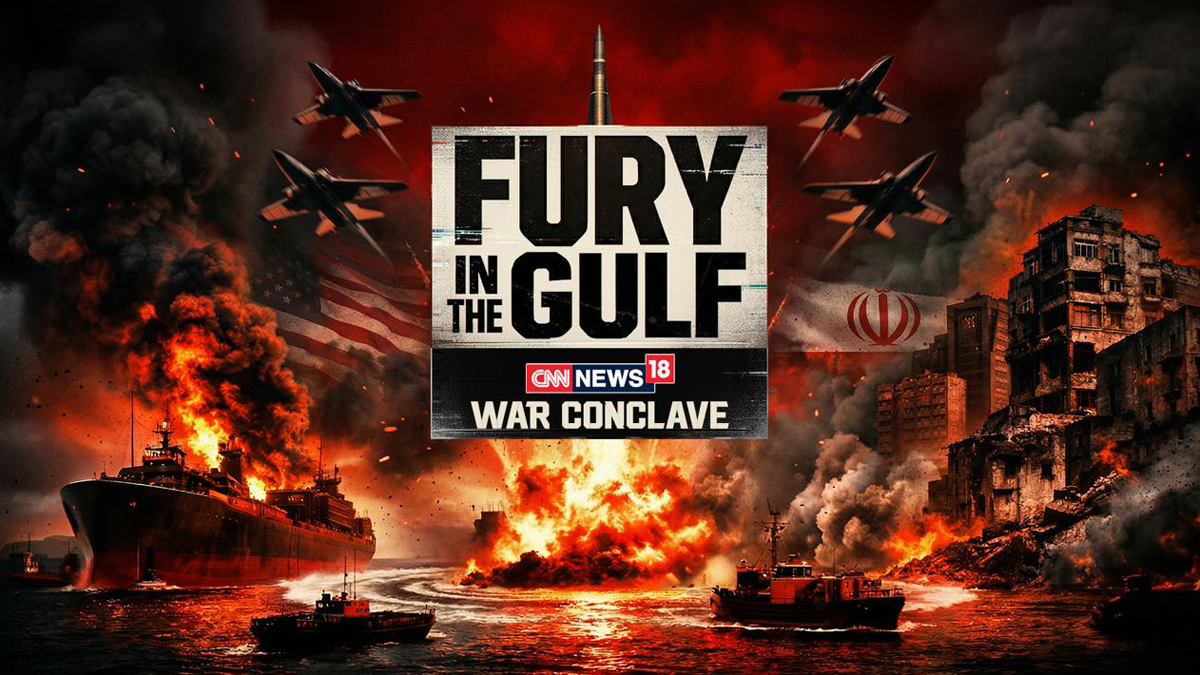
MUMBAI: CNN-News18 is set to host a special three-hour broadcast, Fury in the Gulf – War Conclave, on April 7, aiming to decode the escalating West Asia crisis and its far-reaching implications for India.
Scheduled from 4:00 PM to 7:00 PM, the conclave comes at a time when tensions between Iran and the United States are reshaping global geopolitics and triggering economic uncertainty. With India’s deep energy ties, trade links and large diaspora in the Gulf, the developments carry significant domestic relevance.
Built around the theme ‘Conflict, Consequences, and The Future,’ the programme will feature six curated sessions combining one-on-one interviews and panel discussions. The focus is to cut through the clutter and offer viewers a clearer understanding of the fast-evolving situation.
Key sessions include ‘Diplomacy in Times of War’ featuring Shashi Tharoor, and ‘World After the Iran Conflict’ with voices such as Ram Madhav, Reuven Azar, representatives from the European Union and the Iranian Deputy Envoy. Another session titled ‘Another Dunkirk?’ will bring together K. J. S. Dhillon and Jitin Prasada among others.
CNN-News18 editorial affairs director Rahul Shivshankar said, “In times of war, clarity becomes the most powerful tool. Fury in the Gulf – War Conclave brings together credible voices to address the questions and confusion that arise amid an overwhelming influx of information.”
He added that the initiative is aimed at delivering “facts, perspective, and insight” at a time when misinformation can easily cloud public understanding.
Echoing the sentiment, CNN-News18 CEO– English and business news Smriti Mehra said the conflict marks a defining global moment, with consequences that extend well beyond the region. She noted that the conclave seeks to present the crisis with “depth, nuance and responsibility” so audiences can better grasp its real-world impact.
As geopolitical tensions continue to dominate headlines, the conclave positions itself as an attempt to bring order to the noise, offering viewers a structured, insight-led look at a complex and rapidly shifting global situation.






