News Broadcasting
Print coverage influences TV viewership of sports

MUMBAI: This afternoon the National Sports Seminar was held by the The Sports Journalist Federation of India.
The speakers included Fed Cup coach Enrico Piperno, BCCI executive secretary Ratnakar Shetty, Ogilvy & Mather chairman Piyush Pandey and Tam Media CEO L V Krishnan.
Krishnan looked at how coverage of sports in the newspapers influences television viewership. “Sania Mirza needs to thank two people – her coach and journalists. The coverage on her has been fantastic. When she played Serena Williams at the Australian Open recently it made front page news. Ratings soared in Andhra Pradesh and Hyderabad.

“Newspapers educate sports fans on a topic. They are then motivated to go to the television to watch the happenings. A recent event that benefitted in a big way from newspaper coverage was the football World Cup. In 2002 when the event was on the Indian cricket team was playing England at the same time. Cricket won comfortably then.
“This time there was a 300 per cent jump in the viewership of the soccer World Cup. That is because of the huge newspaper coverage. There was 450,000 cms worth of print coverage which was more than what was seen during the 2003 cricket World Cup. For the common man, media is a seamless medium. They read about a sports event in the newspaper and then they gravitate towards the television.
“At the same time you need a personality that captures the public’s imagination. Hockey has suffered in this respect. There is no one dominant personality who can give the sport a push as far as visibility is concerned. Soccer on the other hand is filled with famous names. Their pictures in the newspapers create a lot of recognition even in the smaller towns.”
He also spoke about the effectiveness on advertising in sport. After all it is the one genre where in product placement blends in seamlessly. An example was Pepsi getting involved with a cricket series a couple of years ago. They branded the boundary rope with triangles. It worked well because the camera focus on the boundary rope was high. Replays also helped visibility. “By comparison if a character in a soap is shown drinking a Cola it looks out of place and disrupts the flow of the story.”
Pandey noted that in India there are two great advertising vehicles Bollywod and sports (mostly cricket). the advantage that a sportsperson has is that he/she is a great body of character. “There is performance which kids aspire for and parents appreciate. There is the power of youth and also physical activity. Unfortunately in India, there is laziness both on the part of the agency and on the part of the sportsperson.
“They do not sit together. If they did, then the scriptwriter would get a clear idea of what it is the sportsperson can and cannot do. Because there is lack of dialogue you get ads that ridicule a sports person. The Sehwag Ki Ma ads made a great batsman look like a fool. I can also think of just two ads where Sachin Tendulkar’s appeal was used well. One was the Pepsi mask ad. here the fact that he likes kids came through. Also Pepsi wisely did not let him speak,” said Pandey.
He noted that a lot of great ads use sportspeople in a natural environment. An example is Sampras and Aggasi playing tennis for a Nike ad. At least the company is not using Sampras to sell diapers. It is upto the sportsdperson to also be selective of the kind of creative he/she appears in. Otherwise his/her brand value can go down.
Shetty spoke about the different ways the BCCI is using money. One way is increasing the pay for domestic cricketers. This enables someone to look at cricket as a career even if he is not in the national side. The BCCI also gives pensions to retired cricketers. It is also looking to give women’s cricket a push.
Then there is the stadium upgrade project. He admitted that the Wankhede stadium in Mumbai needs a facelift if it is to host matches during the 2011 matches. The BCCI will reimburse the various cricket associations upto Rs. 250 million on their renovating or building stadiums. The BCCI is also looking to create a corpus fund to help other sports. He added that the BCCI is going to inaugurate its head office at the Wankhede stadium in October. It is also looking to build a musuem where visitors can look at artifacts.





News Broadcasting
Kamlesh Singh receives Haldi Ghati Award from MMCF
India Today Group editor honoured for three decades of journalism at Udaipur ceremony.
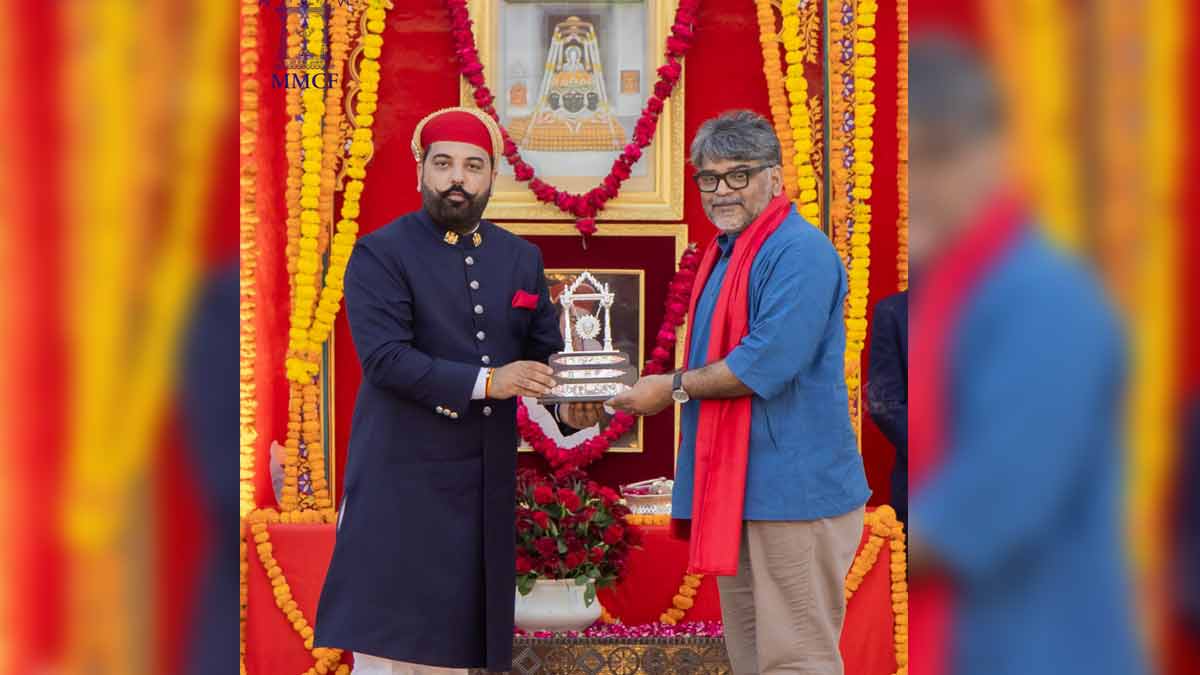
MUMBAI- Kamlesh Singh just turned a lifetime of sharp words into a shiny shield because when journalism wakes up a society, even the Maharana of Mewar wants to pin a medal on it.
The Maharana of Mewar Charitable Foundation (MMCF) conferred its prestigious Haldi Ghati Award on Kamlesh Singh, a senior editor at the India Today Group, during a ceremony in Udaipur on 15 March 2026. The national award, instituted in 1981-82, recognises “work of permanent value that initiates an awakening in society through the medium of journalism.”
Singh, who leads several editorial initiatives including Aaj Tak Radio, the Teen Taal community and The Lallantop, was presented the honour by Lakshyaraj Singh Mewar, Managing Trustee of MMCF. The citation highlighted his three decades of contributions to Indian media, innovations in digital journalism, mentoring young reporters, and his popular podcast persona “Tau” on Teen Taal, which fosters thoughtful public discourse.
The Haldi Ghati Award, named after the historic Battle of Haldighati symbolising valour and resilience, is one of four national awards given annually by MMCF. Past recipients include Tavleen Singh, Piyush Pandey and Raj Chengappa.
Other honourees this year included Padma Vibhushan Pt Hari Prasad Chaurasia, Vedamurti Devvrat Rekhe, Treeman of India Marimuthu Yoganathan, Vir Chakra Capt Rizwan Malik, and US-based researcher Molly Emma Aitken, who received the Colonel James Tod Award for contributions to understanding Mewar’s spirit and values.
In an era where headlines often shout louder than substance, the MMCF quietly reminded everyone that real journalism isn’t about noise, it’s about the quiet, persistent work that stirs society awake, one thoughtful story at a time.







