I&B Ministry
President Pranab Mukherjee outlines Govt’s policy initiatives in electronic media & IT

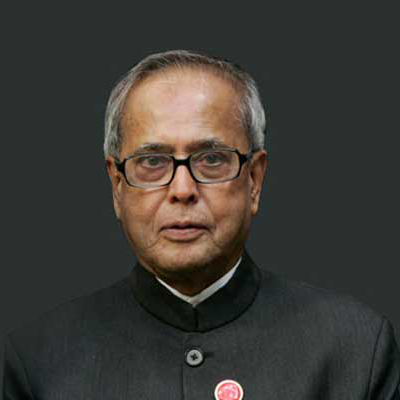
NEW DELHI: President Pranab Mukherjee has said that the government is committed to deeper penetration of electronic media in remote and distant areas. In his address to the joint sitting of Parliament at the start of the Budget Session, he said auctions will be conducted for 135 vacant channels in 69 existing cities of FM Phase-II as part of first batch of FM Phase-Ill.
In an hour-long speech that outlined the policies of the government, he said that this would also facilitate migration of FM Phase-II to FM Phase-Ill.

Mukherjee said that this will take private FM radio to cities having population of more than 100,000 and border towns of Jammu and Kashmir, North-eastern region and island territories in a phased manner.
He said the government had envisioned an ambitious umbrella programme, Digital India, to prepare the country for technology based transformation and citizen centric transparent governance with service orientation. Aadhar based attendance system and Jeevan Praman, Aadhar based Digital Life Certificate Portal, had shown that innovative use of technology can make enormous difference.
Measures were being taken to accomplish digital inclusion in rural areas, small towns, north-east and other remote areas, opening up immense job opportunities in these areas. Promoting manufacturing of electronic goods has been an area of thrust, he added.
According to him, the government was committed to using space technology and its applications in governance, social and economic development and resource management. A satellite was to be launched shortly for the use of SAARC countries to foster greater partnership and development of South Asian Region.
In this context, he referred to Mangalyaan, which had been placed in the Mars Orbit on 24 September, 2014, making India the first country to do so in the first attempt. The country also successfully launched the first experimental flight of GSLV Mark-Ill on 19 December, 2014, which will enable launch of heavier satellites in the near future.
The Government had taken major initiatives for improving ‘Ease of Doing Business’ through simplification and rationalization of existing rules and procedures, Mukherjee said. Leveraging IT and use of modern technologies is a key strategy. Single window in a Hub-Spoke model is being made a reality.
He said Maximum Governance, Minimum Government was the guiding principle and with an aim to take governance to the doorstep of the poorest of the poor in remotest areas, focus is on simplification of official procedures and reducing the decision-making levels in government by leveraging technology. The system of Group of Ministers has been dispensed with, and emphasis is on swift decision-making. While introducing stricter and sterner measures to deal with corruption; effort is being made to ensure that sufficient safeguards are in place to protect bona fide decisions taken in public interest and to inspire confidence in the civil service.
The government was firmly committed to engage people in the process of governance and policy-making. A new initiative My Gov Online Platform has been launched. This platform has ensured public participation in decision-making and ideation of various national flagship programmes like Swachh Bharat Mission, Namami Gange, Pradhan Mantri Jan Dhan Yojana and NITI Aayog.
The Government had formulated the National Sports Talent Search Scheme for encouraging sporting talent amongst children in the age group of 8 to 12 through National Sports Development Fund and Target Olympic Podium.

I&B Ministry
Doordarshan, ICCR sign MoU to boost global reach of Indian culture
Pact taps TV, radio and digital platforms to take cultural content worldwide
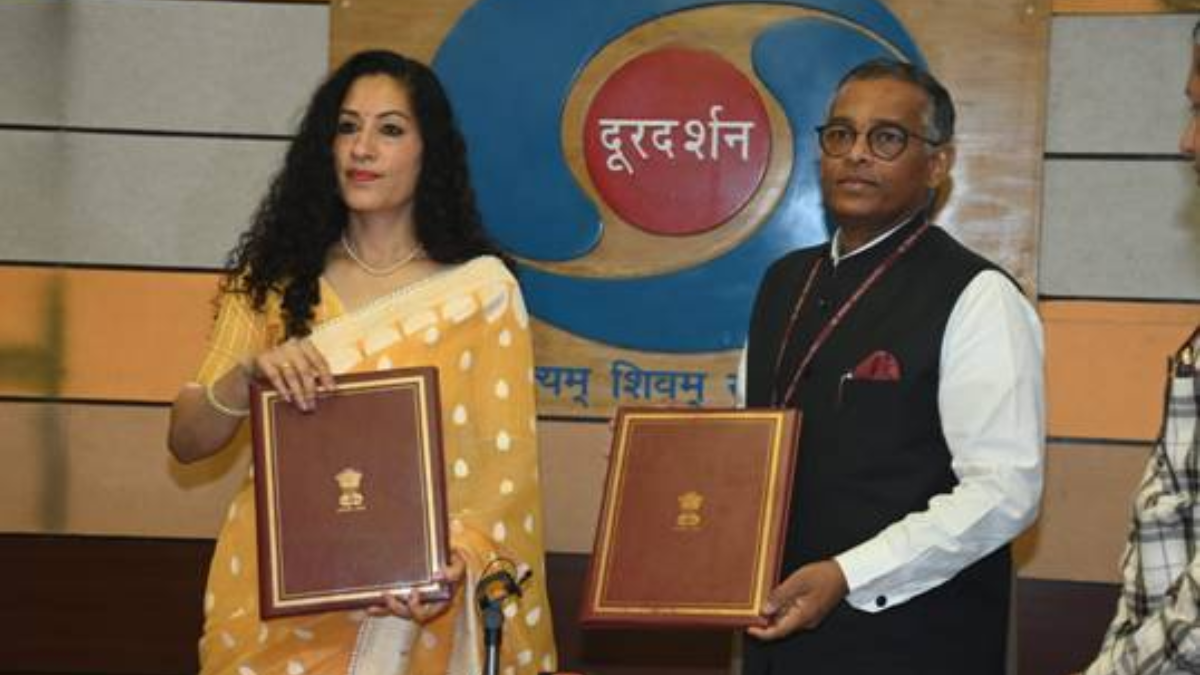
NEW DELHI: In a move aimed at taking India’s cultural story further across borders, Doordarshan under Prasar Bharati has signed a memorandum of understanding with the Indian Council for Cultural Relations to expand the global reach of Indian cultural content.
The agreement, signed on April 7 at Doordarshan Bhawan, brings together the content strength of ICCR and the wide broadcast network of Doordarshan, spanning television, radio and digital platforms.
Under the partnership, ICCR will provide a steady stream of cultural programming, including performances and events organised by Indian missions abroad such as embassies, consulates and cultural centres. Doordarshan will handle production, coverage and distribution, ensuring that these programmes find audiences not just in India but across the world.
The collaboration also opens the door for recorded cultural content from overseas missions to be aired across multiple platforms, including OTT and social media, making Indian art, music and heritage more accessible to global viewers.
A notable feature of the MoU is joint ownership of content rights in perpetuity, including digital rights. This allows both organisations to archive and reuse material over time, building a long-term cultural repository while maximising reach. Doordarshan will also support pre-event promotion and cross-platform visibility to drive engagement.
Speaking at the signing, Doordarshan director general K. Satish Nambudiripad and Indian Council for Cultural Relations director general K. Nandini Singla highlighted the potential of the partnership to strengthen India’s cultural diplomacy through modern media channels.
The agreement, initially valid for three years, also allows Doordarshan to explore monetisation opportunities from the content generated, adding a commercial layer to cultural broadcasting.
As India looks to blend tradition with technology, this partnership signals a clear intent to make its cultural voice not just heard, but seen and streamed across the globe.







