I&B Ministry
Prasar Bharati’s grants-in-aid gets substantial increase, first-time separate allocation for strengthening broadcast services

NEW DELHI: The grants-in-aid for Prasar Bharati have gone up again for the third time over the last few years from the revised estimates of Rs 2708.29 crore in 2015-16 to Rs 3056.86 for 2016-17.
In addition, there is a grant-in-aid of Rs 52 crore to Doordarshan’s Kisan Channel, which is double that of aid last year.
In addition, there is an investment of Rs 200 crore in the pubcaster, which is the same as last year. Though the previous government had stopped investments in the pubcaster, Finance Minister Arun Jaitley had re-introduced this in 2015-16 after a gap of two years.

An explanatory note says the grants-in-aid is being provided to cover the gap in resources of Prasar Bharati in meeting its revenue expenditure.
The grant in aid for Prasar Bharati in 2015-16 was Rs 2824.55 crore for 2015-16, apart from the grant-in-aid of Rs 26.26 crore in the revised estimates (as against the budgetary allocation of Rs 45 crore) on Kisan Channel.
Expenditure on salaries of Prasar Bharati has fallen on the shoulders of the Government since all Prasar Bharati employees who were in employment as on 5 October, 2007 have been given deemed deputation status.
The total budget of the Information and Broadcasting Ministry has been raised to Rs 4083.63 crore, which is a small raise in comparison to Rs 3711.11 crore for 2015-16, though the revised estimates for the year show an expenditure of Rs 3588.58 crore.
A major effort this year was to reduce the number of heads under which allocations have been made over the years. For example, there are no separate allocation for film certification or Press Information Services as in previous years.
Interestingly, there is a separate allocation of Rs 30.83 crore for strengthening of broadcasting services, which includes Rs 28.83 on information and publicity and the balance on building and machinery. This provides for Electronic Media Monitoring Centre, contribution to the Asian Institute of Broadcasting Development, Community Radio movement in India, Digitalisation, Building and Machinery and private FM Radio Stations.
The allocation under ‘Secretariat – Social services’ has been cut down to Rs 70.32 crore as against the budgetary allocation of Rs 235.23 crore in 2015-16 as the revised estimates show an expenditure of just Rs 91.44 crore. The explanatory note says that from 2016-17, this covers the expenditure under Non-Plan activities only which includes provision for Main Secretariat and Principal Accounts office.
The allocation for the film sector has been raised to Rs 268.53 crore and covers art and culture, information and publicity, which takes the maximum share of Rs 213.64 crore. Subjects under this head include the National Film Heritage Mission, anti-piracy measures, promotion of Indian cinema overseas, production of films and documentaries, and setting up a centre of excellence for animation, gaming and visual effects. The explanatory note adds that Secretariat – Social services also covers expenses on development of community radio, and development support to the north-east as well as Jammu and Kashmir and ‘other identified areas.’
Thus, there is an allocation of Rs 33.31 crore for Mass Communications, which covers (a) Indian Institute of Mass Communication, an autonomous body, which imparts training in mass media and conducts courses in journalism, and (b) New Media Wing, which collects basic information on subjects of media interest for providing assistance to the Ministry and to its Media Units, Indian Missions abroad and newspapers and media agencies.
There is another provision of Rs 491.78 crore, which includes expenditure (a) Directorate of Advertising and Visual Publicity – for planning and executing publicity campaigns through advertising and other printed materials, as well as through Radio and Televisions, exhibitions and other outdoor publicity media; (b) Press Information Bureau – which serves as a link between the Government and the Press and attends to the publicity and public relations requirements of various Ministries/Departments, including grants to Press Council of India, a statutory organisations seeking to preserve press; (c) Field Publicity – covering expenditure of Directorate of Field Publicity and its district level field units engaged in inter-personal developmental communications through films shows, live media programmes, photo displays and seminars; (d) Song and Drama Division – for creating awareness amongst the masses, particularly in rural areas, about various activities of national developments of units spread all over the country; (e) Publications – for publishing priced books, journals and other printed material in English, Hindi and regional languages on a wide variety of subjects and ‘Employment News/Rozgar Samachar;’ (f) Information Wing Plan Schemes – for training, international media programme, Policy related studies etc.; and (g) Photo Division.
For the seventh year in a row, the government has not announced any investment in the National Film Development Corporation (NFDC).
There is a marginal increase in the lump sum provision for projects/schemes for development of North-eastern areas including Sikkim to Rs 80 crore against Rs 75 crore last year.






I&B Ministry
IT Rules tweaks are clarificatory, not expansion of powers: MeitY
Govt signals flexibility as platforms push for clarity on user content rules
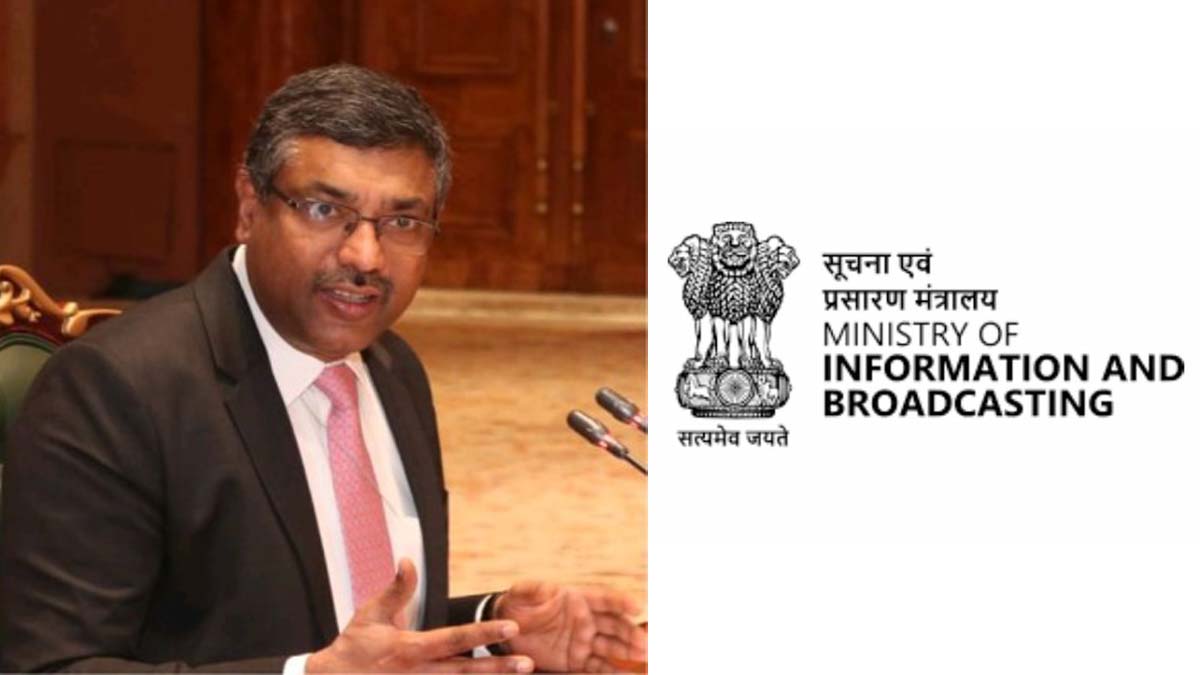
NEW DELHI: The Centre has sought to dial down concerns over its proposed amendments to the IT Rules, with Ministry of Electronics and Information Technology secretary S Krishnan asserting that the changes are intended as clarifications rather than an expansion of regulatory powers.
Pushing back against criticism from platforms and civil society, S Krishnan said the amendments “do not in any way actually give us wider powers” and are meant to remove ambiguity in how existing provisions are applied. He added that the trigger came largely from within the ecosystem, with intermediaries themselves seeking clearer guidance on compliance, takedowns and record preservation.
At the heart of the debate is the growing friction between platforms and policymakers over responsibility for user-generated content. Intermediaries have argued that they should not be treated on par with publishers, particularly when content is created and uploaded by users. Krishnan acknowledged this concern, noting that “a sharper distinction” between user content and publisher content is needed and is currently under examination.
The issue becomes more complex in enforcement scenarios. While registered publishers can be directly asked to modify or remove content, intermediaries often lack control over the original creator. “In such cases, the intermediary cannot direct those changes,” Krishnan explained, underlining the need for procedural nuance.
Another key proposal under discussion is to bring user-generated news and current affairs content within a more unified regulatory ambit, potentially under the Ministry of Information and Broadcasting. The move follows suggestions that a single authority should handle such content, regardless of whether it originates from a publisher or an individual user.
Even as the government frames the amendments as a tidy-up exercise, fault lines remain. Industry players have flagged concerns over compliance burdens, especially for smaller businesses, and questioned whether advisories could effectively become binding without explicit legislative backing. Krishnan said the government is mindful of these risks and is exploring ways to ease obligations, including possible relaxations under certain provisions.
The ministry is also considering consolidating multiple advisories and guidelines into a more structured framework, a step widely seen as addressing long-standing confusion over what platforms are expected to follow.
On takedowns, the government has reiterated that due process will remain unchanged. Krishnan stressed that actions will continue to be governed by established procedures, with reasons recorded and review mechanisms in place. He also pointed to the surge in deepfakes and synthetic media as a factor behind rising content disputes, calling it a “scale challenge” for regulators.
Interestingly, Krishnan also framed social media platforms as commercial entities rather than pure vehicles of free expression, hinting at a broader shift in regulatory thinking as platform economics come into sharper focus.
With stakeholders seeking more time and, in some cases, a rollback of the proposals, the government has kept the consultation process open-ended. Krishnan said further revisions remain on the table, signalling a willingness to adapt the draft based on feedback.
For now, the message from MeitY is clear: the rules may not be tightening in intent, but the effort to define them more clearly is well underway.






