News Headline
Prasar Bharati CEO Jawhar Sircar pooh-poohs ‘budget hike’ reports

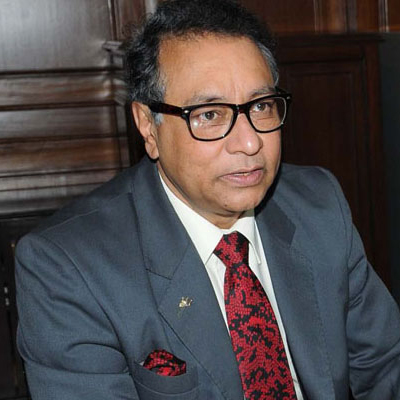
NEW DELHI: The Indian pubcaster has been a soft target since time immemorial. In the light of media articles citing ratings data by the Broadcast Audience Research Council (BARC) India, which say that Doordarshan’s viewership has been poor despite a hike in budget and hiring of expert consultants, Prasar Bharati CEO Jawhar Sircar pooh-poohs it all.
In an exclusive interaction with Indiantelevision.com, Sircar informs that the pubcaster has not even received full reimbursement of government salaries for employees recruited prior to October 2007.

Sircar goes on to point out that as per a decision by the then Group of Ministers (GoM), which was looking into the financial status of Prasar Bharati, it had been decided during the tenure of the previous government that the Central Government will bear the salaries and other allowances of all employees in service as on 5 October, 2007.
Sircar says, “As a result, our own revenue funds that are meant for ‘Content’ have gone to meet this salary gap.” He said that Prasar Bharati had been stressing this fact for the past three years. However, it seems like its voice fell on deaf ears.
At the outset, Sircar says, “I still cannot understand why some people are always raising this question of “hike in budget”? What budget? All the money we get is for paying salaries of 29,000 government servants, who were recruited by the Information and Broadcasting Ministry some 30 to 35 years ago. The government has to pay their salaries as long as they are in service and Prasar Bharati is mainly their administering body and the Ministry passes this salary bill on to Prasar Bharati, who had to engage these persons to disburse their government-scale salaries, without any leeway or choice.”
He added that while the Ministry used to set aside a sum of approximately Rs 80 – 100 crore for several years for creating content for “special areas,” this funding had also stopped, leaving behind several liabilities.
With the choked fund pipeline for content, Sircar asks, “How does content improve? One way out is to offer our ‘time bands’ to external producers provided they cover our costs.”
“We are waiting patiently for our funds to be returned. Since these issues are coming out publicly through vague terms like ‘an I&B Ministry official said,’ I would welcome an open debate on this question though we prefer to discuss these matters across the table. But after all, DD is a public institution and it is ready to face any public scrutiny,” Sircar opines.
No longer in a mood to take things lying down, Sircar posed a few pertinent questions:
1) Can we cut down costs on the huge infrastructure, some of which appears to be meaningless?
2) Do we really need to have analogue TV transmission in this satellite age?
3) Why do we spend so much to strengthen short wave and medium wave radio, when it is FM that is in demand?
“I have raised these questions as no one was raising them and many in this organization are not happy at all,” he adds.
Specifically referring to the media reports, he says, “If the programmes that DD has paid for (‘Commissioned’ or ‘SFC’ in DD’s language) do not appear to be attracting enough eyeballs, then we have to reach out to better producers like we used to do for Mahabharat, Ramayan and Buniyaad, etc. DD did not produce its own programmes then or did not decide to pay or commission producers to make programmes for DD. We are seriously thinking about it. But we will have to go over this option very carefully.”
Drawing a comparison between the British Broadcasting Corporation (BBC) and the Indian pubcaster, Sircar says, “There is a box in the news that advises DD to stay out of the numbers game and become a popular brand distinction like BBC. Do you have any idea of what this means? Every British citizen pays Rs 15,000 per year for the BBC’s quality programmes. But in India, Prasar Bharati struggles to earn its ‘content funds’ through content generated revenue against fierce competition.”
According to Sircar, as per calculations done by the Sam Pitroda Committee, in India the cost per person works out to a mere 31 cents or approximately Rs 20 by way of support to Doordarshan and All India Radio (AIR). “BBC gets Rs 35,000 crore per year from the exchequer,” he adds.
Signing off, Sircar says, “So why do we make such meaningless comparisons and indulge in wishful thinking?”






NEW DELHI: Hamdard Laboratories gathered a cross-section of India’s achievers in New Delhi on Friday, handing out the Hakeem Abdul Hameed Excellence Awards to figures who have left their mark across healthcare, education, sport, public service and the arts.
The ceremony, attended by minister of state for defence Sanjay Seth and senior officials from the ministry of Ayush, celebrated individuals whose work blends professional success with a sense of public purpose. It was as much a roll call of achievement as it was a reminder that influence is not measured only in profits or podiums, but in people reached and lives improved.
Among the headline awardees was Alakh Pandey, founder and chief executive of PhysicsWallah, recognised for turning affordable digital learning into a mass movement. On the sporting front, Arjuna Awardee and kabaddi player Sakshi Puniya was honoured for her contribution to the game and for pushing women’s participation onto bigger stages.
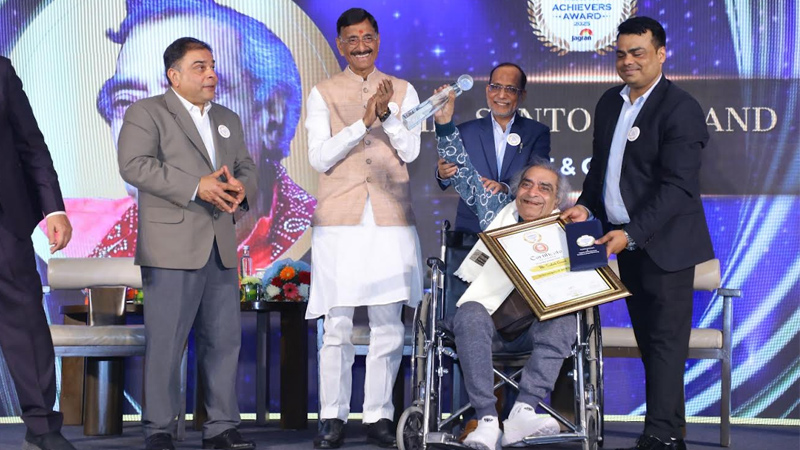
The cultural spotlight fell on veteran lyricist and poet Santosh Anand, whose songs have echoed across generations of Hindi cinema. At 97, Anand accepted the honour with characteristic humility, reflecting on a life shaped by perseverance and hope.
Healthcare honours spanned both modern and traditional systems. Manoj N. Nesari was recognised for strengthening Ayurveda’s place in national and global health frameworks. Padma shri Mohammed Abdul Waheed was honoured for his research-backed work in Unani medicine, while padma shri Mohsin Wali received recognition for his long-standing contribution to patient-centred care.
Education and social development also featured prominently. Padma shri Zahir Ishaq Kazi was honoured for decades of work in education, while former Meghalaya superintendent of Police T. C. Chacko was recognised for public service. Goonj founder Anshu Gupta received an award for his dignity-centred rural development initiatives, and the Hunar Shakti Foundation was honoured for empowering women and young girls through skill development.
The Lifetime Achievement Award went to former IAS officer Shailaja Chandra for her long career in public healthcare and governance, particularly in the traditional systems under Ayush.
Speaking at the event, Hamdard chairman Abdul Majeed said the awards were a tribute to those who combine excellence with empathy. “These awardees reflect Hakeem Sahib’s belief that healthcare, education and public service must ultimately serve humanity,” he said.
Minister Seth struck a forward-looking note, saying India’s young population gives the country a unique opportunity to become a global destination for learning, health and wellness by 2047.
The ceremony also featured the trailer launch of Unani Ki Kahaani, an upcoming documentary starring actor Jim Sarbh, set to premiere on Discovery on 11 February.
Instituted in memory of Unani scholar and educationist Hakeem Abdul Hameed, the awards have grown into a national platform that celebrates those building a more inclusive and resilient India. For one evening at least, the spotlight was not just on success, but on service with substance.






