News Headline
Prasad extols CAS advantages in RS

NEW DELHI: “Conditional access system will bring a smile on the face of every consumer.”
This is how information and broadcasting minister Ravi Shankar Prasad described addressability in cable homes and its benefits to Elders in the Upper House of the Indian Parliament (Rajya Sabha)
Defending the government’s stand on CAS and its imminent introduction in a phased manner in four metros of the country — for which the Opposition and some allies attacked it — Prasad hailed CAS as a “march of technology.” Pleading his case, he said, “Allow this to go on, I request the Elders.”
In a statement in the Rajya Sabha in reply to a calling-attention notice from the Congress Party’s Suresh Pachouri, government ally Shiv Sena’s Sanjay Nirupam and others, the minister detailed the genesis of CAS and its implementation.
The minister denied that there is any confusion in the implementation of CAS for viewing pay channels for which a set-top box would be needed.
CAS is being sought to be implemented area-wise in the cities of Kolkata, Chennai, Mumbai and Delhi from 1 September. Earlier, according to a notification the rollout was to have happened from 14 July, a deadline that could be adhered to because confusion over availability of boxes and the pricing of pay channels.
Referring to CAS, Prasad said the government has been in constant dialogue with the various stakeholders in the industry and out of a concern for the consumers an earlier deadline of CAS rollout was postponed.
He also dismissed the claims made by Opposition members, Pachouri and Nirupam on outflow of forex from the country owing to import of boxes and creation of monopolies. Pointing out that CAS would lead to a “great electronic revolution in the country”, Prasad said that tax sops extended to local manufacturers would see boxes being manufactured here “from Chandni Chowk (in Delhi) to Ludhiana (in Punjab).”
“Once CAS starts rolling a lot of initiatives will come in,” the minister said, adding that Indian entrepreneurs first assess a situation before jumping onto the bandwagon.
Enumerating the names of established global companies (NDS, Scientific Atlanta, Conax, Nagravision, etc) that are supplying CAS technology to India, the I&B minister clarified that interoperability is something that has not worked elsewhere in the world and is also unlikely to work here in India. In Europe interoperability (of the smart card needed for CAS) was tried out in a limited way, but it did not work, Prasad said, adding, “In India, interoperable set-top boxes (are) commercially not available.”
The minister, who gained in confidence once he started speaking after several hours of debate in Rajya Sabha on CAS and Star News issues, went on to say that CAS may be the prescription for many an ill like under-declaration of subscriber base by cable ops, lack of quality service and the cleavage that exists between the various stakeholders in the industry.
“CAS will bring a smile on the face of every consumer,” he triumphantly said, even as Opposition members in the House continued to rile the government on the arguments being put forward in defence of CAS.
Earlier, the government came under severe attack from its ally Shiv Sena and main opposition Congress for its uplinking policy that demanded that any foreign channel violating norms should not be given uplinking facility and the chaos on CAS.
Both Pachouri and Nirupam criticised the CAS policy saying it had only created “confusion and anarchy” and sought to know how the government was going to ensure that the consumers would not have to shell out more than what they were paying to cable operators now.
Nirupam wondered what was the need for introduction of CAS when the government had already decided to move on to DTH system. He feared that 15 lakh persons employed in cable TV industry would become jobless resulting in social unrest.





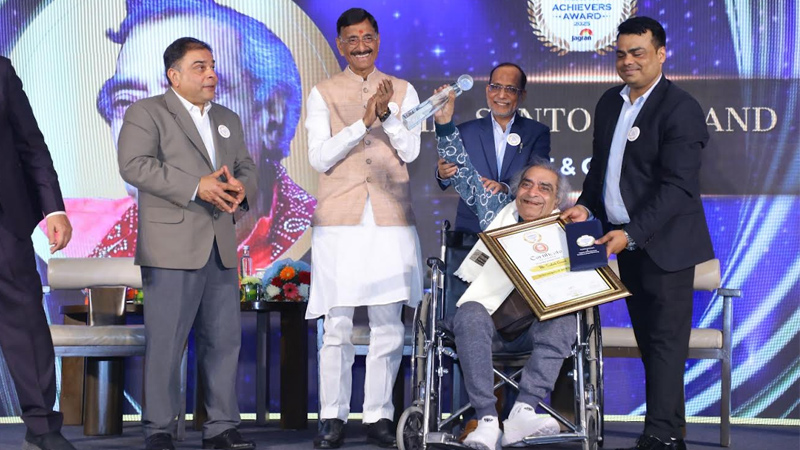
NEW DELHI: Hamdard Laboratories gathered a cross-section of India’s achievers in New Delhi on Friday, handing out the Hakeem Abdul Hameed Excellence Awards to figures who have left their mark across healthcare, education, sport, public service and the arts.
The ceremony, attended by minister of state for defence Sanjay Seth and senior officials from the ministry of Ayush, celebrated individuals whose work blends professional success with a sense of public purpose. It was as much a roll call of achievement as it was a reminder that influence is not measured only in profits or podiums, but in people reached and lives improved.
Among the headline awardees was Alakh Pandey, founder and chief executive of PhysicsWallah, recognised for turning affordable digital learning into a mass movement. On the sporting front, Arjuna Awardee and kabaddi player Sakshi Puniya was honoured for her contribution to the game and for pushing women’s participation onto bigger stages.

The cultural spotlight fell on veteran lyricist and poet Santosh Anand, whose songs have echoed across generations of Hindi cinema. At 97, Anand accepted the honour with characteristic humility, reflecting on a life shaped by perseverance and hope.
Healthcare honours spanned both modern and traditional systems. Manoj N. Nesari was recognised for strengthening Ayurveda’s place in national and global health frameworks. Padma shri Mohammed Abdul Waheed was honoured for his research-backed work in Unani medicine, while padma shri Mohsin Wali received recognition for his long-standing contribution to patient-centred care.
Education and social development also featured prominently. Padma shri Zahir Ishaq Kazi was honoured for decades of work in education, while former Meghalaya superintendent of Police T. C. Chacko was recognised for public service. Goonj founder Anshu Gupta received an award for his dignity-centred rural development initiatives, and the Hunar Shakti Foundation was honoured for empowering women and young girls through skill development.
The Lifetime Achievement Award went to former IAS officer Shailaja Chandra for her long career in public healthcare and governance, particularly in the traditional systems under Ayush.
Speaking at the event, Hamdard chairman Abdul Majeed said the awards were a tribute to those who combine excellence with empathy. “These awardees reflect Hakeem Sahib’s belief that healthcare, education and public service must ultimately serve humanity,” he said.
Minister Seth struck a forward-looking note, saying India’s young population gives the country a unique opportunity to become a global destination for learning, health and wellness by 2047.
The ceremony also featured the trailer launch of Unani Ki Kahaani, an upcoming documentary starring actor Jim Sarbh, set to premiere on Discovery on 11 February.
Instituted in memory of Unani scholar and educationist Hakeem Abdul Hameed, the awards have grown into a national platform that celebrates those building a more inclusive and resilient India. For one evening at least, the spotlight was not just on success, but on service with substance.








