iWorld
PPL & Novex: The music royalty collection question


Mumbai: Are music royalty collecting agencies like Novex Communications and Phonographic Performance Ltd (PPL) entitled to collect performance royalties on behalf of their clients from organisations such as hotels and others? Well, the Bombay high court (court) has adjudicated (decision) that they are in a bunch of matters, namely Novex Communications vs Trade Wings Hotels Ltd, Comip suit No. 264 of 2022 and others (said matters), despite them not being registered as a copyright society. A single judge bench passed a detailed judgement on 24 January 2024 in favour of the two (plaintiffs).
In 2022, the duo had filed a bunch of suits against various third parties (defendants) seeking injunctions against them from using the sound recordings, wherein the former own copyright by way of assignments from the respective producers (said songs), without obtaining licences from the plaintiffs.
The defendants raised a preliminary issue that the PPL and Novex cannot carry on the business of licensing without being registered as a copyright society under section (s.) 33 of the Copyright Act, 1957 (“Act”).

Rival contentions:
Plaintiffs inter alia contended the following:
(i) As per s.18(2), Plaintiffs being the assignees are the owners of copyright in the said songs. Further, as per s.30, the Plaintiffs, being the owners / duly authorised agents of the owners, are entitled to grant licenses;
(ii) Relying on compulsory license and statutory license provisions under s. 31A to D, Plaintiffs contended that these provisions do not mention copyright societies which implies that copyright licensing business need not be done only through a registered copyright society;
(iii) Chapter VII relating to copyright societies which was introduced by 1994 amendment to the Act did not affect the rights of a copyright owner to issue licenses for its work. This is corroborated by s.34 of the Act which allows a copyright owner to withdraw itself from the copyright society. Thus, the copyright society provides an additional option to the owners to grant licenses through a copyright society in addition to (and not in exclusion to) issuing licenses on their own;
(iv) S.33(1) of the Act which provides that no ‘person’ shall carry on the business of licensing without being registered as a copyright society does not include the ‘owner’ of a work. If ‘owner’ is deemed to be included within the term ‘person’, then s.30 which empowers an owner to issue license will be rendered negatory;
(v) Two conflicting provisions (s.30 which entitles an owner to grant license and s.33 which entitles only a registered copyright society to grant license) should be reconciled by restricting each to its own object. Relying on the headings of s. 30, 33 and 34, Plaintiffs contended that all that is required is if a copyright society wants to do business of issuing licenses, then it must be registered as a copyright society as per s.33 and this does not curtail the owner’s right to license under s.30;
(vi) The term ‘business’ in s.33 of the Act should be given a contextual meaning to read as ‘business of issuing licenses in respect of works which are not owned by such person’. If the term ‘business’ is given a wider meaning, then 99 per cent of the ownership rights will be taken away and the copyright owners would only be able to license their rights for philanthropy;
(vii) Considering there is an apparent conflict between s.30 and 33 of the Act, s.30 is the leading provision and s.33 is a subordinate provision which must give way to s.30;
(viii) The second proviso was needed since the Parliament was clear that s.33(1) did not prevent all owners including authors from licensing their copyrights for profit and since parliament wanted to draw distinction between the authors and the owners the second proviso became necessary. Hence it is specifically mentioned that licensing by the authors of the underlying works will only be done by the copyright society; ‘Parliament is deemed to know the law and therefore the fact that the Parliament has amended s.33(1) in 2012 by adding the second proviso shows that Parliament itself did not think s.33(1) barred every owner of a copyright from carrying on the business of licensing his works’.
(ix) As per second proviso to s.33(1), in case of underlying works forming part of sound recordings, the rights of owners to grant licenses have been taken away. Such a prohibition is not there for sound recordings. This means that rights of owners of sound recordings to grant licenses have not been curtained. With respect to Madras High Court order in Novex v DXC Technology (“DXC case”), the Madras High Court wrongly applied the second proviso to sound recordings;
(x) Defendants are rank infringers and they have no plausible defense;
In response, the defendants inter alia contended the following:
(i) The term ‘person’ in s.33(1) of the Act includes ‘owner’. Thus, without registration as a copyright society, no one can carry on the business of licensing;
(ii) There is no conflict between s.30 and 33 of the Act. s.30 provides a right to an owner to grant license. Once the owner carries on business of licensing, then it has to first seek registration as a copyright society. Assuming there is any conflict, s.33 being a special provision must prevail over s.30 which is a general provision;
(iii) S.33 does not take away the right of an owner to grant license as contended by the Plaintiffs. It merely regulates the same by way of providing an obligation to register as a copyright society;
(iv) 1st proviso to s.33 which exempt owners in their ‘individual capacity’ from registration as a copyright society does not apply to Plaintiffs who are not acting in their individual capacity;
(v) The assignment deeds in favour of the Plaintiffs are executed to circumvent the requirement of registration as a copyright society;
(vi) Plaintiffs’ acts are in contravention of s.33(1), and therefore, they are not entitled to any reliefs from this Hon’ble Court;
(vii) PPL was earlier registered as a copyright society and it is still trying to obtain registration. This shows that PPL is aware that it is required to be registered as a copyright society;
(viii) If Plaintiffs’ contention is accepted, then s.33(1) would be rendered redundant;
(ix) The law intends that there must be a single copyright society for one class of work to ensure a single window for end-users;
(x) The law clearly seeks to address a mischief, i.e., of a person carrying on the business of licensing without regulation. Accordingly, Heydon’s Rule or Mischief Rule must be applied to suppress the mischief that was intended to be remedied, especially when Parliament has consciously made an amendment to the law;
(xi) The Supreme Court’s decision in “ENIL v Super Cassette Industries Ltd”, the Parliamentary Debates and extracts from Copinger make it amply clear that the object of copyright societies is not just to promote rights of owners but to balance it with public interest by protecting the interests of users.
Decision:
After considering the rival contentions and provisions of the Act, the Court observed as follows:
S.30 empowers an owner / duly authorised agent of an owner to grant license;
The idea of a copyright society is to assist the owner and not take away rights from an owner.
As per s.34(1)(b), an owner can either issue license through a registered copyright society or withdraw its authorisation to copyright society and grants license on its own;
Chapter VII relating to copyright society does not take away the rights of owners to grant license. It only gives a choice to the owner to either exploit its copyright on its own or through a copyright society;
The word ‘person’ in s.33(1) does not include the ‘owner’, otherwise s.33(1) would take aware the right of owner under s.30;
S.33(1) applies to those entities which carry on the business of licensing of work which is owned by ‘others’;
S.30 is the leading provision and s.33(1) is the subordinate provision which must give way to s.30;
DXC case overlooked s.30 and wrongly applied second proviso of s.33(1) which relates to underlying works;
In view of the above, the court held that the plaintiffs are entitled to carry on the business of copyright licensing without being registered as copyright societies. The court further clarified that the decision will also apply to ‘exclusive licensee’ as under s.54, the ‘owner of copyright’ also includes an ‘exclusive licensee’.
Comments:
The court has analysed the provisions of the act in detail and passed the decision on a long pending question. However, the decision is diametrically opposite to the detailed judgment in DXC case against which appeals are pending before the division bench of the Madras High Court. It remains to be seen if the decision is carried in appeal. Considering the differing stands taken by the courts, it would be in the interest of all that the question is tested and answered once and for all, by the Hon’ble Supreme court.
Written by Anushree Rauta – equity partner- head of media and entertainment practice, Shwetank Tripathi – associate partner, Shrija Verma- associate, and Savan Dhameliya – associate.
This is an article sourced from the Indiantelevision.com group legal representative firm, ANM Global, and the group need not subscribe to the views contained in it.






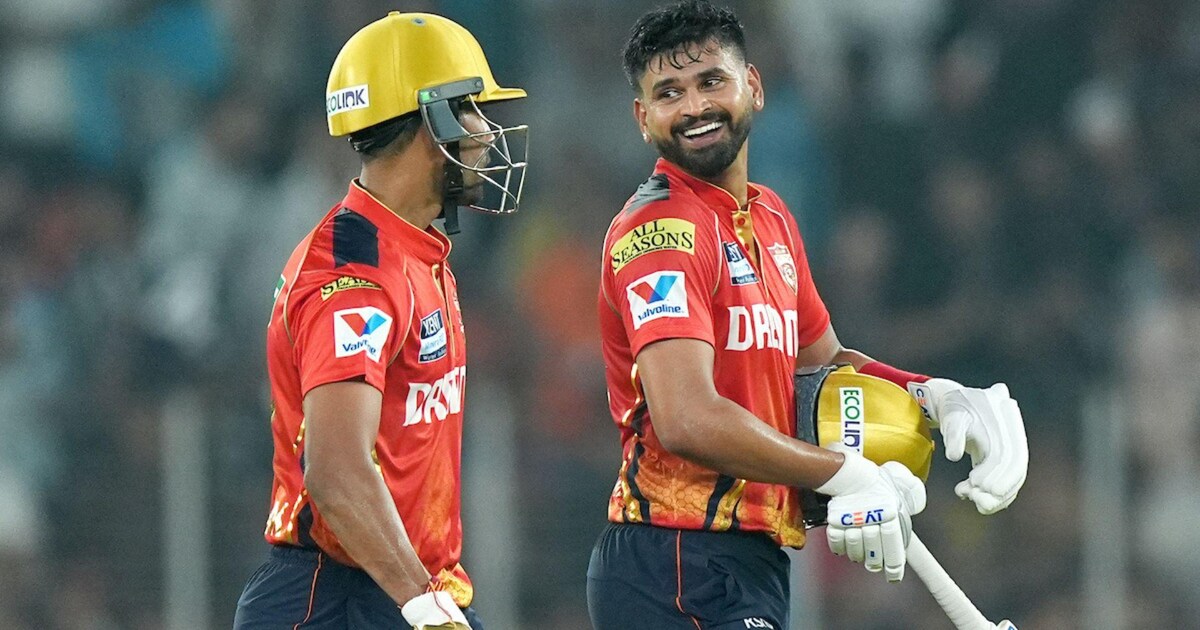
MUMBAI: If cricket were a binge-worthy series, this one just dropped its most explosive pilot yet. The opening weekend of the 2026 edition of the Indian Premier League has come out swinging, smashing records across both television and digital platforms and reaffirming the tournament’s unmatched pull in India’s sporting and media landscape.
Backed by two high-octane matches featuring 200-plus run chases, the tournament delivered a combined reach of over 515 million viewers across linear TV and digital platforms via JioStar’s broadcast ecosystem, including Star Sports and JioHotstar. More tellingly, engagement surged alongside reach, with total watch-time hitting 32.6 billion minutes, a sharp 26 per cent jump over the opening weekend of the previous season.
The numbers reveal a deeper shift in how India watches cricket. Connected TV (CTV) consumption rose by 30 per cent, while peak concurrency on digital platforms jumped 61 per cent, signalling a growing appetite for shared, big-screen streaming experiences. On traditional television, the momentum held strong, with TV ratings (TVR) climbing 24 per cent compared to earlier seasons’ opening matches.
A key driver of this spike has been the evolution of the viewing experience itself. This season introduced differentiated feeds, most notably a Hindi CTV broadcast featuring cricketing voices such as Ravichandran Ashwin, Suresh Raina, Harbhajan Singh, Virender Sehwag and Irfan Pathan. Blending expert analysis with a watch-along format, the feed has added a conversational, almost second-screen feel without requiring viewers to leave their screens.
According to JioStar CEO for Sports Ishan Chatterjee, at the opening weekend underscores not just scale but also the depth of engagement that live cricket continues to command. He noted that the combination of large-screen viewing and digital interactivity is creating a more immersive and personalised experience, while also delivering tangible outcomes for brand partners.
From the league’s perspective, the early numbers point to a tournament that continues to reinvent itself. Arun Singh Dhumal, Chairman of the IPL, said the strong start reflects how high-quality cricket paired with enhanced viewing formats is resonating with audiences nationwide, while Board of Control for Cricket in India secretary Devajit Saikia highlighted the “quality of engagement” as a key takeaway, not just the scale.
Commercially too, the opening weekend signals robust advertiser confidence. The broadcast is led by co-presenting sponsors including Google (Search AI Mode), Campa Energy, and Havells & Lloyd, alongside co-powered partners such as Birla Opus, Hero Motocorp and Amazon. A long tail of associate sponsors from OpenAI and Asian Paints to Flipkart and Amul further reflects the league’s unmatched ability to aggregate advertiser interest at scale.
Taken together, the opening weekend numbers are less a spike and more a statement. With 515 million viewers, 32.6 billion minutes of watch-time, and double-digit growth across formats, IPL 2026 has not just started strong, it has set the tone for a season that looks poised to push the boundaries of both sport and spectacle.






