iWorld
Powered by Jio, RIL touches $100 bn market cap

MUMBAI: Reliance Industries becomes the second company to hit $100 billion market capitalisation after TCS in 2018. Previously, in 2008 too, the company has hit the $100 billion mark when the rupee was around 40 to the dollar, according to Moneycontrol.com.
RIL has seen a hike in the share prices of oil-to-telecom for the fifth consecutive day on Thursday. The stock closed 4.42 per cent higher at Rs 1,082.20 on the BSE and taking total five-day gains to over 12 per cent. This could be due to an aggressive plan announced in the AGM and ahead of its June quarter earnings.
While having a buy call on the stock with a target price of Rs 1,340 per share (which implies 29 per cent potential upside), global brokerage house Goldman Sachs said it expects Q1 EBITDA to grow 45 per cent YoY (up two per cent QoQ).

The company’s market capitalisation stood at Rs 6,85,726.98 crore at its record price level and TCS at Rs 7,45,612.17 crore (One US dollar = Rs 68.64).
SP Tulsian of sptulsian.com expects that the telecom business will be the biggest contributor to the share price of Reliance Industries over the next 18 months. Hence, he is banking on the growth of Jio and Reliance Retail.
Speaking about positive factors that could impact the stock, he said, “There is an increase in margins of the petrochemicals and refinery segments. The monetisation plan for Reliance Jio and Reliance Retail are likely in the next 30 months.”
KR Choksey Investment Managers MD Deven Choksey was quoted stating that, the visibility is clearly emerging for Jio as the average revenue per user of Jio will jump from Rs 150 to higher levels.
“Through the fiber-to-home proposition, if Jio customer base reaches 40 crore from the current 20 crore, it would mean an addition of Rs two lakh crore to the total revenue and 50 per cent of that may be EBITDA which works out to Rs one lakh crore. This could happen in two or three years. This is why the market is gung-ho about Jio,” said Choksey, according to Moneycontrol.com.
Reliance consumer businesses, including Jio and retail, up from two per cent to 13 per cent of consolidated EBITDA.







Gaming
Nodwin Gaming partners with Runestone for esports data and integrity solutions
South Asian esports leader joins forces with Czech tech firm to enhance tournament operations.
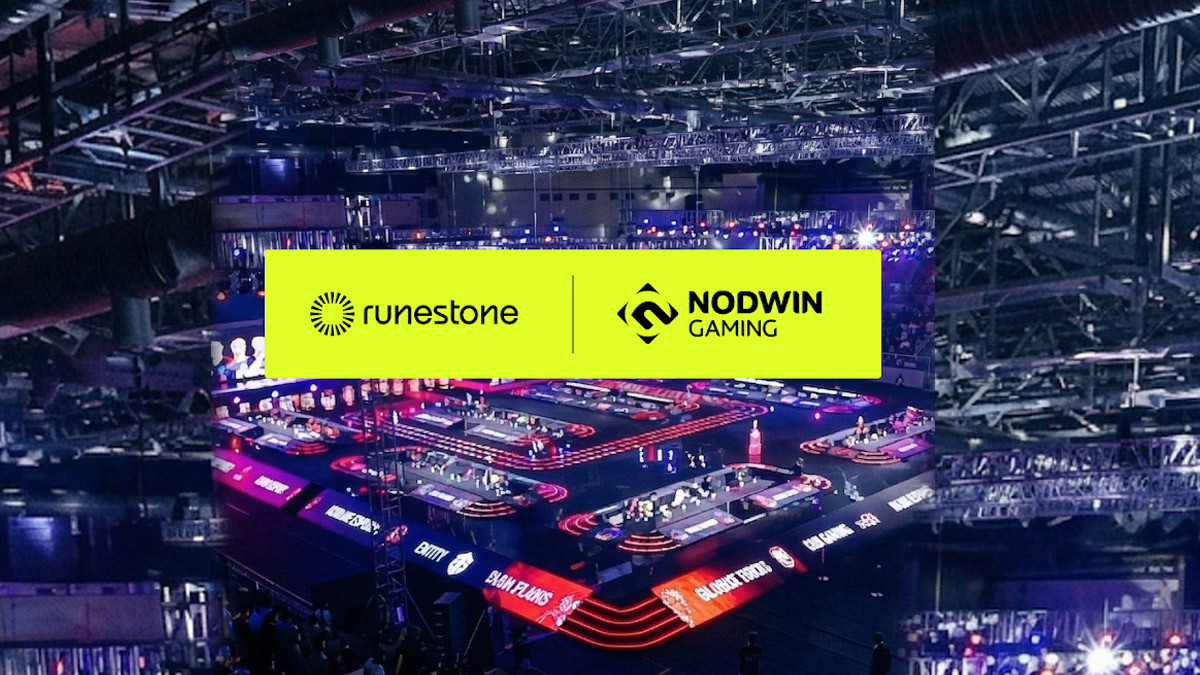
MUMBAI: Nodwin Gaming has just levelled up its game by bringing in a specialist to keep the scoreboard honest and the fans fully engaged. The leading South Asian esports and gaming company has announced a strategic partnership with Runestone, a Prague-headquartered esports technology firm specialising in real-time data and engagement solutions for tournament organisers and publishers.
The collaboration aims to strengthen competitive integrity, improve operational oversight, and deliver more interactive viewing experiences across Nodwin’s properties. It will initially focus on the Nodwin Clutch Series for Counter-Strike 2, a Tier 2 tournament that provides emerging teams with consistent competitive opportunities and helps build the talent pipeline.
The latest edition of the series recently concluded with Big defeating ECSTATIC 2–1 in the grand final of the $50,000 online event.
Nodwin Gaming chief business officer at MENA and global head of data monetization Teemu Koski said, “Integrity and transparency are fundamental to sustainable esports ecosystems, especially in Tier 2 competition where the next generation of talent emerges. Runestone’s expertise complements our experience in building scalable esports IPs.”
Runestone head of partnerships Michael Schwartz added, “Nodwin Gaming has built one of the most dynamic esports ecosystems across emerging markets. We’re thrilled to collaborate on supporting tournaments with greater transparency, deeper fan interaction, and scalable tools.”
Both companies are exploring opportunities to extend the partnership across additional titles, including mobile-first competitive ecosystems, and to develop new products for publishers, tournament operators, and event promoters.
In the rapidly growing world of esports, where fair play and fan excitement are equally crucial, Nodwin Gaming and Runestone are teaming up to ensure every match is not only competitive but also transparent and engaging. This alliance could well become a game-changer for Tier 2 tournaments across South Asia and beyond.







