News Headline
Post TDSAT order, TRAI issues fresh paper on tariff for commercial subscribers

NEW DELHI: The Telecom Regulatory Authority of India (TRAI) has asked commercial subscribers whether there is need to define and differentiate between domestic subscribers and commercial subscribers for provision of TV signals and the basis for such classification.
In a paper on “Tariff issues related to Commercial Subscribers”, the regulator has also asked if there is a need to enable engagement of broadcasters in the determination of retail tariffs for commercial subscribers on a case-to-case basis.

The paper has been issued following the directions by the Telecom Disputes Settlement and Arbitration Tribunal (TDSAT) earlier this year that there was need for a fresh look at tariff orders. Stakeholders have been asked to give their comments by 31 July and counter-comments by 7 August.
TRAI has sought information on how it can be ensured that TV signal feed is not misused for commercial purposes wherein the signal has been provided for non-commercial purpose.
It has also asked if there is a need to have a different tariff framework for commercial subscribers (both at wholesale and retail levels) and what should be the suggested tariff framework for commercial subscribers (both at wholesale and retail levels).
It wants to know if the present framework is adequate to ensure transparency and accountability in the value chain to effectively minimise disputes and conflicts among stakeholders, and what should the practical and implementable mechanism be to ensure transparency and accountability in the value chain.
Following the Supreme Court’s order of 16 April, 2014, TRAI had notified the Telecommunication (Broadcasting and Cable) Services (Second) tariff (Twelfth Amendment) order & the Telecommunication (Broadcasting and Cable) Services (Fourth) (Addressable Systems) Tariff (Fourth Amendment) order on 16 July, 2014. These two tariff amendment orders prescribing the tariff framework for commercial subscribers were challenged before TDSAT, which in its order of 9 March, 2015 had set aside these Tariff Amendment Orders. TRAI was asked to examine the issue afresh and come out with a new tariff dispensation for commercial subscribers within six months from the date of its order.






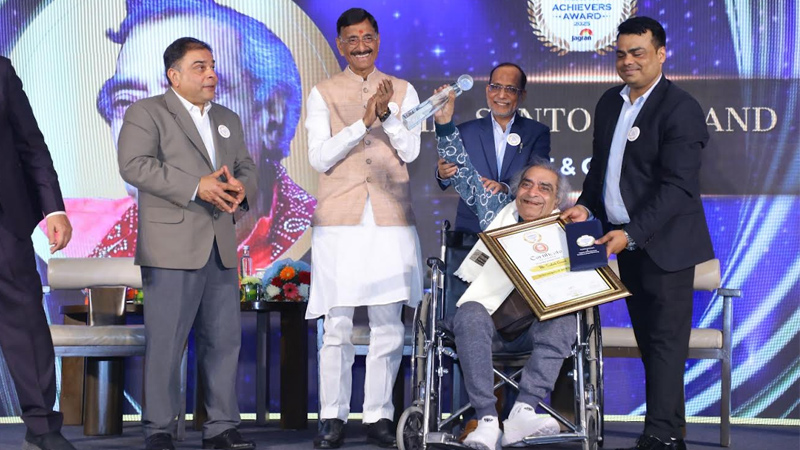
NEW DELHI: Hamdard Laboratories gathered a cross-section of India’s achievers in New Delhi on Friday, handing out the Hakeem Abdul Hameed Excellence Awards to figures who have left their mark across healthcare, education, sport, public service and the arts.
The ceremony, attended by minister of state for defence Sanjay Seth and senior officials from the ministry of Ayush, celebrated individuals whose work blends professional success with a sense of public purpose. It was as much a roll call of achievement as it was a reminder that influence is not measured only in profits or podiums, but in people reached and lives improved.
Among the headline awardees was Alakh Pandey, founder and chief executive of PhysicsWallah, recognised for turning affordable digital learning into a mass movement. On the sporting front, Arjuna Awardee and kabaddi player Sakshi Puniya was honoured for her contribution to the game and for pushing women’s participation onto bigger stages.
The cultural spotlight fell on veteran lyricist and poet Santosh Anand, whose songs have echoed across generations of Hindi cinema. At 97, Anand accepted the honour with characteristic humility, reflecting on a life shaped by perseverance and hope.
Healthcare honours spanned both modern and traditional systems. Manoj N. Nesari was recognised for strengthening Ayurveda’s place in national and global health frameworks. Padma shri Mohammed Abdul Waheed was honoured for his research-backed work in Unani medicine, while padma shri Mohsin Wali received recognition for his long-standing contribution to patient-centred care.
Education and social development also featured prominently. Padma shri Zahir Ishaq Kazi was honoured for decades of work in education, while former Meghalaya superintendent of Police T. C. Chacko was recognised for public service. Goonj founder Anshu Gupta received an award for his dignity-centred rural development initiatives, and the Hunar Shakti Foundation was honoured for empowering women and young girls through skill development.
The Lifetime Achievement Award went to former IAS officer Shailaja Chandra for her long career in public healthcare and governance, particularly in the traditional systems under Ayush.
Speaking at the event, Hamdard chairman Abdul Majeed said the awards were a tribute to those who combine excellence with empathy. “These awardees reflect Hakeem Sahib’s belief that healthcare, education and public service must ultimately serve humanity,” he said.
Minister Seth struck a forward-looking note, saying India’s young population gives the country a unique opportunity to become a global destination for learning, health and wellness by 2047.
The ceremony also featured the trailer launch of Unani Ki Kahaani, an upcoming documentary starring actor Jim Sarbh, set to premiere on Discovery on 11 February.
Instituted in memory of Unani scholar and educationist Hakeem Abdul Hameed, the awards have grown into a national platform that celebrates those building a more inclusive and resilient India. For one evening at least, the spotlight was not just on success, but on service with substance.







