News Headline
POLICY 2004: Waiting for Godot


December, 2003. Give us some more time and next year, we would take issues like CAS, DTH, second phase of FM radio and the matter of news channels uplinking from India forward. Since the regulator is studying some cases, we’d wait for its recommendations. This would be done apart from other initiatives in the media and entertainment sector. ——- the then information and broadcasting minister RAVI SHANKAR PRASAD.
January 6, 2005. I don’t think we are going to take decisions in a hurry and CAS is certainly not a priority at the moment. The ministry is still studying various recommendations of Trai. I am trying to evolve a system where I complete a job and then speak about it. —– the present I&B minister JAIPAL REDDY.

In between these two observations, hangs a tale. A tale spanning almost nine months (three months before the general elections and six months after a new government had come to the helm of affairs) in slomo and indecisiveness. A phase when not only the media, but the industry too expected some rapid-fire action from the new government. Especially because Reddy is an old hand at the I&B ministry and had some radical plans last time round when he had the portfolio.

If the following paragraphs make a mention of policies that are likely to impact the industry, they were set in motion much before Reddy and co. took over. So take
a breath. Here goes. DTH, if Reddy has his way, will probably take flight. FM radio is heading nowhere. TRAI is announcing regulations with no help from the ministry (the regulator continues to draw its mandate from the previous government). FDI in print is being looked at again – after International Herald Tribune started operations on Indian soil and the film industry is still crying hoarse on rampant piracy. To add to the state of indecisiveness, politicians got busy with turf war and bureaucrats lived up to their breed by finding ways and means to debate issues that could have been cut short for the final decisions to be taken quickly.
 Nothing can highlight the lull than the I&B ministry yearly round up put out by the government PR division, Press Information Bureau. Amongst other things, it listed 2004 events like DD’s DTH (the most significant one it seems), holding of international film fest in Goa and the Economic Editors’ Conference in Delhi and giving momentum to an inter-ministerial panel on vulgarity and surrogate ads on TV.
Let us take the biggest event — or the non-event may be — of 2003. Rocked by high-level lobbying by the industry and public indifference, the then national Democratic Front government, led by the Bharatiya Janata Party, dropped the politically hot potato called CAS in the lap of Telecom Regulatory Authority of India (Trai) towards the end of 2003, thinking the issue could be taken up in 2004 after it comes back to power. This was done after months of mandays had been wasted in government-industry interaction on CAS and some investment had been made by certain players in infrastructure anticipating arrival of a new technological regime.
What’s the status now? Despite Trai submitting a comprehensive report, which some in the ministry term more complicated than the issue itself, on how an addressable system could be brought about in India, the I&B ministry now is said to be studying the case all over again. An indication to the disdain to the Trai report comes out when an official said last year, “Travelling all over the world and compiling how things work elsewhere, doesn’t make a sectoral report.”
As the turf war between the Trai and the I&B ministry continued in the latter half of 2004, several important decision got held up, including the second phase of FM radio, which, according to Reddy’s multiple reiteration, has the potential of bringing about a radio revolution coupled with community radio services. The turf war was so intense that Trai also decided to sound the bugle by declaring grandly that since broadcast and cable services have been re-designated telecom services by the previous government, the Authority should also have a say in the policy making process on downlinking. Not only Trai rushed a letter to the I&B ministry on this issue, but also said publicly that it needs more powers to adjudicate in intra and inter-industry disputes.
“If need be, we’d approach the Supreme Court,” Trai chairman and former bureaucrat Pradip Baijal grandly announced on the sidelines of a public function last
month, indicating the stridency in the regulator’s outlook.
 DTH matter continued to simmer throughout 2004 despite Trai’s suggestions to both the I&B and telecom ministries to extend some sops to the players like allowing a DTH service provider to use foreign satellites and a cut in the revenue sharing percentage. But the year would be remembered more by the Rupert Murdoch-controlled Star for having successfully failed to `move’ either files or the bureaucrats in the ministry. Thus, Space TV (a joint venture between the Tatas and Star) continues to hang in space as the government tries digging for more
facts about the project.
Contrast it with pubcaster Doordarshan’s elation. After several aborted attempts and false call, it managed to get off the ground its free DTH service. Dubbed a “unique project” by Reddy, DD Direct Plus will enable the viewers access to 33 free-to-air TV channels, mostly comprising DD’s and private channels, and 10-odd radio channels. At taxpayers’ expense, the government and Prasar Bharati have embarked on a project that doesn’t seem to be able to turn commercially viable for some time to come.
Year 2004 was characterised by long pauses, remarkable inaction and little else. Reddy sat on some of the most important decisions taken by the previous government on the pretext of getting a better insight. Much to the chagrin of conscience-keepers of the present government, namely the Left, Reddy distinguished himself with his trademark verbosity —which failed to keep pace with action.
One fondly hopes that 2005 would be better off for the industry as it grapples with bottomline-impacting policy decisions in the pipeline (ask the financially bleeding private FM radio operators and they’ll vouch for this fact, waiting anxiously for a word from the government on Trai’s suggestions) and policymakers’penchant for looking for the ideal piece of legislation.
That this yearly round up is short, compared to others in the series, speaks itself volubly for the state of policy making during 2004.







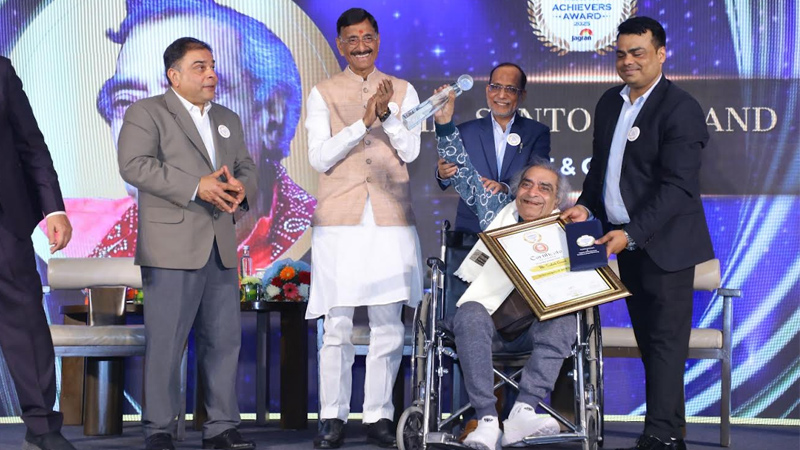
NEW DELHI: Hamdard Laboratories gathered a cross-section of India’s achievers in New Delhi on Friday, handing out the Hakeem Abdul Hameed Excellence Awards to figures who have left their mark across healthcare, education, sport, public service and the arts.
The ceremony, attended by minister of state for defence Sanjay Seth and senior officials from the ministry of Ayush, celebrated individuals whose work blends professional success with a sense of public purpose. It was as much a roll call of achievement as it was a reminder that influence is not measured only in profits or podiums, but in people reached and lives improved.
Among the headline awardees was Alakh Pandey, founder and chief executive of PhysicsWallah, recognised for turning affordable digital learning into a mass movement. On the sporting front, Arjuna Awardee and kabaddi player Sakshi Puniya was honoured for her contribution to the game and for pushing women’s participation onto bigger stages.
The cultural spotlight fell on veteran lyricist and poet Santosh Anand, whose songs have echoed across generations of Hindi cinema. At 97, Anand accepted the honour with characteristic humility, reflecting on a life shaped by perseverance and hope.
Healthcare honours spanned both modern and traditional systems. Manoj N. Nesari was recognised for strengthening Ayurveda’s place in national and global health frameworks. Padma shri Mohammed Abdul Waheed was honoured for his research-backed work in Unani medicine, while padma shri Mohsin Wali received recognition for his long-standing contribution to patient-centred care.
Education and social development also featured prominently. Padma shri Zahir Ishaq Kazi was honoured for decades of work in education, while former Meghalaya superintendent of Police T. C. Chacko was recognised for public service. Goonj founder Anshu Gupta received an award for his dignity-centred rural development initiatives, and the Hunar Shakti Foundation was honoured for empowering women and young girls through skill development.
The Lifetime Achievement Award went to former IAS officer Shailaja Chandra for her long career in public healthcare and governance, particularly in the traditional systems under Ayush.
Speaking at the event, Hamdard chairman Abdul Majeed said the awards were a tribute to those who combine excellence with empathy. “These awardees reflect Hakeem Sahib’s belief that healthcare, education and public service must ultimately serve humanity,” he said.
Minister Seth struck a forward-looking note, saying India’s young population gives the country a unique opportunity to become a global destination for learning, health and wellness by 2047.
The ceremony also featured the trailer launch of Unani Ki Kahaani, an upcoming documentary starring actor Jim Sarbh, set to premiere on Discovery on 11 February.
Instituted in memory of Unani scholar and educationist Hakeem Abdul Hameed, the awards have grown into a national platform that celebrates those building a more inclusive and resilient India. For one evening at least, the spotlight was not just on success, but on service with substance.








