News Broadcasting
Plan panel urges deregulation in telecom sector


NEW DELHI: At a time when the government is attempting to push through a Central legislation to mandate what people should see (or not see) on television and what sort of technology should be used for set-top boxes, the Planning Commission has said that “deregulation” is the need of the hour.
“There is a need for moving away towards a lighter regulatory stance which is less directly involved in product launches of firms,” the Planning Commission in its approach paper for the 10th five-year plan has said, hinting that in an era where increasing convergence will take place between telecommunications, IT and broadcasting government involvement should be minimal.
In the section on telecom, a copy of which is available with indiantelevision.com, the Planning Commission’s comprehensive paper says that it is important for policy makers to steer clear of decisions (such as the closed user group policy or restrictions on voice over Internet protocol) that prevent economic agents from pursuing optimal paths.

“Currently, government is involved in every new technology that arises in telecom (as also in other sectors of convergence). Whether we discuss VSAT or VoIP, it has not been possible for private players to proceed on building firms and launching products without reference to the State. This has a wide variety of negative ramifications such as delays, political pressures, anti-competitive devices to block new technology, etc,” the Planning Commission has observed.
It may be worthwhile mentioning here, as an aside, that earlier in the year the Planning Commission had also observed that the policy guidelines relating to KU-band direct-to-home (DTH) TV services are restrictive and need to be reviewed as even after 18 months of the policy announcement no investment had been made in this sector.
In its approach paper for the 10th five-year plan, the plan panel has cited an example to highlight how constant government involvement where technology is concerned hampers newer technologies from entering the country.
Pointing out that a new vehicle for delivering broadband Internet services – the 802.11 standard – should be possible for firms to rollout 802.11 products and immediately impact the market, the plan panel has said: “However, in the current regulatory climate, it is likely that this will require taking permissions, await the drafting of the 802.11 policy which will generate political roadblocks, etc.”
Going beyond policies that uphold connections between consenting economic agents, there is also a need to proceed with the complete deregulation of value-added services such as e-mails, ISPs, etc, where the services being produced are not public goods and, hence, can be handled by purely private competitive markets.


News Broadcasting
Kamlesh Singh receives Haldi Ghati Award from MMCF
India Today Group editor honoured for three decades of journalism at Udaipur ceremony.
MUMBAI- Kamlesh Singh just turned a lifetime of sharp words into a shiny shield because when journalism wakes up a society, even the Maharana of Mewar wants to pin a medal on it.
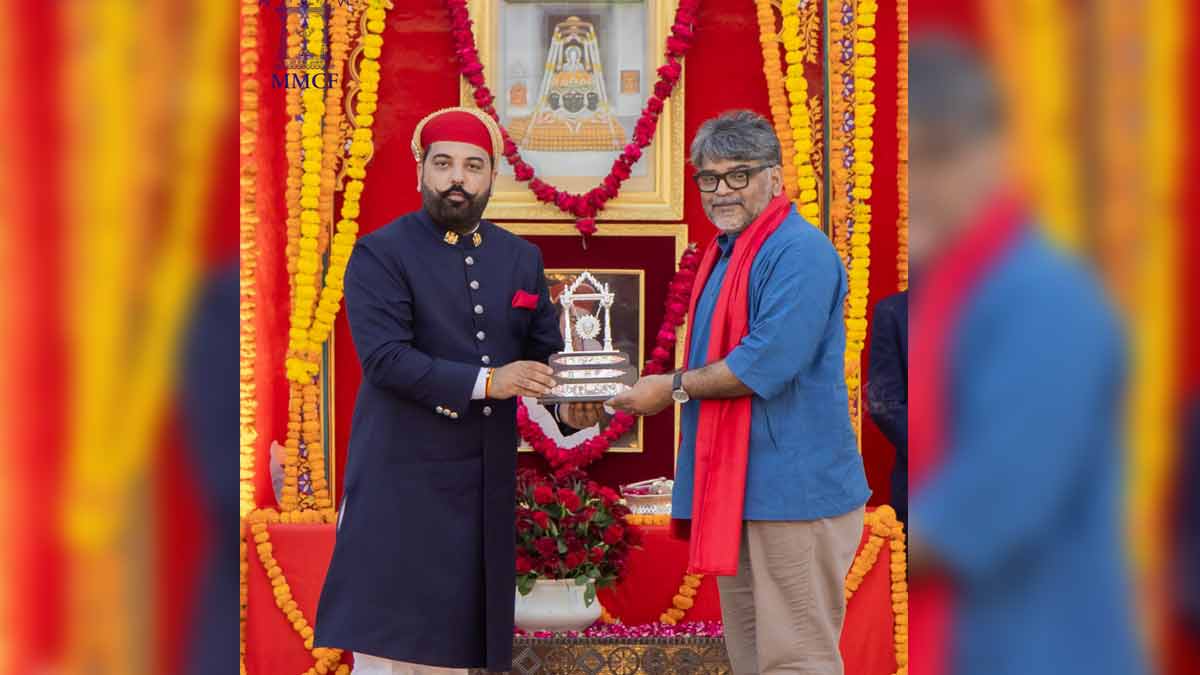
The Maharana of Mewar Charitable Foundation (MMCF) conferred its prestigious Haldi Ghati Award on Kamlesh Singh, a senior editor at the India Today Group, during a ceremony in Udaipur on 15 March 2026. The national award, instituted in 1981-82, recognises “work of permanent value that initiates an awakening in society through the medium of journalism.”
Singh, who leads several editorial initiatives including Aaj Tak Radio, the Teen Taal community and The Lallantop, was presented the honour by Lakshyaraj Singh Mewar, Managing Trustee of MMCF. The citation highlighted his three decades of contributions to Indian media, innovations in digital journalism, mentoring young reporters, and his popular podcast persona “Tau” on Teen Taal, which fosters thoughtful public discourse.
The Haldi Ghati Award, named after the historic Battle of Haldighati symbolising valour and resilience, is one of four national awards given annually by MMCF. Past recipients include Tavleen Singh, Piyush Pandey and Raj Chengappa.
Other honourees this year included Padma Vibhushan Pt Hari Prasad Chaurasia, Vedamurti Devvrat Rekhe, Treeman of India Marimuthu Yoganathan, Vir Chakra Capt Rizwan Malik, and US-based researcher Molly Emma Aitken, who received the Colonel James Tod Award for contributions to understanding Mewar’s spirit and values.
In an era where headlines often shout louder than substance, the MMCF quietly reminded everyone that real journalism isn’t about noise, it’s about the quiet, persistent work that stirs society awake, one thoughtful story at a time.







