Event Coverage
People are watching films but in their drawing rooms, not in the cinema halls, says Mitra


Indiantelevision.com’s series of interviews with the speakers of next week’s FRAMES 2003 convention continues with Sa re ga ma Managing Director Abhik Mitra. Mitra will participate in the forum on The Business of Film Making – Agony and Ecstasy.
The business of film-making, distribution and exhibition has gained in volume and value. The process of corporatisation has already begun and this has improved the financing norms for the sector. There is some optimism despite the fact that the industry has just been through its worst in 2002. The industry is plagued by issues such as lack of creative acumen, piracy and other deterrents. How does one explain this contradiction? What is the true picture?
The real reason for optimism is that there is serious consumption in taking place India… some serious films viewing. And consumption can only grow in India in the years to come, there are no two ways about it. I believe that the entertainment industry will grow faster than any other industry in the next 5 years.
At the same time, there are a lot of concerns. Firstly piracy. If you don’t have a strong domestic market then there is no sense just looking at exports. You have to be able to generate substantial revenues within the country itself.

Secondly, the actual costs of making a film has been artificially inflated, creative costs, actors costs, music costs everything needs to be re-looked at. The cost of talent has to come down significantly, for the movie business to be feasible.
When we say that a film has not worked, it does not mean that nobody has seen the film. It’s just that the revenues generated through ticket sales and other sources have not matched to the actual cost of making the film. There have been many instances of films which have cost much much more than what they should have cost.
Thirdly, creative scale There are so few people making making films, it has a cascading effect on the value chain. We need more people in the business. But then again, people will venture only if there is money in it.
You were part of Ficci Frames last year. What kind of changes have you seen in the business of film-making, in terms of professionalism, financing, transparency, distribution, promotions since then?
Oh, it has got better by the day. Ficci has played a lead role; it has provided a platform for the corporate to understand the modus operandi of the film fraternity and vice versa. There is a healthy interaction taking place.
Do you believe that Indian cinema has the potential to emulate the recent success of the Chinese and other South Asian films? What kind of cinema can make that impact?
Absolutely! May be even more. The simple reason being that the film makers here think in English and understand the western world better than their Chinese or South Asian counterparts.
Which export markets (apart from the US and the UK) should Indian film makers target?
I think Malaysia, Indonesia, Fiji, Australia, and may be Korea and Japan for certain films. But for a successful crossover, you need to look at other parameters and not just the language. It has to be a crossover in every sense.
Do you think India has a standing in the global scenario notwithstanding the recent successes?
Of course.
The year 2002 is perceived to be the worst year for the Indian film industry? What are the causes for this dismal status?
As mentioned earlier, piracy is the main problem. People are watching films but in their drawing rooms, not in the cinema halls
Is the government receptive to what the film industry needs?
At least the government is showing the interest, but it should help in fighting piracy. The piracy levels have to be brought down. Also the government has to bring down the entertainment taxes so that the common man starts going back to the theaters.
Is the film business geared up to face the competition from television other entertainment channels and avenues?
I don’t really see TV as a serious competition. Like the rest of the world, films and TV co-exist exists happily in India. Of course the rampant piracy on cable TV is a serious problem, but I personally believe that if there is a well made film and an equally well made Kyunki Saas bhi kaabhi bahu thi people will watch both.
What role does research play in judging consumer tastes? Should film makers and their creative teams take cognizance of the same?
Undoubtedly! But the Indian film makers have not done enough as yet.
Do distributors play a role in ensuring the success of the films? Should they be involved in the initial stages?
Yes, they should. They should be part of discussions, they should know what is likely to work, the elements needed, the right product mix.
What about the plethora of multiplexes that are coming up? Will they encourage the audiences to go and watch films? What kind of benefits should be given to multiplexes?
On the multiplexes front, a lot of benefits have already been given. But ticket prices are exorbitant! They have to come down for the common man to take his family to multiplexes. The entire costing and pricing of tickets at multiplexes has to be seriously re-looked at. There has to be a carrot approach in the pricing of tickets.
Should film makers gear up in terms of innovative promotions and publicity? Should they employ marketing and communication consultants?
Yes they should. A lot of film makers recently have started using marketing/communication consultants. Kaante and Lagaan, are recent examples of well marketed movies. Even Raaz after its release, was well marketed.
Are filmmakers exploiting the additional revenue streams such as in-film placements, DVD sales, offshore rights, Internet rights, merchandising?
Every day is a learning day. Indian film makers are gradually exploiting the additional revenue streams.
Are the industry players able to source finance for their ventures? Why and why not? What more needs to be done?
We need more banks and financial institutions apart from IDBI to start financing movies and it has to done fast. Plus, the flexibility of interest rates needs to be worked on.
The lesser known film makers are charged more than well known film makers, it does not make sense. At the debt finance level, people do not understand the real business issues of film making. Everybody understands the glamour part of it but the real issues are sadly not looked at.


Event Coverage
Anime India announces Amazon MX Player as co-presenting partner for Anime India Kolkata 2026
MUMBAI: Riding high on the success of its blockbuster Mumbai debut, Anime India is accelerating its nationwide expansion with the announcement of Amazon MX Player as the co-presenting partner for Anime India Kolkata. The partnership marks a significant step forward in the festival’s mission to deliver large-scale, accessible, and fan-first anime experiences across the country.
Scheduled for 14 and 15 February 2026 at the iconic Biswa Bangla Mela Prangan, Anime India Kolkata will launch the first regional chapter of what is set to be a year-long, multi-city tour. As the curtain-raiser for the 2026 circuit, the Kolkata edition aims to fuse the energy of global Japanese pop culture with India’s fast-growing community of anime, manga, and pop-culture fans.
A household name in digital entertainment, Amazon MX Player brings unmatched reach and cultural relevance to the Anime India platform. With its expanding focus on anime and youth-driven content, Amazon MX Player’s involvement as co-presenting partner reinforces Anime India’s vision of making anime culture more inclusive breaking barriers of language, geography, and accessibility to connect with fans nationwide.
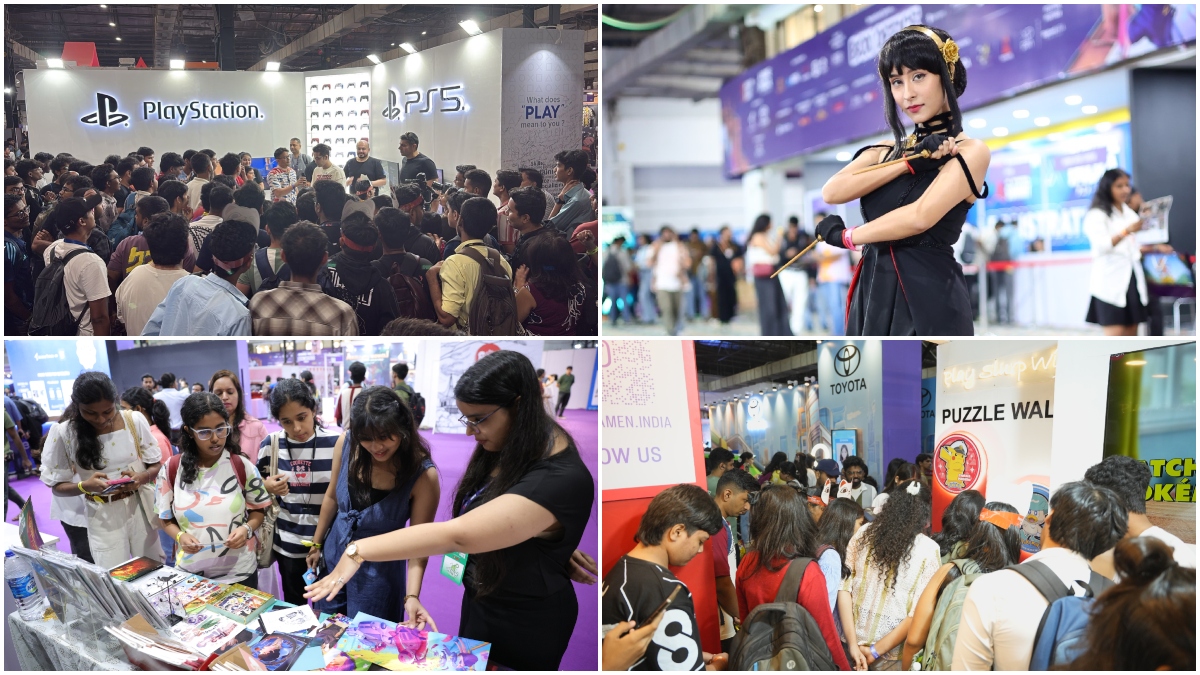
Anime India Kolkata 2026 will showcase cosplay competitions, interactive zones led by the Indian Gunpla Community, India-39 Vocaloid Community, The Japan Curry, and Adda-o-Otaku by The Otaku Guild. Fans can join tournaments across fighting games, Pokémon VGC, and more. Acclaimed Japanese director Susumu Mitsunaka (Haikyu!!) will attend as guest of honour, appearing in panels and live sessions. Positioned as an immersive celebration of fan culture and industry collaboration, the Kolkata edition marks the beginning of Anime India’s nationwide expansion.
Sharing their perspective on the partnership, Amazon MX Player director Aruna Daryanani expressed, “Anime in India has evolved from a niche interest into a mainstream cultural movement, driven by an increasingly engaged and passionate fanbase. At Amazon MX Player, our focus is on expanding access by bringing anime to audiences across the country for free and in multiple local languages. Our association with Anime India reflects our commitment to supporting the growth of anime in India and deepening connections with fans, while continuing to build Amazon MX Player as a trusted destination for free, high-quality entertainment.”
“Anime India Kolkata is a celebration of how anime has grown beyond entertainment into a powerful cultural and creative force. By bringing fans, creators, and industry leaders onto one shared platform, the festival is helping define the future of pop culture in India,” said Anime India co-founder and director Neha Mehta.
The debut edition of Anime India 2025 in Mumbai attracted over 29,000 fans, quickly cementing its status as a landmark celebration of anime and Japanese pop culture. Riding on this overwhelming response, the Kolkata chapter is projected to draw more than 40,000 visitors across two days, positioning it as one of the biggest anime conventions ever held in eastern India.
Anime India is focused on bringing together fans from across the country to create a truly pan-India celebration of anime, manga, cosplay, gaming, and Japanese culture. With plans to expand into four key metropolitan hubs in 2026—east (Kolkata), north (Delhi), west (Mumbai), and south (Hyderabad)—the festival seeks to deliver globally benchmarked experiences while supporting and uplifting creators, artists, and fan communities throughout India.







