News Broadcasting
Parsons hobnobs with corporate elites

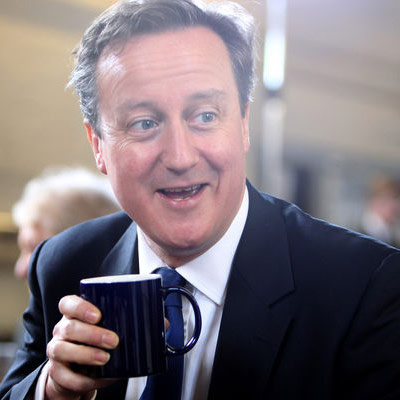
NEW DELHI: When the world’s biggest media company’s (Time Warner Inc) chairman and CEO comes to India on a flying visit, it is reason enough to ask the question: what’s on the agenda? Especially, when it happens to be Richard D Parsons’ first trip to a country where the media and entertainment industry has been projected to grow at a rapid pace over the next five years.
If various accounts are to be believed, then Time Warner is looking at various options and business opportunities in India, including further strengthening ties with its current Indian partner, the Subhash Chandra-promoted Zee Telefilms, apart from expanding its other ventures.
Already one-and-a-half days into his India visit, Parsons did meet colleagues from various group companies in Delhi — though it could not be ascertained whether he visited the Turner India office at the busy Nehru Place area in South Delhi — as also some government officials and representatives of Indian corporate houses.

Through some of its group companies — Turner’s three satellite TV channels like CNN and Cartoon Network, Warner Bros. Movies based in Mumbai, a cable TV distribution join venture with Zee Telefilms and also a small outfit of AOL in Bangalore — Time Warner has an adequate presence here. But it would be nowhere near as lucrative or penetrative as competitor Rupert Murdoch’s Star.
It has to be handed to the various ventures of Time Warner here that mum was the word on Parsons’ visit. No official word or statement came through except the fact that he was “not having any interaction with the Indian media,” though he officially hosted a reception today at the Oberoi hotel here that was attended by some prominent media personalities, including the CEOs of some media organizations.
Since no official word was forthcoming from anywhere, speculation was rife. Parsons is understood to have had a meeting with the promoter of the privately held Living Media (publishers of magazines like Indian Today with a sister concern running TV channels, apart from other media businesses), Aroon Purie, where some business talks were held.
It is unlikely that Purie would agree to divest stake in Living Media to Time Warner or any other foreign company — he said so in an interview with indiantelevision.com recently — but would be glad to start a joint venture for a print medium product.
According to information available, Time Warner, which also has in its vast portfolio of products Time magazine, is actively looking at printing and producing an Asian edition of Time from India after shifting the work from Hong Kong. Purie may prove to be just the right candidate in that eventuality.
According to a guest who attended the Time Warner party in Delhi, Parsons did indicate that the world’s biggest media company would like to set up even a business process outsourcing unit (reason not known) in India, apart from tapping other segments like film production, music and satellite TV.
Delhi was also abuzz with rumours that Time Warner has closed a deal with its existing TV partner, Zee Telefilms. No official statement or confirmation was forthcoming from either side, despite repeated attempts made by indiantelevision.com.
And how could it be? Parsons visit to India was almost a media blackout because of security reasons, one was told. The picture was completed with a posse of personal security personnel who not only shoved around Indian media, part of which wanted to cover Time Warner chairman’s visit here, but also categorically told photographers that Parson was not to be photographed without permission. Not even when he was in the hotel lobby. The fact that Parsons’ head of security detail was a man mountain type certainly leant force (literally) to the whole exercise.
All this military-like routine was despite the fact that Parsons heads a media organization, which has units like the CNN and Time magazine in its stable. One wonders what the reaction would have been if photographers from these media entities had been pushed around by the security detail of an India media baron while in the US. Outrage would have been the probable response.
To come back to the party itself, guests included several India media personalities. Those who were spotted at the party included Hindustan Times vice chairman Shobhna Bhartia, Bennett, Coleman & Co.’s managing director Vineet Jain, Sony Entertainment TV India CEO Kunal Dasgupta, BBC World’s resident director V Bakshi, Zee Tele CMD Subhash Chandra and journalist-turned-entrepreneur MJ Akbar of the Asian Age.
Was Parsons impressed with India’s media and entertainment industry and the opportunities it offered? We’d have to wait for the security veil to part open for information to trickle out. Sounds of silence, indeed!






News Broadcasting
Network18 channels lead YouTube news viewership in March 2026
CNN-News18, News18 India and CNBC channels top categories with record views
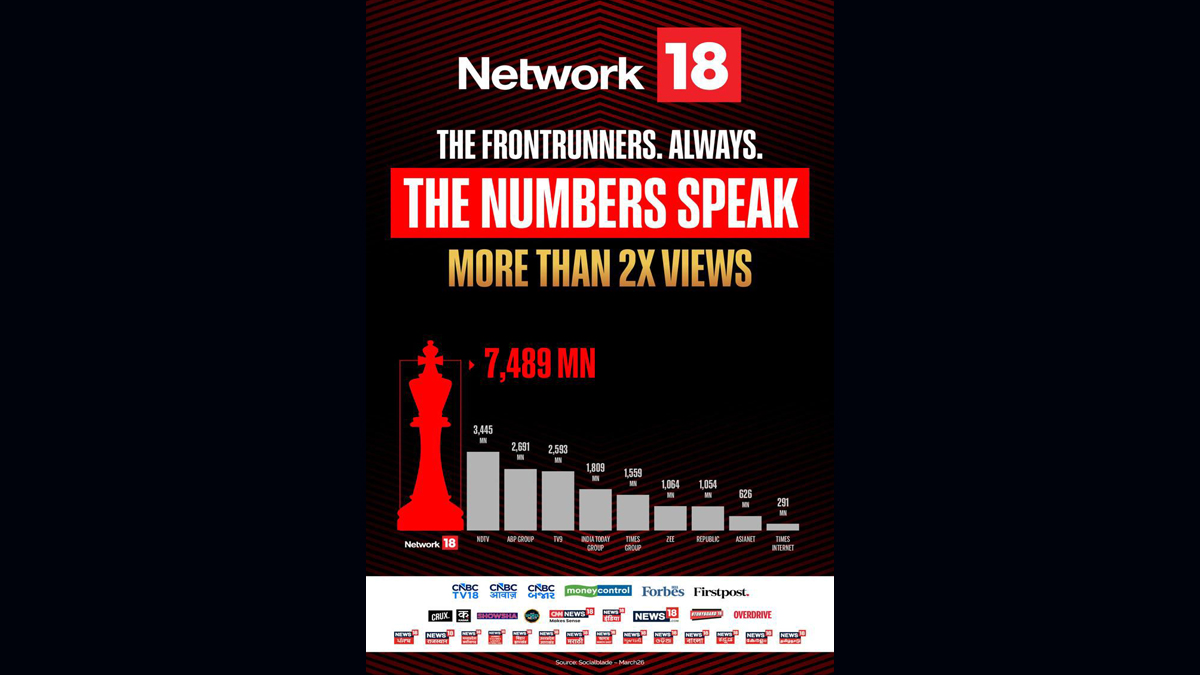
MUMBAI: When the world hit refresh on breaking news, Network18’s channels were already streaming ahead. As geopolitical tensions and war-driven headlines fuelled a surge in global news consumption, the network’s digital playbook delivered big clocking record Youtube viewership across English, Hindi and business news categories in March 2026.
At the forefront was CNN-News18, which emerged as the clear leader in the English news segment with 130 million live and video-on-demand views. The channel edged past competitors such as Times of India (126.5 million), Times Now (101.1 million), India Today (88.2 million) and NDTV (77.5 million), according to Databeings data for March.
In the Hindi news arena, News18 India delivered a commanding performance, racking up a staggering 3,297 million views on YouTube. The channel comfortably outpaced NDTV India, which recorded 3,119 million views, underlining its deep reach and consistent engagement with mass audiences, as per Playboard data.
The network’s dominance wasn’t confined to general news. In the Hindi business segment, CNBC Awaaz topped the charts with 92 million views, narrowly ahead of Zee Business (90 million) and well ahead of ET Now Swadesh (57 million). Meanwhile, its English counterpart CNBC-TV18 posted a strong 58 million views, reinforcing the network’s cross-category strength.
The spike in viewership reflects a broader shift in audience behaviour, with viewers increasingly turning to digital platforms particularly Youtube for real-time updates and in-depth coverage during high-intensity news cycles. For Network18, the numbers signal more than just scale; they underline the effectiveness of a multi-platform strategy that blends speed, credibility and continuous coverage.
In a month where the news never paused, it seems viewers chose to stay tuned where the stream never stopped.






