News Broadcasting
Parliament dissolution puts all pending media matters on hold, FM players immediate losers

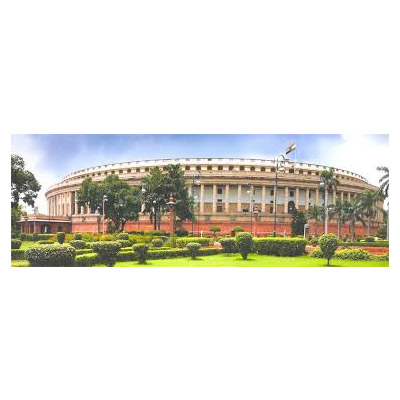
NEW DELHI: With the coalition government deciding to dissolve the Lok Sabha (Lower House) on 6 February after a go-ahead for interim rail and Union Budgets are taken, it looks unlikey that any important policy decision regarding media will be taken till the poll process has been completed.
That also puts a question mark over the future of the recommendations of the Dr Amit Mitra panel on FM radio broadcast policy.
Though the information and broadcasting ministry had earlier shown some interest in taking the panel recommendations to the cabinet for a final view on some suggestions like opening up the sector to foreign investment and allowing news and current affairs programming on private FM radio stations, it lost steam somewhat as the minister, Ravi Shankar Prasad, could not find the time to devote to the matter.

Once the Lok Sabha is dissolved, the ruling machinery becomes a caretaker one till the next government is installed. It is also not customary for a caretaker government to take important policy decisions like allowing foreign investment in a certain sector of the industry.
A senior government official said, “The recommendations are still being studied by the I&B ministry and it is highly unlikely that any decision would be taken now.” Though, there is some inter-ministerial meeting on the recommendations is lined up in the near future, nothing much is expected to come out of such meetings.
The FM radio industry was hoping that the government would push through with some of the recommendations of the Mitra panel, which was expected to bring some relief to the financially-beleaguered segment.
It is also unlikely that the government would take a stand on conditional access system (CAS), which is now in the domain of the Telecom Regulatory Authority of India where the stakeholders of the broadcast and cable industry are now fighting out their intra-industry battle. This, despite the fact that the Delhi high court is slated to have a hearing on a case related to CAS on 5 April.
The dissolution of the Lok Sabha also brings down the curtain on the work on the proposed broadcast bill as well.
What looks interesting is that if the present coalition government, headed by the Bharatiya Janata Party (BJP), is voted back to power the Convergence Bill may be brought out of cold storage. And if Arun Shourie gets back the telecom and IT portfolio, then he is sure to do that, political observors said.





News Broadcasting
CNN-News18 to host Fury in the Gulf conclave on West Asia crisis
Three-hour summit to unpack geopolitical fallout and impact on India
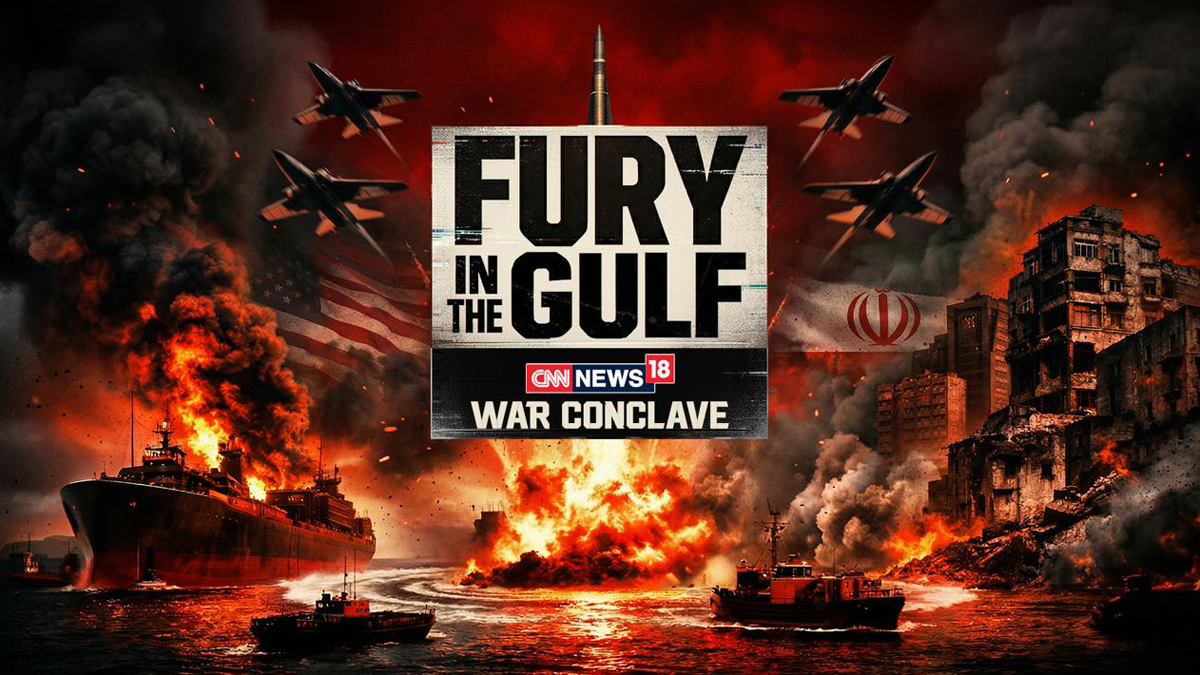
MUMBAI: CNN-News18 is set to host a special three-hour broadcast, Fury in the Gulf – War Conclave, on April 7, aiming to decode the escalating West Asia crisis and its far-reaching implications for India.
Scheduled from 4:00 PM to 7:00 PM, the conclave comes at a time when tensions between Iran and the United States are reshaping global geopolitics and triggering economic uncertainty. With India’s deep energy ties, trade links and large diaspora in the Gulf, the developments carry significant domestic relevance.
Built around the theme ‘Conflict, Consequences, and The Future,’ the programme will feature six curated sessions combining one-on-one interviews and panel discussions. The focus is to cut through the clutter and offer viewers a clearer understanding of the fast-evolving situation.
Key sessions include ‘Diplomacy in Times of War’ featuring Shashi Tharoor, and ‘World After the Iran Conflict’ with voices such as Ram Madhav, Reuven Azar, representatives from the European Union and the Iranian Deputy Envoy. Another session titled ‘Another Dunkirk?’ will bring together K. J. S. Dhillon and Jitin Prasada among others.
CNN-News18 editorial affairs director Rahul Shivshankar said, “In times of war, clarity becomes the most powerful tool. Fury in the Gulf – War Conclave brings together credible voices to address the questions and confusion that arise amid an overwhelming influx of information.”
He added that the initiative is aimed at delivering “facts, perspective, and insight” at a time when misinformation can easily cloud public understanding.
Echoing the sentiment, CNN-News18 CEO– English and business news Smriti Mehra said the conflict marks a defining global moment, with consequences that extend well beyond the region. She noted that the conclave seeks to present the crisis with “depth, nuance and responsibility” so audiences can better grasp its real-world impact.
As geopolitical tensions continue to dominate headlines, the conclave positions itself as an attempt to bring order to the noise, offering viewers a structured, insight-led look at a complex and rapidly shifting global situation.






