News Headline
Paid Competitive Gaming growing six times faster than overall market

Mumbai: The gaming industry is witnessing the rise of an exciting new segment: Paid Competitive Gaming or PCG. A new report titled “Global Paid Competitive Gaming Report 2023,” launched at the Game Developer Conference in San Francisco, revealed that the PCG market is expected to reach $16 billion by 2024. With a CAGR of 31.9per cent from 2021 to 2024, it is growing six times faster than the overall global mobile games market, which is forecast to reach $223 billion by 2024 at a 4.9 per cent CAGR.
The report, a collaborative effort between Newzoo, the global leader in video game and gamer data, and MPL, chronicles the rise of the promising gaming segment and trends in this space. It is based on a consulting analysis by Newzoo and customized research conducted by the company in 2022 on 24,562 respondents across 12 of the largest gaming markets.
The gaming industry has undergone a paradigm shift since the introduction of the pay-to-play model in the 1970s and the subsequent free-to-play model in the 2000s. Today, there are four distinct ways to monetize games: subscription services, rewarded ads, play & earn, and PCG.

“This shift highlights that publishers are embracing new and innovative models, while players are expecting new and inventive forms of interaction with their favorite games,” said Newzoo head of consulting Tony Habschmidt, adding, “PCG has become a burgeoning example of this, and focuses on offering players the ability to monetize their experiences with and through other players, opening up the potential to be rewarded for their skills. As new players are drawn to it from traditional forms of gaming and from adjacent entertainment realms like sports and social media, PCG will democratize and redefine the industry.”
PCG represents a novel competitive experience for everyday gamers, offering them myriad of opportunities to compete in low to high stakes skill-based games against other players worldwide, beyond traditional games. Real money prize pools allow players to monetize their gaming abilities, and effective skill-matching ensures a fair and competitive playing field for all participants.
Report Highlights:
Top PCG Markets
US, India, Mexico, UK and Germany are forecast to be the top markets for PCG. The United States, currently the largest gaming market in the world, is also leading the way in PCG, with an estimated value of $3 billion in 2021. It is projected to grow at a CAGR of 29.4 per cent, reaching $6.6 billion by 2024 (representing 33 per cent of the total mobile gaming market). India is the second largest PCG market and is projected to grow to $3.5 billion by 2024. India along with Mexico are the fastest growing PCG markets with a CAGR of 33.3 per cent and 32.0 per cent respectively. The UK and Germany are growing at a rate of 21.9 per cent and 20.6 per cent, respectively.
Mobile will remain the dominant platform for gaming
Mobile is gaming’s biggest and fastest-growing segment, by player numbers and revenues alike. In 2021, the global gaming industry saw 2.8 billion mobile gamers contributing over 50 per cent of the global gaming revenue and is forecasted to grow even further to $113.0 billion by 2024 with 3.1 billion players. PC gaming had 1.4 billion players in 2021, expected to rise to 1.5 billion by 2024, and console gaming had 871 million players in 2021, projected to increase to 943 million in 2024. Cross-platform play is popular, with significant overlap between the platforms. Newzoo estimates that there will be over three billion gamers globally by 2024.
Gamers who participate in paid competitive games display distinct behaviors that set them apart from traditional gamers, contributing to the steady growth of the PCG segment:
- Skill gamers are more engaged than traditional gamers: Skill-based gamers spend more time playing mobile games (4.6 – 6.2 hours per week) and have more gaming apps installed (6.0 – 7.6 on average) than non-skill-based gamers (3.5 – 5.3 hours per week and 4.4 – 6.1 apps on average).
- High likelihood to play skill-based games for traditional gamers: A significant portion of traditional gamers (15-48 per cent) are likely to play skill-based games in the future, and many of them are eager to start within a month.
- Gamers expect to increase their money spent on PCG in the long term: Indian gamers are the most likely to do so (58 per cent), followed by gamers in the US and Brazil (both at 51 per cent)
- Skill gaming is high-churn by nature but many players reactivate: Many churned players return within a year, particularly in Latin America and India, where almost half of the skill-based gamers plan to play such games in the coming three years.
Smartphone and 5G penetration will unlock new audiences
According to projections from Newzoo’s Global Games Market Report (April 2022 Update), the number of global smartphone users is expected to rise by 45 per cent from 2.9 billion to 4.8 billion by 2024. This growth will be driven by affordable smartphones, especially Android devices, in emerging markets, providing a more accessible gateway to gaming. In addition, 5G technology’s faster speeds will enhance gameplay and support cloud gaming. By 2024, approximately 2.4 billion, or 37.4 per cent, of the projected 6.4 billion active smartphones will be 5G-ready.

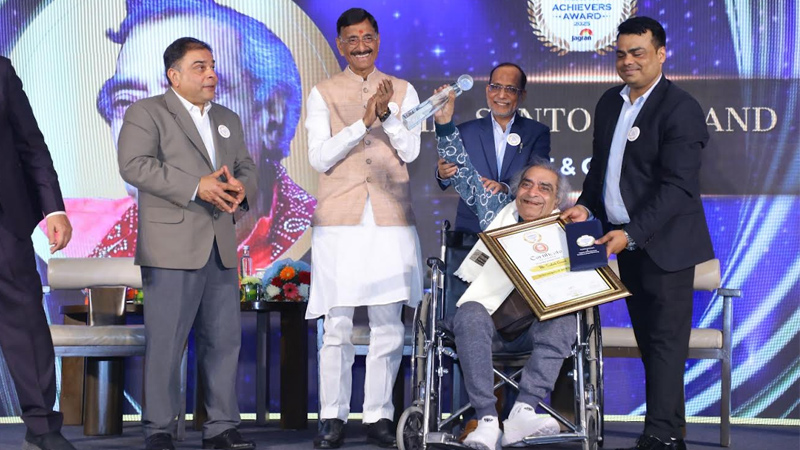
NEW DELHI: Hamdard Laboratories gathered a cross-section of India’s achievers in New Delhi on Friday, handing out the Hakeem Abdul Hameed Excellence Awards to figures who have left their mark across healthcare, education, sport, public service and the arts.
The ceremony, attended by minister of state for defence Sanjay Seth and senior officials from the ministry of Ayush, celebrated individuals whose work blends professional success with a sense of public purpose. It was as much a roll call of achievement as it was a reminder that influence is not measured only in profits or podiums, but in people reached and lives improved.
Among the headline awardees was Alakh Pandey, founder and chief executive of PhysicsWallah, recognised for turning affordable digital learning into a mass movement. On the sporting front, Arjuna Awardee and kabaddi player Sakshi Puniya was honoured for her contribution to the game and for pushing women’s participation onto bigger stages.
The cultural spotlight fell on veteran lyricist and poet Santosh Anand, whose songs have echoed across generations of Hindi cinema. At 97, Anand accepted the honour with characteristic humility, reflecting on a life shaped by perseverance and hope.
Healthcare honours spanned both modern and traditional systems. Manoj N. Nesari was recognised for strengthening Ayurveda’s place in national and global health frameworks. Padma shri Mohammed Abdul Waheed was honoured for his research-backed work in Unani medicine, while padma shri Mohsin Wali received recognition for his long-standing contribution to patient-centred care.
Education and social development also featured prominently. Padma shri Zahir Ishaq Kazi was honoured for decades of work in education, while former Meghalaya superintendent of Police T. C. Chacko was recognised for public service. Goonj founder Anshu Gupta received an award for his dignity-centred rural development initiatives, and the Hunar Shakti Foundation was honoured for empowering women and young girls through skill development.
The Lifetime Achievement Award went to former IAS officer Shailaja Chandra for her long career in public healthcare and governance, particularly in the traditional systems under Ayush.
Speaking at the event, Hamdard chairman Abdul Majeed said the awards were a tribute to those who combine excellence with empathy. “These awardees reflect Hakeem Sahib’s belief that healthcare, education and public service must ultimately serve humanity,” he said.
Minister Seth struck a forward-looking note, saying India’s young population gives the country a unique opportunity to become a global destination for learning, health and wellness by 2047.
The ceremony also featured the trailer launch of Unani Ki Kahaani, an upcoming documentary starring actor Jim Sarbh, set to premiere on Discovery on 11 February.
Instituted in memory of Unani scholar and educationist Hakeem Abdul Hameed, the awards have grown into a national platform that celebrates those building a more inclusive and resilient India. For one evening at least, the spotlight was not just on success, but on service with substance.








