News Broadcasting
Ownership limits need to be relaxed: FCC


MUMBAI: A Federal Communications Commission (FCC) study has revealed that media consolidation has not reduced the variety of programmes on television and radio but has resulted in more TV commercials and similar slants in news coverage in the US.
The study is part of the 12 studies carried out by the FCC and universities across the US as part of its review of media-ownership rules, results of which were made public yesterday. Contrary to the belief that increased media consolidation would result in less local programming, the study concludes that network-owned TV stations provide 23 per cent more local news and public affairs programming than network affiliates. It also reveals that TV stations which are jointly owned with newspapers received higher ratings, won more awards and produced more programmes, say media reports.
The study, say reports, was undertaken after the federal appeals court ordered the agency to provide a “factual base” for some of its media rules . The study has made the following discoveries.

# The number of media outlets in 10 sample markets has nearly tripled since 1960, while the number of their independent owners jumped 139 per cent.
# TV, the Web, newspapers and radio all serve as sources for news-seeking consumers.
# Although the average number of radio station owners has fallen from 13.5 to 9.9 in six years, the average number of programme formats is unchanged at 10.
# The growing presence of national owners of local radio stations has driven down ad rates.
Other rules under review include bans on a broadcaster from owning TV stations that reach more than 35 per cent of US homes, owning two stations in smaller cities and owning a newspaper and TV station in one market, and curbs on local radio concentration.
FCC Chairman Michael K Powell who argued that ownership limits in an era of 200-channel cable TV and the Internet are no longer viable, said the FCC will relax the limits based on the findings, when it completes its review early next year.
Director of the Center for Digital Democracy, Jeff Chester, however has ripped the studies apart saying,”This is not a serious independent analysis. They did studies that would ratify their own preconception of the marketplace,” he has been quoted as saying.
Another study by Joel Waldfogel, professor of business and public policy at the Wharton School at the University of Pennsylvania, reveals that consumers are using the Internet increasingly as a substitute for television news, a finding which can hold the argument that ownership rules are no longer required.
Ironically, these findings contradict findings by a recent Nielsen Media Research survey of 3,000 consumers, who confirm that they mostly used broadcast TV, cable news and daily newspapers to stay informed. The study also reveals that more than 83 per cent rely on TV for national news compared with 21 per cent who use the Internet.


News Broadcasting
CNN-News18 to host Fury in the Gulf conclave on West Asia crisis
Three-hour summit to unpack geopolitical fallout and impact on India
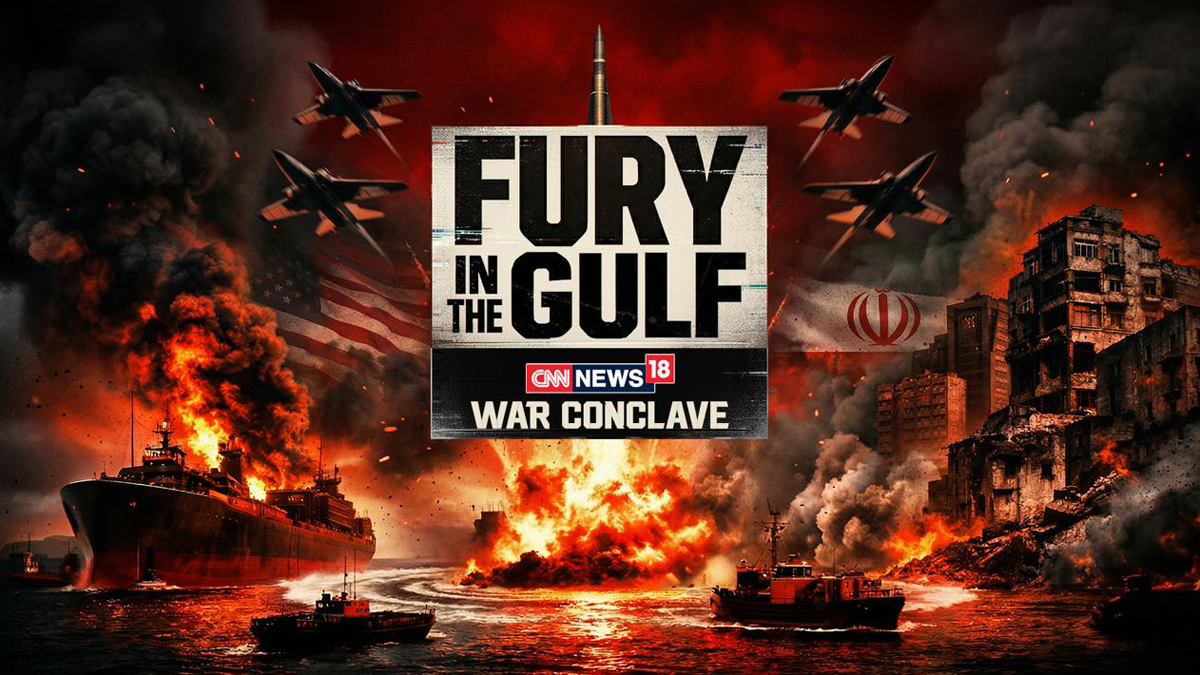
MUMBAI: CNN-News18 is set to host a special three-hour broadcast, Fury in the Gulf – War Conclave, on April 7, aiming to decode the escalating West Asia crisis and its far-reaching implications for India.
Scheduled from 4:00 PM to 7:00 PM, the conclave comes at a time when tensions between Iran and the United States are reshaping global geopolitics and triggering economic uncertainty. With India’s deep energy ties, trade links and large diaspora in the Gulf, the developments carry significant domestic relevance.
Built around the theme ‘Conflict, Consequences, and The Future,’ the programme will feature six curated sessions combining one-on-one interviews and panel discussions. The focus is to cut through the clutter and offer viewers a clearer understanding of the fast-evolving situation.
Key sessions include ‘Diplomacy in Times of War’ featuring Shashi Tharoor, and ‘World After the Iran Conflict’ with voices such as Ram Madhav, Reuven Azar, representatives from the European Union and the Iranian Deputy Envoy. Another session titled ‘Another Dunkirk?’ will bring together K. J. S. Dhillon and Jitin Prasada among others.
CNN-News18 editorial affairs director Rahul Shivshankar said, “In times of war, clarity becomes the most powerful tool. Fury in the Gulf – War Conclave brings together credible voices to address the questions and confusion that arise amid an overwhelming influx of information.”
He added that the initiative is aimed at delivering “facts, perspective, and insight” at a time when misinformation can easily cloud public understanding.
Echoing the sentiment, CNN-News18 CEO– English and business news Smriti Mehra said the conflict marks a defining global moment, with consequences that extend well beyond the region. She noted that the conclave seeks to present the crisis with “depth, nuance and responsibility” so audiences can better grasp its real-world impact.
As geopolitical tensions continue to dominate headlines, the conclave positions itself as an attempt to bring order to the noise, offering viewers a structured, insight-led look at a complex and rapidly shifting global situation.






