News Broadcasting
Our shows will empower people to drive electoral discourse: Network18’s Priyanka Kaul

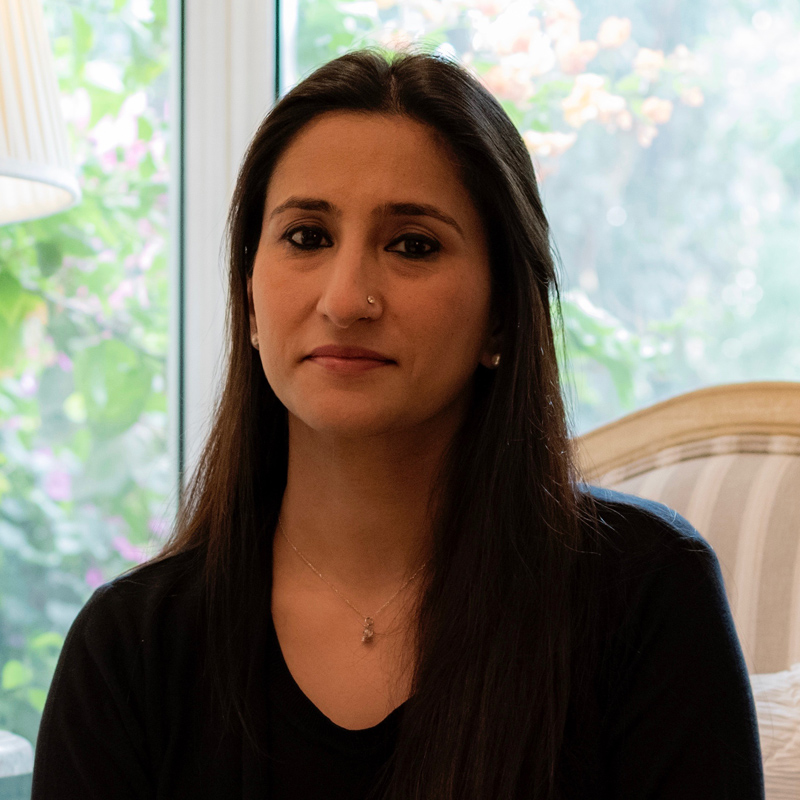
MUMBAI: The news genre has entered its peak time – election season. All news channels including Hindi, English and regional have started their election-based programming from the exit polls that took place on 7 December 2018. Election coverage is like the bread and butter for news channels since this is where they get to score more loyal viewers.
If we look at the BARC rating of week 48, channels of Network18 are present in each of the six categories of news. The network’s business news channels CNBC TV18 and CNBC Awaaz led the chart in their respective markets. Whereas, the Hindi news channel, News18 India, is present in all three genres in the top 3 channels.
Indiantelevision.com caught up with Network18 president marketing and special projects Priyanka Kaul to talk about the network’s plan for the upcoming election and the content and marketing strategy.

Excerpts:
In the run-up to the elections, how do you see the growth of news channels?
Elections clearly drive a strong spike in viewership of news channels. In a democratic polity such as ours people at large retain a key interest in politics. As elections have become shriller over the years, people have developed a keen interest in tracking the outcome of electoral battles. Given this, there is an uptick in viewership for election-related programming that peaks on counting day which clearly becomes a tent pole.
How do you position your brand ahead of election year?
As a network, we have always prided ourselves in our coverage of elections. We have developed a reputation over the years of being the most accurate and the first to call elections. Given our national and regional reach and hence our ability to not only track key stories across the length and breadth of the country but also to evaluate the likely impact of the same. In terms of our brand strategy we have always believed that there is no real alternative to Network18 when it comes to elections and hence we center much of our promotion on the thought of Elections=Network18.
Could you give us an overview of news genre (breakup of Hindi, English and regional channels) – share of viewership by category?
News is the third most watched category on television, after GECs and movies with a share of 7.7 per cent with regional leading the pack with over 60 per cent viewership followed by Hindi & English news at 37 per cent and less than 1 per cent respectively. We are India’s largest news network with a vast bouquet of national and regional channels. News18 India leads the Hindi news genre during key prime time band (7-11pm in urban India) and CNBC-TV18 leads the English business news genre with an overall viewership of 77 per cent approximately. CNBC Awaaz leads the Hindi business news genre with an overall viewership share of over 70 per cent while we see a 90 per cent share during the Budget Speech.
How has the channel performed in terms of viewership and revenue?
News18 Network has 10.7 per cent share amongst all news channels. News18 India ranks number 2 overall and sees 15.4 per cent market share during primetime and 11.6 per cent market share respectively. CNN News18 ranks number 3 in the genre with 13.2 per cent market share. CNBC-TV18 & Awaaz rank number 1 in the genre with 70.6 per cent and 59.1 per cent market share during market hours respectively.
What is your content and marketing strategy going forward?
Our content and marketing strategy going forward will be strongly centred on the idea of keeping our viewers, the voters at the centre of all our plans. Catering to their needs and reinventing shows to keep them interested along with content and programming fresh is the key to our plans and strategy. As previously mentioned, we are looking at integrating our viewers with the most popular shows on News18 India. This approach is something that we shall remain strongly committed to. Our shows/campaign will try and ensure that viewers not only become a part of electoral discourse but are actually empowered to drive the same. Through different formats – vox pops, audience-based shows, surveys – we will ensure that we go beyond the same talking heads and studios that have become par for the course.
Any new show launches in the pipeline? Which time slot and the show are getting the highest viewership?
There are of course a slew of new show launches and we constantly also ramp-up existing shows in the pipeline. For instance, 2 of the most popular shows on News18 India – Lapete Mien Netaji and BhaiyajiKahin – are travelling to Rajasthan and MP. We are in fact even running a marketing campaign to invite local viewers to our shows as they travel through these regions. We are of course looking at launching several new shows in the lead up to the general elections including shows that will fully leverage the strength of the entire network – 20 channels across general news, business news and regional news. We will also be looking at launching shows that focus key societal segments including the youth and women voters. Different formats including campaign trails, voxpop based shows, political satires etc. are also being planned.
Which category of brands shows more interest in the Hindi news space?
Hindi news, especially during election season, gives brands both reach as well as stature. Hence we see multiple categories get active from FMCG to e-commerce. High viewership, coupled with a keen interest in the segment, attracts all brands.
What is the total reach of the news channels overall? Which region is contributing to the highest viewership in Hindi, English and regional genre?
News18 Network channels reached 429 million viewers (in Oct’18) higher than any other news network. South is the highest contributing region for the English news genre as well as CNN News18 – contributes 37 per cent to the genre and 47 per cent to CNN News18.UP/Uttarakhand is the highest contributing region for the Hindi news genre as well as News18 India – contributes 18 per cent to the genre and 17 per cent to News18 India.
Amongst regional news Malayalam news sees 98 per cent market share and Tamil/Telugu news sees 97 per cent each, followed by Kannada news at 91 per cent and Oriya (86 per cent), Bangla (75 per cent), Marathi (48 per cent). Regional news channels have the highest share among all news channels in the state.
How are you planning to cover the upcoming four assembly elections by the year end?
Our network channels like News18 Rajasthan, MP & Chhattisgarh are already doing extensive coverage around assembly elections apart from our national channels which is CNN-News18 and News18 India doing special shows around these elections. As we close in on the counting day the quantum of programming will keep increasing with shows such as the Poll of Polls and more. The channels will continue to track developments given the importance of these elections. We will also be leveraging our social media channels along with our digital asset www.news18.com to ensure that relevant and accurate information flows seamlessly to our viewers across all touch points.






News Broadcasting
News18 India launches Command Centre war explainer with Arya
New show shifts from debates to decoding global conflicts and impacts
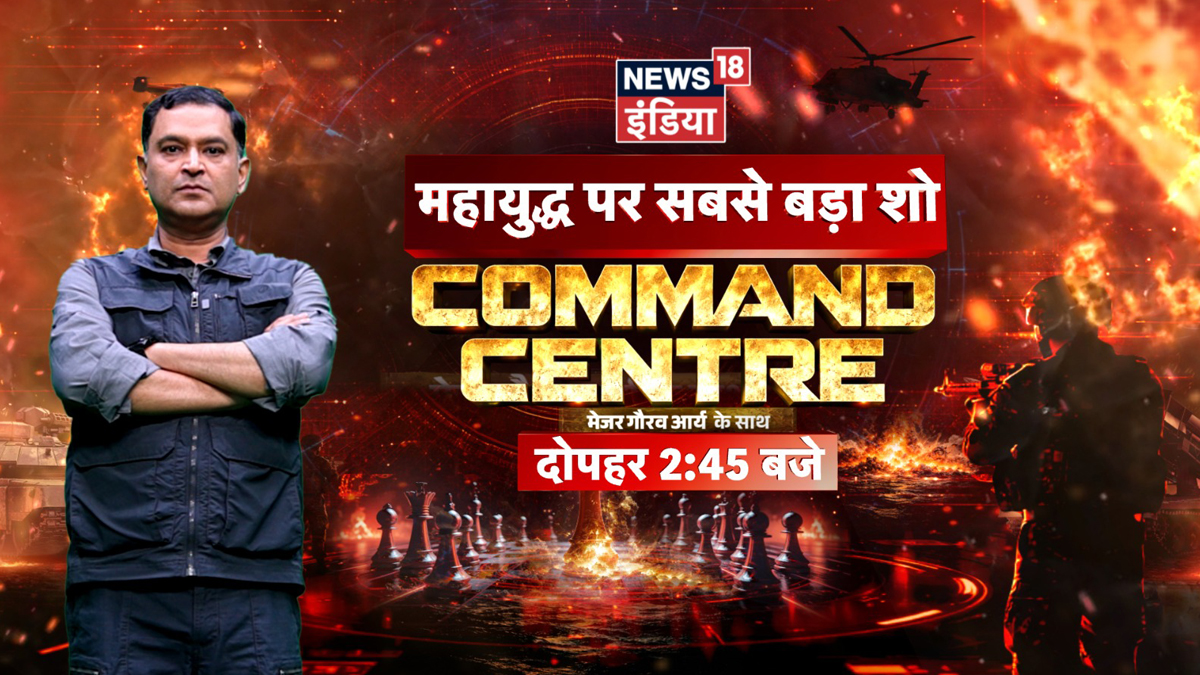
MUMBAI: News18 India has rolled out a new war-focused programme, Command Centre, featuring Gaurav Arya, as it looks to offer viewers a sharper, more grounded take on global conflicts amid rising tensions in West Asia.
Positioned as an “insider war room”, the show moves away from conventional panel debates and instead focuses on explaining military developments, decoding strategy and connecting global events to their everyday impact, from fuel prices to economic shifts.
The format leans heavily on visuals and data. The studio has been designed like a command hub, complete with large LED war maps, real-time graphics and an alert system to track developments as they unfold.
At the centre of it all is Arya, who brings his military background to simplify complex war strategies for viewers. His signature line, “Seedhi baat samjhiye”, anchors the show’s promise of clarity over noise.
News18 India managing editor Jyoti Kamal said, “Command Centre, featuring Major Gaurav Arya is designed to deliver accurate insights and a clear perspective on how evolving conflicts impact everyday life, from household budgets to national security. With expert voices analysing every development in real time, the show goes beyond headlines to decode what’s happening now, what it means, and what could come next.”
Echoing the intent, Gaurav Arya added, “In times of war, confusion is the biggest threat. With News18 India’s Command Centre, we are bringing viewers inside the war room, decoding strategies, tracking every escalation, and explaining, in the simplest terms, what it means for India and for every household. Seedhi baat samjhiye, this is where you understand not just what is happening, but what happens next.”
The weekday show will air in the afternoon slot and will also feature Gaurav Shukla, adding to its editorial depth.
With its mix of analysis, visuals and a clear focus on impact, the show reflects a broader shift in news consumption. Viewers are no longer just watching events unfold, they are looking to understand what those events mean for them.






