iWorld
Our partnership with JioCinema and Pocket52 has been very instrumental: Pranav Bagai

Mumbai: The Poker Sports League (PSL) Season 6 has wrapped up its Qualifiers, marking a new milestone with an extraordinary turnout. This season saw 20,927 unique participants, further cementing PSL’s reputation as the World’s largest poker league.
The Qualifiers, which kicked off on 16 June, drew over 5000 participants in the first qualifier alone, a testament to the growing popularity of poker as a game of skill in India. Over 50 days, players competed in daily open qualifiers on Pocket52, with the top 42 players earning coveted spots on the 7 teams advancing to the league matches. Additionally, the top 1,000 participants were rewarded with prizes totaling over Rs. 40 lakhs, significantly enhancing engagement and excitement around the contest.
Indiantelevision.com reached out to Poker Sports League founder & CEO Pranav Bagai, where he discussed the specific elements that will take PSL to new heights and much more.

Edited excerpts
Describe the specific elements or changes that have been introduced in Season 6 that you believe will take PSL to new heights.
We have made some exciting changes in PSL Season 6.
The biggest change is that there are 7 teams in Season 6. The introduction of a new team has happened after three seasons and we plan to introduce two more teams in the next two seasons. This will bring us to our cap of 9 teams in Season 8.
The prize pool has been increased from 1.5 crores in the last season to 2 crores for Season 6.
We have added a professional poker player in each team to increase the competitiveness between teams.
Fans can look forward to more highlights, key moments from our streams, and, for the first time, short-form content like winning moments, best hands, crazy bluffs, glory moments, and more.
With Season 5 achieving global recognition, what strategies are in place to further PSL’s international reach in Season 6?
Pre-covid we used to have two international players per team. In the coming seasons, we will make it a norm to include international players once again. This will not only add newer skill sets to the team but also create a pathway to reach out to a wider audience.
How have the partnerships with JioCinema and Pocket52 evolved, and what role do they play in the success of PSL?
Our partnership with JioCinema and Pocket52 has been very, very instrumental. JioCinema has the largest OTT network in the country. We worked very closely with them last year and we managed 12.5 million views, making PSL Season 5 one of the most viewed poker events – globally. They helped us boost our viewership by 600% from Season 4 to Season 5. We hope to double our viewership in Season 6 by including Hindi commentary.
Meanwhile, talking about Pocket52, they have played a huge role in the success of Poker Sports League. Season 6 is the third time that Pocket52 has been the title sponsor for PSL. Unless you are a professional poker player who makes it through the draft, the only way to make it to PSL season 6 is through the Poker Sports League season 6 qualifiers – which are held exclusively on the Pocket52 platform. The Pocket 52 app’s recent UI/UX enhancements have significantly boosted its growth by prominently featuring PSL on the app.
How do you see the landscape of poker evolving in India and globally over the next five years, and what role will PSL play in this evolution?
Over the next five years, the landscape of poker in India and globally is poised for exponential growth. Over the last few months, we have seen an increase in the number of smaller apps or websites that are coming up with Poker on their platforms. Since October last year, we have seen a lot of newer companies get into poker. A lot of the rummy portals that were not in poker before have recently launched their platform. Additionally, there has been a significant rise in the number of Poker-related ads seen on TV, especially during IPL.
So, globally, poker has been growing. It has been estimated that globally we can expect nearly 11% to 12% CAGR. The growth rate in India, however, is higher than that globally. India is expected to witness a growth rate of 16.9% CAGR. This makes India a great market for Poker. Speaking about the contribution of PSL, I believe that the platform we are providing will act as a bridge to reduce the gap and taboo around the industry. I believe we’re on the tip of the iceberg today and poker is just about starting in India. Its going to explode in the next 5 years.






Gaming
India’s broadcasters say no to Fifa World Cup 2026
Fifa has slashed its asking price by 65 per cent but India’s broadcasters are still not buying
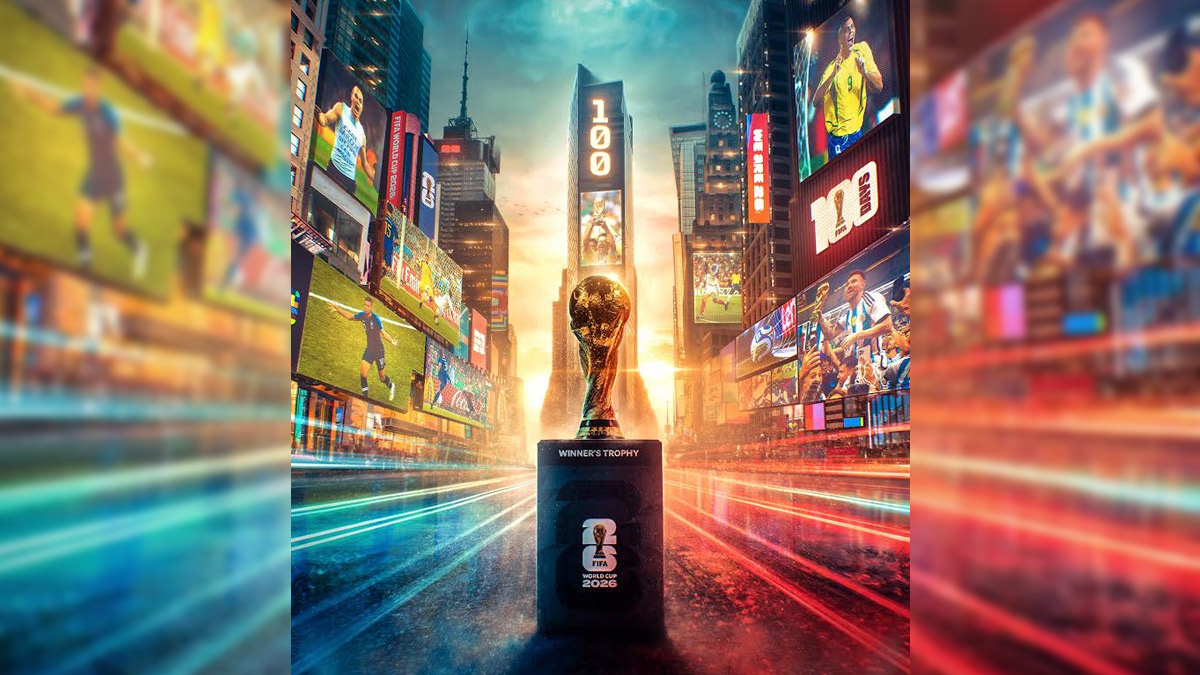
MUMBAI: The world’s biggest sporting event cannot find a single taker in the world’s most sports-mad nation. Fifa’s television rights for the 2026 World Cup remain unsold in India, and the clock is ticking loudly.
To shift the property, world football’s governing body has already swallowed hard and cut its asking price from $100m to $35m, bundling in the 2030 edition as a sweetener. It has not worked. Indian broadcasters have looked at the offer, done the sums and quietly walked away.
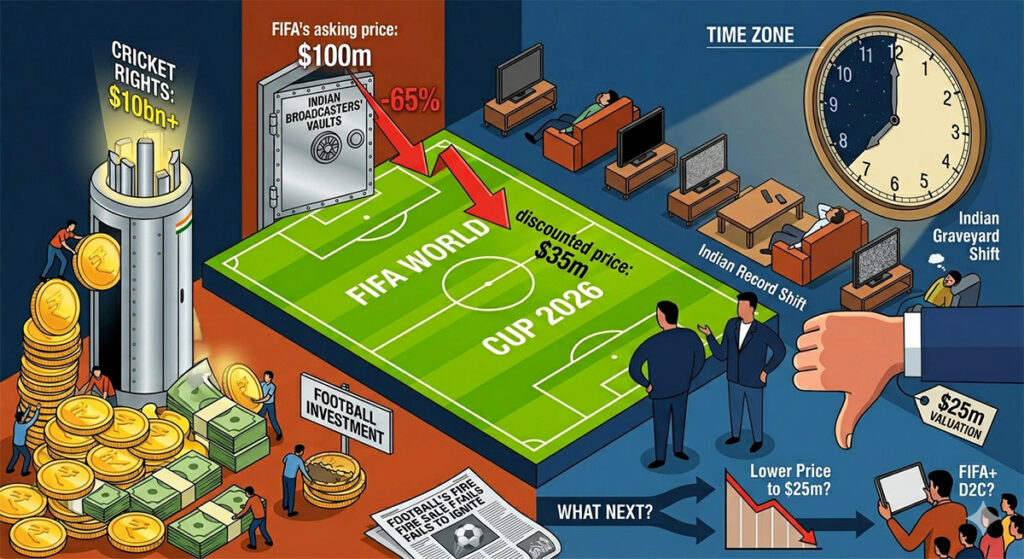
The reasons are brutally simple. The 2026 tournament, co-hosted by the United States, Canada and Mexico, kicks off in a time zone that turns India’s primetime into a graveyard shift. Most matches will air between midnight and 7am IST, a scheduling catastrophe for advertisers chasing mass reach. The 2022 Qatar edition was a gift by comparison, with matches dropping neatly into Indian evenings. North America offers no such luxury.
The market itself has also changed beyond recognition. The merger of Star India and Viacom18 into JioStar has gutted the competitive tension that once sent sports rights prices soaring. Where rival bidders once slugged it out, there is now a single dominant buyer, and it is in no hurry. JioStar has valued the rights at roughly $25m, a full $10m below Fifa’s already-discounted floor price. That gap has so far proved unbridgeable.
Broadcasters are also nursing a ferocious cricket hangover. Between 2022 and 2023, Indian media houses committed well over $10bn to cricket rights alone, covering IPL, ICC events and BCCI domestic fixtures combined. After a binge of that scale, appetite for a football package that delivers a fraction of the ratings, in the dead of night, is close to zero.
The economics of football broadcasting make the maths even harder. Cricket, with its natural breaks every few overs, is an advertiser’s paradise. Football offers a 15-minute halftime and precious little else. Recovering a nine-figure rights fee from a single half-hour ad window is a stretch at the best of times. These are not the best of times: the Indian government’s tightening grip on real-money gaming and gambling advertising has vaporised a category that once underwrote the economics of big sporting events.
Nor is the World Cup an anomaly. Indian Super League valuations have cratered. English Premier League rights have softened across successive cycles. The cooling of football as a broadcast commodity in India is structural, not cyclical.
With the tournament opening on 11th June, Fifa is running out of road. It may yet blink and meet JioStar at $25m. Or it may go direct, streaming the entire tournament on its own platform, Fifa+, or cutting a digital deal with YouTube, and hoping that a generation of Indian football fans finds its way there without a broadcaster to guide them.
Either way, the beautiful game’s Indian chapter is looking decidedly ugly.






