News Broadcasting
‘Our aim is to give history a more broad based appeal, which is why we are focussing on entertainment’

Live the Story! With the aim of competing better in the English entertainment space The History Channel is pursuing a new strategic direction in India. The aim is to spread the appeal of the channel to more viewers and increase the stickiness level through a variety of shows. These include television movies, documentaries, mini series and long running series.
Indiantelevision.com’s Ashwin Pinto caught up with The History Channel India MD Nikhil Mirchandani to find out about the plans and what lies in store.
Excerpts:

Could you talk about The History Channel’s new direction?
I would like to point out that we have not changed our positioning. We own the theme of history and will continue to do so. Our aim is to give history a more broad based appeal, which is why we are focussing on entertainment. Over the last three years we did a few things that set the stage for what we are trying to do today.
We established our positioning of history that no other channel has. History is our middle name so to speak. In a scenario of over 300 channels distribution is very important. We managed to do that since we are a part of the Star family.
We are the 16th best distributed channel in the country. We established a loyal viewer and advertiser base. We have also marketed ourselves well like getting Diana Hayden to host Biography. Moving towards entertainment is the next logical stage of evolution in our product lifecycle. Our aim is to attract more viewers and advertisers.
In what way has the programming strategy been embellished?
We begin our primetime with factual content at 8 pm. Then there are drama series at 9 pm There will be classic product from our library at 10 pm. At 11 pm there will be a thriller band. On the weekends you have a television movie on Friday at 9 pm For example Hitler The Rise of Evil.
There will also be a combination of fact and fiction. For instance you could see a biography of Marilyn Monroe followed by a drama or a television movie. We are also targeting women in the afternoon with programming that we are confident will appeal to them.
The primetime moves from a youngish factual content to drama to thriller. That evolution of our programming blocks is logical.
According to research how do viewers perceive the channel?
Viewers perceive us as a well respected credible authority on the subject of history. They have constantly expected that of us and we will not dilute that offering. They find us interesting as we deal with personalities like Hitler, Helen of Troy.
The great thing about the History Channel is that it is not restricted by formats. That is not the case with a movie channel that focuses on blockbusters. If they deviate one immediately notices that. Our only concern is whether the story is historically relevant. I would say that English movie channels are undifferentiated from each other.
We have a wide basket from the lifestyle genre, to thrillers to even perhaps stories on 9/11. It will be in terms of formats. By this I mean documentaries, movies, series, one off biopics, long series. The topics have also grown. We will also showcase concerts like Woodstock. History is never going to be the same again and we take advantage of that.


News Broadcasting
CNN-News18 to host Fury in the Gulf conclave on West Asia crisis
Three-hour summit to unpack geopolitical fallout and impact on India
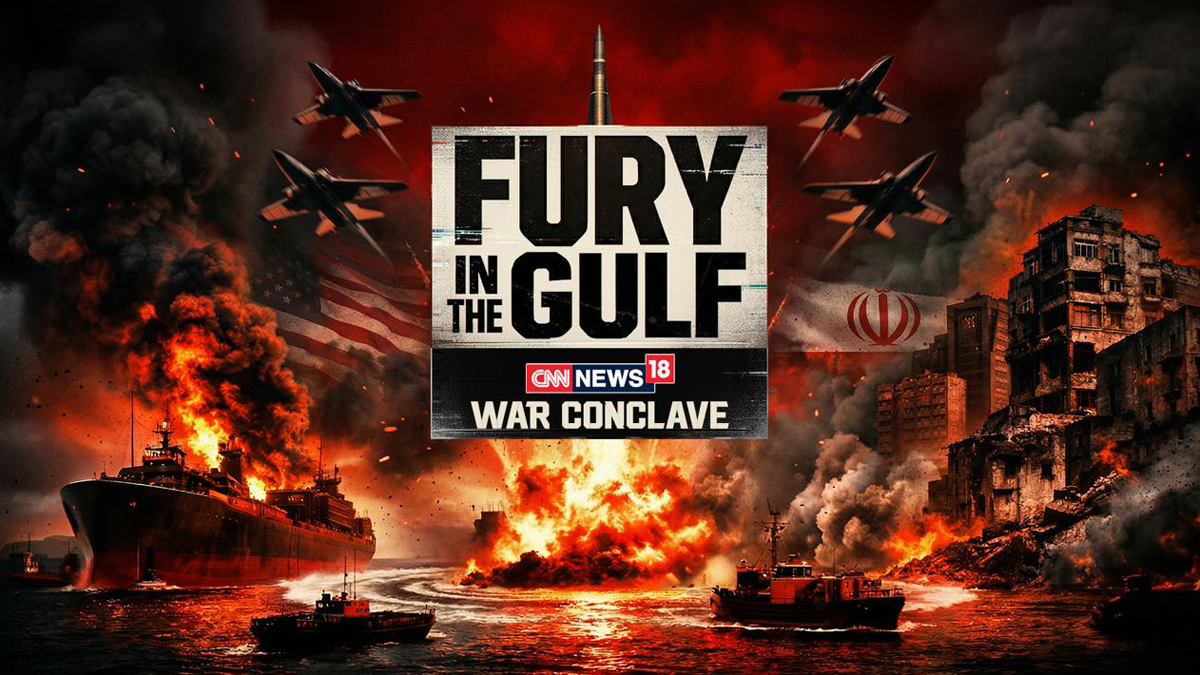
MUMBAI: CNN-News18 is set to host a special three-hour broadcast, Fury in the Gulf – War Conclave, on April 7, aiming to decode the escalating West Asia crisis and its far-reaching implications for India.
Scheduled from 4:00 PM to 7:00 PM, the conclave comes at a time when tensions between Iran and the United States are reshaping global geopolitics and triggering economic uncertainty. With India’s deep energy ties, trade links and large diaspora in the Gulf, the developments carry significant domestic relevance.
Built around the theme ‘Conflict, Consequences, and The Future,’ the programme will feature six curated sessions combining one-on-one interviews and panel discussions. The focus is to cut through the clutter and offer viewers a clearer understanding of the fast-evolving situation.
Key sessions include ‘Diplomacy in Times of War’ featuring Shashi Tharoor, and ‘World After the Iran Conflict’ with voices such as Ram Madhav, Reuven Azar, representatives from the European Union and the Iranian Deputy Envoy. Another session titled ‘Another Dunkirk?’ will bring together K. J. S. Dhillon and Jitin Prasada among others.
CNN-News18 editorial affairs director Rahul Shivshankar said, “In times of war, clarity becomes the most powerful tool. Fury in the Gulf – War Conclave brings together credible voices to address the questions and confusion that arise amid an overwhelming influx of information.”
He added that the initiative is aimed at delivering “facts, perspective, and insight” at a time when misinformation can easily cloud public understanding.
Echoing the sentiment, CNN-News18 CEO– English and business news Smriti Mehra said the conflict marks a defining global moment, with consequences that extend well beyond the region. She noted that the conclave seeks to present the crisis with “depth, nuance and responsibility” so audiences can better grasp its real-world impact.
As geopolitical tensions continue to dominate headlines, the conclave positions itself as an attempt to bring order to the noise, offering viewers a structured, insight-led look at a complex and rapidly shifting global situation.






