eNews
OTTplay Premium and KCCL introduce combo of high-speed internet and Premium OTT content

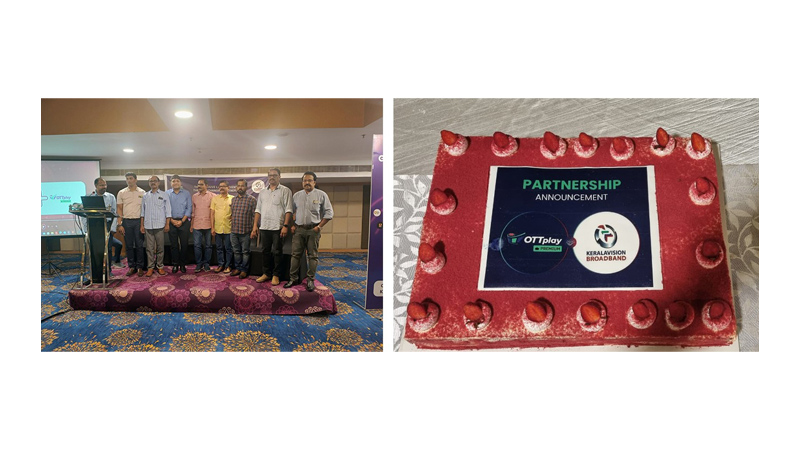
Mumbai: In a strategic move to meet the escalating global demand for high-speed internet and diverse entertainment options, OTTplay Premium, India’s first AI-powered streaming platform, has joined forces with Kerala Communicators Cable Limited (KCCL), the largest Multiple System Operator (MSO) in Kerala and a top-ranking MSO with the largest connection base in India.
This game-changing partnership is set to redefine the landscape of home entertainment and high-speed internet access, offering an unparalleled package that includes a 50 MBPS internet connection, a massive 4000 GB data limit, and access to 14 premium OTT platforms. Subscribers will also enjoy a rich array of content, featuring popular platforms such as SunNXT, Sony Liv, Zee 5, Lionsgate Play, Distro TV, Namma Flix, ALT Balaji, Play Flix, iStream, Fancode, Dollywood Play, Shorts TV, and Raj Digital.
What makes this offering truly innovative is the affordable pricing at just Rs. 616, making it one of the most cost-effective and comprehensive entertainment and internet packages in the market. This partnership between OTTplay Premium and KCCL aims to cater to the growing consumer demand for high-quality content and high-speed internet at an accessible price point.

Recently, the announcement of this partnership took place during a grand ceremony at Radisson Blu Kochi, Kerala. Key representatives from both OTTplay and KCCL teams were present at the event, marking a significant moment for the industry. This event symbolized the commitment of both entities to revolutionize home entertainment and high-speed internet services in India.
Representatives from both sides have conveyed their enthusiasm on the announcement, stating:
OTTplay CEO and co-founder Avinash Mudaliar expressed his excitement about this partnership, saying, “Our mission at OTTplay Premium has always been to enhance the streaming experience for our users through cutting-edge technology and a vast content library. Teaming up with KCCL allows us to extend our reach and offer a comprehensive package that combines the power of personalized streaming with high-speed internet access. We believe this partnership will set new standards for the industry.”
Commenting on the partnership, Aboobecker Sidique, president said, “The Company adopted OTT bundled schemes previously but the tie-up with OTTplay is a full-fledged one to meet the demand of operators and customers.”
COA general secretary KV Rajan said, “KCCL has sustained competition from big corporate giants in the entertainment industry of Kerala and launching of OTT bundling offer with OTTplay will be a new leap to retain customer base.”
KCCL and KVBL chairman Govindan highlighted, “The growth story of KVBL in broadband as the 8th largest FTTH broadband provider in India and reiterated that it will grow further by diversification of its service offer including OTT bundling”
KCCL and KVBL MD Sureshkumar explained, “New attractive OTT bundled schemes with higher Mbps and attractive rate to ensure maximum market penetration.”
KCCL and KVBL COO Padmakumar N said, “Wired broadband penetration in India is only 5% of total broadband and there is high potential for wired broadband to grow with attractive offers like OTT bundling.”
TCCL chairman Shakeelan also attended the launching function.
OTTPremium is proud to be the leading aggregator in the south, and this partnership adds another feather to its cap. This collaboration is expected to have a transformative impact on the way consumers experience entertainment and internet services at home. The bundled offering is now available for subscription, and both companies are confident that it will quickly become the go-to choice for households seeking a seamless blend of high-speed internet and premium entertainment.






eNews
Paisabazaar launches Credit Premier League 2.0
Nationwide campaign rewards highest credit scores with Rs 1 lakh top prize.

MUMBAI: When credit scores become a national league, even your CIBIL report starts feeling like it’s playing in the IPL and Paisabazaar has just kicked off the second season. Paisabazaar, India’s leading marketplace for financial products and the country’s largest free credit score platform, has announced the return of the Credit Premier League (CPL) 2.0, a fun, nationwide initiative to recognise and reward individuals with the highest credit scores.
Building on the success of the first edition, CPL 2.0 introduces higher rewards and broader participation. The individual(s) with the highest credit score in the country will win Rs 1 lakh, while state champions will each receive Rs 10,000. Additionally, all participants from the winning state, the one with the highest average credit score will also be rewarded.
All winnings will be credited directly to winners’ PB Wallet, allowing them to pay credit card bills, recharge mobiles, or settle utility bills seamlessly on the Paisabazaar platform.
Paisabazaar CEO Santosh Agarwal said the campaign aims to make credit awareness more engaging and mainstream. “With CPL, we are bringing together engagement, gamification and rewards to make conversations around credit scores more mainstream,” he noted. “Our focus remains on building a financially aware and credit-healthy Bharat.”
The first edition of CPL saw over 5.5 million participants, with the highest individual score touching 861. Delhi recorded the highest average credit score of 746.
Consumers can participate simply by checking their free credit score on the Paisabazaar platform or app. The CPL leaderboard and rankings will be available exclusively on the Paisabazaar App.
In a country where financial dreams are serious business, Paisabazaar has found a smart way to turn credit scores into an exciting game – because when your financial health gets rewarded, everyone wants to play.







