Movie Channels
“OTT, TV and cinema complement each other”: UFO Moviez’ CEO Rajesh Mishra

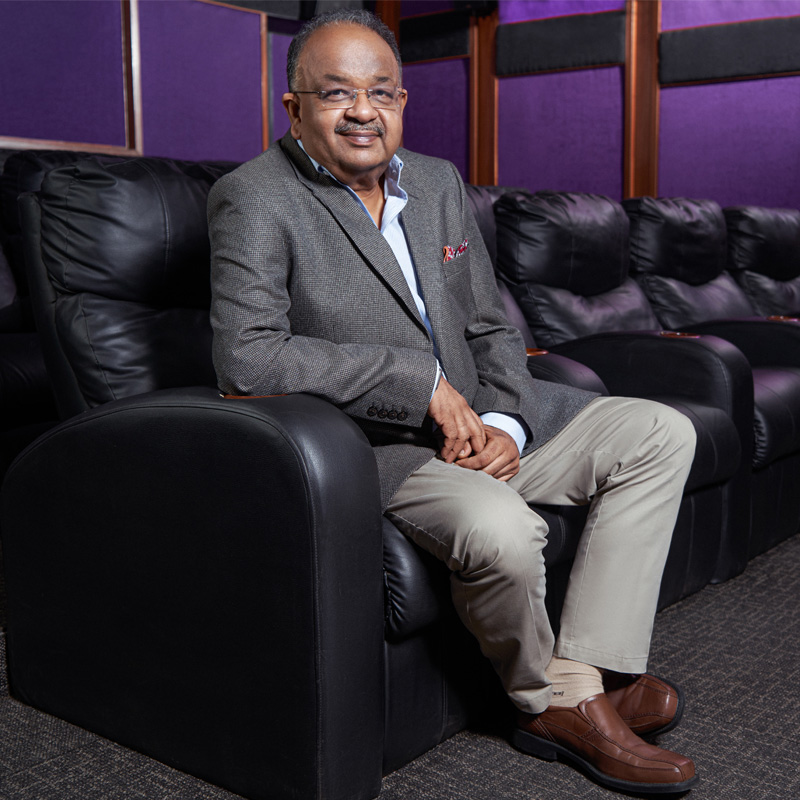
The movie-exhibition business in India is stuck in contradictions. On the one hand, the country produces the highest number of movies in the world, on the other, its screen-density remains one of the lowest. Various state governments provide subsidies to promote shooting in their states, yet GST rate on movie tickets in multiplexes was 28 per cent initially and has been reduced to 18 per cent only recently. And while OTT platforms stream originals directly to homes without any certification or pre-screening, movie-exhibitors need government approvals for every advertisement.
All this leaves the film folks in a sticky situation. While there is a huge untapped potential for expansion of cinema-networks in tier-II, tier-III cities, entrepreneurs and movie-enthusiasts are often hesitant to invest for fear of getting entangled in endless government regulations.
UFO Moviez, India’s largest digital cinema distribution network and in-cinema advertising platform, has been successfully navigating these contradictions for over a decade now. Not only has the company digitised over 5,000 screens and revolutionised movie-distribution in India, in order to salvage community movie-viewing in tier-II, tire-III cities, the company has also launched a sub-brand Nova Cinemaz under a franchise model, along with Caravan Talkies, a novel movie-on-wheels concept, wherein non-ticketed shows are played at media-dark villages at sundown for rural folks who would otherwise have been deprived of this entertainment.

“At the heart of all our efforts,” says UFO Moviez CEO Rajesh Mishra, “is an attempt to add value to all stakeholders in the movie value chain, spanning movie producers, distributors, exhibitors and the cinema-going audience.”
Indiantelevision.com’s Sumit Ahlawat spoke to Mishra on a range of issues involving expansion in smaller cities, how to improve ease of doing business in the movie-exhibition sector, the need for an overhaul of the regulatory framework, the benefits of adopting transparent, computerised ticketing systems, the revenue-sharing model between movie producers, exhibitors and distributors and on the future of in-cinema advertising. Edited Excerpts:
On FY19 for UFO Moviez.
Overall 2019 has been a stable year for us. The digitisation part of our business is working very well. We had completed the digitisation phase broadly by 2013. Currently, we are in the maintenance and growth phase.
On the in-cinema advertising revenue decline in FY19.
We did see a small decline in revenue generation, owing largely to the decline in in-cinema government-sponsored advertising because of the 2019 general elections and the Model Code of Conduct that was in place during the first two quarters. We were expecting this decline and were prepared for that. Advertising revenue from private players, however, has increased by 11 per cent, partly assuaging this shortfall. Going forward in 2020, we are confident about government advertising picking up once again.
Has India’s falling GDP also impacted in-cinema advertising revenues?
On the contrary, advertising by private players has increased by 11 per cent. India’s growth has, indeed, seen a modest decline owing largely to global factors. But this has not impacted the movie-exhibition business in India as demonstrated by the FICCI Frames report 2019 which estimated that while in-cinema advertising revenues have increased from Rs 7.5 billion in 2018 to Rs 9 billion in 2019, domestic theatrical revenues have also increased from Rs 102 billion in 2018 to Rs 110 billion in 2019.
On the need to look beyond metro cities.
As far as the metro cities are concerned, we are reaching a saturation point. Most metro cities in India have 100 plus screens. Even Surat has nearly 70 screens. And smaller cities having a population of 200,000-300,000 are managing with just one-screen cinemas. This imbalance needs to be addressed. India has a multi-layered economy and for the growth of all stakeholders in the movie value chain, from movie producers, distributors, exhibitors to the cinema-going audience, expansion in smaller cities is a must. We believe the next phase of growth in the Indian movie business will come from these smaller cities.
Cinema growth potential in tier-II, tier-III cities.
We have seen single-screen cinemas in tier-II cities struggling for survival. On the one side, they have limited options of movie display due to limited screens. In addition, they have limited in-cinema advertising revenues. These single-screen cinemas can be converted into two to three screen multiplexes. Entrepreneurs in small towns also have disposable income and they are keen to enter the movie-exhibition business. But over-regulation in the cinema sector puts them off. Licensing is a huge obstacle. In some states, one has to get clearances from over 50 nodal authorities before starting a multiplex business.
That’s why we started Nova Cinemaz. To support entrepreneurs in the small cities who are eager to get in but lack the required expertise and know-how. Under a Nova Cinemaz franchise, we partner with entrepreneurs at the local level. We not only take care of their content booking but put standard operating procedures (SOPs) in place, provide our years of technical expertise in computerised ticketing systems, market research, as well as provide clients for in-cinema advertisements.
Currently, we have around 47 screens operating under Nova Cinemaz and another 75 are under discussion.
On Caravan Talkies.
We have a two-pronged strategy for Caravan Talkies. It’s a non-ticketing platform and works totally on advertising. The idea was to take movies in media dark areas at the bottom of the pyramid. This provides potential for advertisers to reach an audience where no other media reaches. It also provides an outreach opportunity for government agencies. Whether it's public health messages, or the Swacch Bharat campaign, or the crop insurance scheme, Caravan Talkies is a great platform for government outreach campaigns. This medium excites us and we will continue to invest our resources in it.
On computerised ticketing systems.
Single-screen cinemas are also struggling on account of lack of transparency and their refusal to join a transparent computerised ticketing system. They suffer because they have to furnish huge minimum guarantees (MGs) for a movie even before its release. Multiplexes work on a revenue-sharing model but single-screen cinemas in smaller cities, which are the most vulnerable, have to shell out MGs. So, I believe, computerised ticketing should be made mandatory across the board (currently it’s mandatory only for multiplexes). It’s vital for the survival of cinemas.
On revenue sharing.
Historically speaking, only 10 per cent movies are a hit, another 10 per cent do average business, while the rest lose money. Given that for movie producers, cinema is the only touch-point with the audience, their survival is a must. And, thus, it’s vital for movie producers to move towards a revenue-sharing model and not insist on MGs.
On Regulation.
Today, the greatest bane for the movie-exhibition business is over-regulation. Over-regulation of content, over-regulation of licenses and high GST rates. A movie ticket below Rs 100 is taxed differently than a multiplex ticket. This Robin Hood-attitude must go. Cinema remains one of the most regulated sectors in the entertainment space. Print, TV, OTT, nothing is as regulated as cinema. The reason China could add 10,000 screens in one year, more than we have been able to add in the last 70 years, is because movie exhibition remains one of the most heavily regulated sectors in India. A complete overhaul of licensing and regulation is a must to realise the full growth potential of the cinema business in India.
On single-window clearances.
The ease of doing business should translate in the movie-exhibition business as well. Single-window clearance for cinemas is the need of the hour. This will help the cinema business tremendously.
On the OTT challenge.
I do not see OTT as a challenge. Rather, I believe that OTT, TV and cinema can all complement each other and help build an ecosystem conducive for the growth of quality content. However, OTT, which streams original content directly into people’s houses does not have to deal with censorship for these whereas, we have to take approvals even for advertisements. While we do not envy the freedom on OTT, we definitely believe that there should be less censorship on cinema well. There should not be a disparity between OTT and cinema.







Movie Channels
Zee5 launches five free FAST channels on Samsung TV Plus India
New genre-led channels bring comedy, drama, horror, classics and South films to Smart TVs.
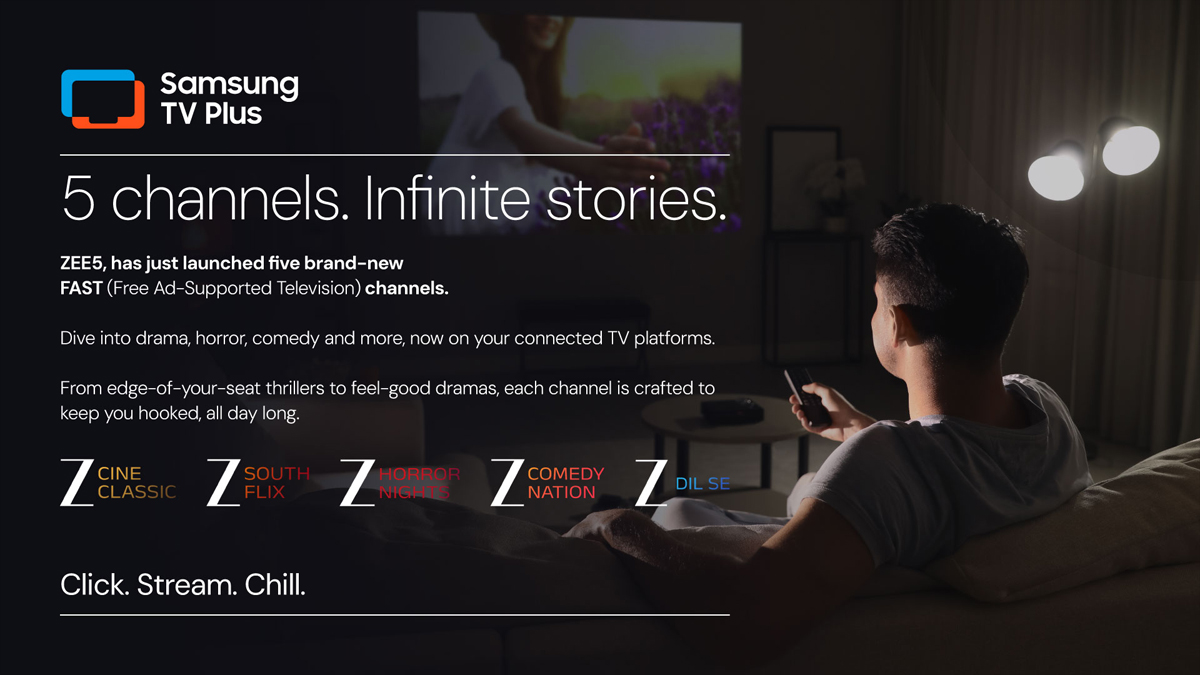
MUMBAI: Zee5 just turned Samsung Smart TVs into a free entertainment buffet because when premium content costs nothing, even the remote control starts smiling. Zee5 has launched five curated free ad-supported streaming TV (FAST) channels on Samsung TV Plus India, making high-quality, genre-specific entertainment available subscription-free to millions of Samsung Smart TV owners across the country.
The five channels now live are:
Zee Comedy Nation – Popular comedy shows and movies
Zee Dil Se – Compelling drama series
ZEE Horror Nights – Horror and supernatural content
ZEE Cine Classic – Timeless Indian films
ZEE South Flix – High-energy South Indian films dubbed in Hindi
All content is drawn from Zee5’s extensive library and programmed in a lean-back, always-on format ideal for large-screen viewing. This launch strengthens Zee5’s Connected TV strategy at a time when 64 per cent of its premium content watch time already comes from connected devices.
Zee5 chief business officer Siju Prabhakaran said, “At Zee5, we believe accessibility and scale will define the next phase of digital entertainment growth in India. Our presence on Samsung TV Plus strengthens our Connected TV strategy, enabling viewers to discover curated, genre-led content in a seamless, free, and premium environment.”
Samsung TV Plus India head of partnerships Kunal Mehta added, “Local partnerships are at the heart of how we grow Samsung TV Plus in India. Zee Entertainment is one of India’s most iconic media brands, and bringing their channels to our service means millions more Samsung Smart TV owners can enjoy premium local content, subscription-free.”
The channels are available directly through the pre-installed Samsung TV Plus app with no login or subscription required. This marks another milestone in Zee5’s CTV expansion and builds on its growing international presence, with Zee channels already available on Samsung TV Plus across Southeast Asia, Australia and New Zealand.
In a streaming world where paywalls often block the fun, Zee5 and Samsung have quietly opened the gates, proving that sometimes the best things in life (and on your TV) really are free especially when they come with a side of comedy, drama, horror, classics and South Indian blockbuster energy.






