iWorld
OTT platforms chasing the regional pie

MUMBAI: It isn't just the broadcast sector that's woken up to the call of the regional, but even the budding over the top (OTT) platforms.
On the stage of Vidnet 2018, hosted by Indiantelevision.com, experts from India’s leading OTT platforms were present. Voot Originals head and VP Viacom Tanya Bami, Eros Now VP editorial and content strategy Piyush Bhatia, monozygotic CEO Ravi Luthria, Arre Sharan Budraja and Spuul content head Girish Dwibhashyam shared their views on the state of content on OTT. The panel was moderated by Monozygotic founder Rajiv Laxman.
Dwibhashyam highlighted about Spuul’s SVOD format and said that initially its primary focus was largely outside India but over a period of time, it captured users in India as well. According to him, currently, long form and live television are more suited for SVOD and for short form content which is less than 10 minutes, AVOD is the way to go. He added, “Earlier, viewership used to come from Mumbai, Delhi metro belt but in the last 9-10 months the consumption has started coming in from the small towns for regional languages like Bhojpuri, Punjabi and that is the trend that we are observing these days. So our focus in India will be more in vernacular languages as we believe that the next 400 million internet users will be different from people right now and they will largely speak vernacular language and would want to watch the content in their own language rather than English language.”

Bami agreed to Dwibhashyam's point about Indian audiences getting inclined towards regional content. She said, “Half of the population is supposed to parallelly grow by 23 per cent in the next couple of years. So, those are people moving away from TV and if they were to watch TV, they will be already on Voot.” Furthermore, according to her, people are moving away from conventional mainstream content and are looking at the international channels and OTT platforms and those are the stories that are offered in regional languages which will gain traction from the viewers. “So the attempt is to move into pure-play storytelling and that will attract newer audiences to the ones who are digital natives. So to top-up the footfall that we may have is why we would go SVOD. Each show will attract the audiences like we did a very big experiment with a popular show on MTV, Kaisi ye Yaariyan, by bringing it on Voot.”
Throwing light on the original content on the platforms, Bami said that serving original content is a must, but content strategy is also important. She said that the platform will be able to maximise and juice it up around content like extra dose, or behind the scenes or probably any sort of engaging content to the audiences will attract eyeballs. She explained by giving an example of Bigg Boss’s content strategy on Voot with Video Vichaar.
Commenting on the same, Bhatia also added that original content is everyone’s primary focus on every OTT platform. While Luthria said the industry should get into more collaborations and developing content base because that will drive the industry. “Three years down the line you see the problem coming in that there are so many things happening. Also, if you are saying that there is no consolidation, then there will be more disruptive content because everyone will be running behind the same pie. So, I suggest there should be collaborative, creative content development.”
Dwibhashyam concluded by saying that the Bible for content for OTT will be the internal consumption dashboard. “I think the future is going to be where we have seen it with Netflix or Amazon that how they used their internal data, that every platform today knows what content is actually getting consumed and what type of content works basically and in future consumers are going to see the stuff that they would like to watch.”







iWorld
Parineeti Chopra hosts new parenting series Mom Talks on Zee5 and Bullet
Celebrity parents share honest stories in 9-episode show launching 4 April 2026.
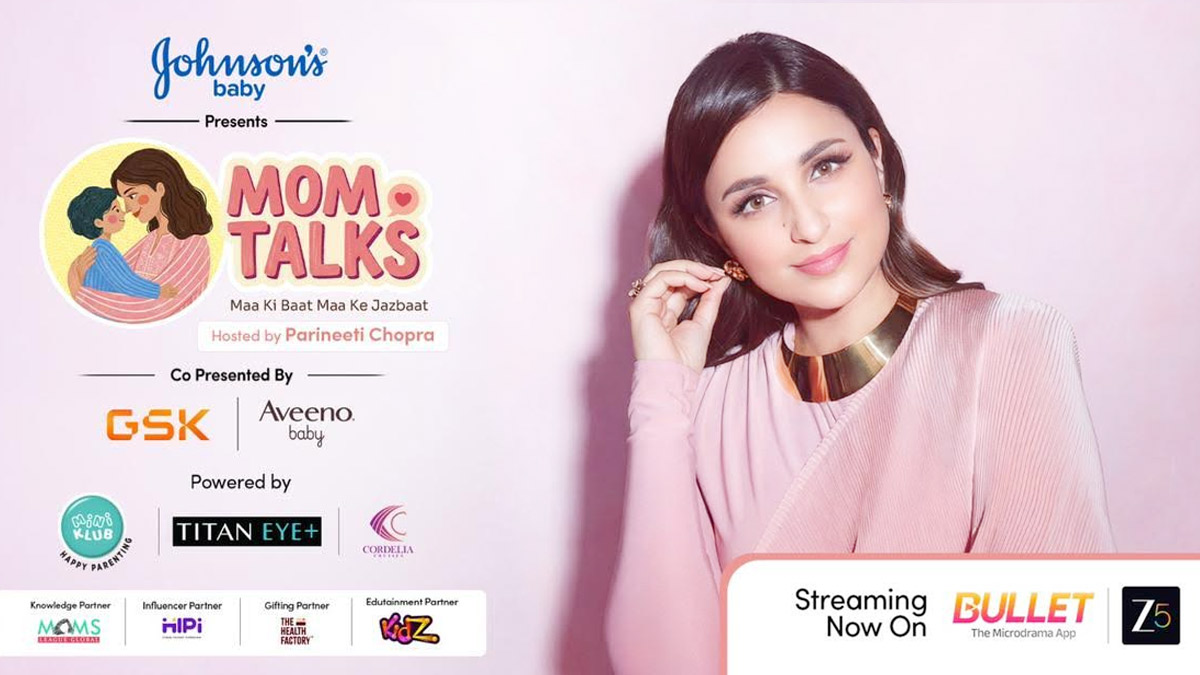
MUMBAI: Parineeti Chopra is stepping into a brand-new role not on the big screen, but as the warm, relatable host helping parents navigate the beautiful chaos of raising children. Bullet microdrama and Zee5 have announced the launch of Mom Talks, a fresh content-led IP hosted by the popular actress. The 9-episode series brings together celebrity parents including Imran Khan, Neha Dhupia, Vikrant Massey & Sheetal, and Gauahar Khan & Zaid Darbar to share candid, real-life perspectives on everyday parenting.
Positioned as a high-engagement format, Mom Talks taps into the growing demand for authentic and credible parenting content. It also offers seamless, contextual integration opportunities for brands. The series is backed by a strong lineup of partners including Johnson’s Baby, GSK, Aveeno Baby, Mini Klub, Titan Eye+ and Cordelia Cruises.
Bullet microdrama app, co-founder & chief business officer Azim Lalani said the show exemplifies how content is evolving towards more rooted, sustained engagement. “It’s about bringing content that people come back to, while creating a natural space for brands to be part of the narrative,” he noted.
Mom Talks creator Bullet head of AVOD & partnerships Munaf Merchant explained the core idea, “We wanted to build a safe, honest, one-stop destination for parents seeking real answers to everyday questions.”
The first episodes will stream for free on ee5 AVOD starting 4 April 2026, with new episodes dropping every Friday and Saturday. The series will also be available on the Bullet microdrama app.
Speaking about their association, Peeyush Unikkat from Johnson’s Baby highlighted the brand’s focus on supporting modern parenting journeys, while Aakash Mehta from GSK emphasised the show’s role in making important health conversations more relatable for new parents.
In a digital space often filled with filtered perfection, Mom Talks promises something refreshingly real honest conversations, celebrity insights, and practical wisdom, all wrapped in Parineeti Chopra’s engaging presence. For Indian parents, this could be the parenting series they’ve been waiting to binge.






