International
Oscar departs from norm; awards ‘Parasite’ multiple times

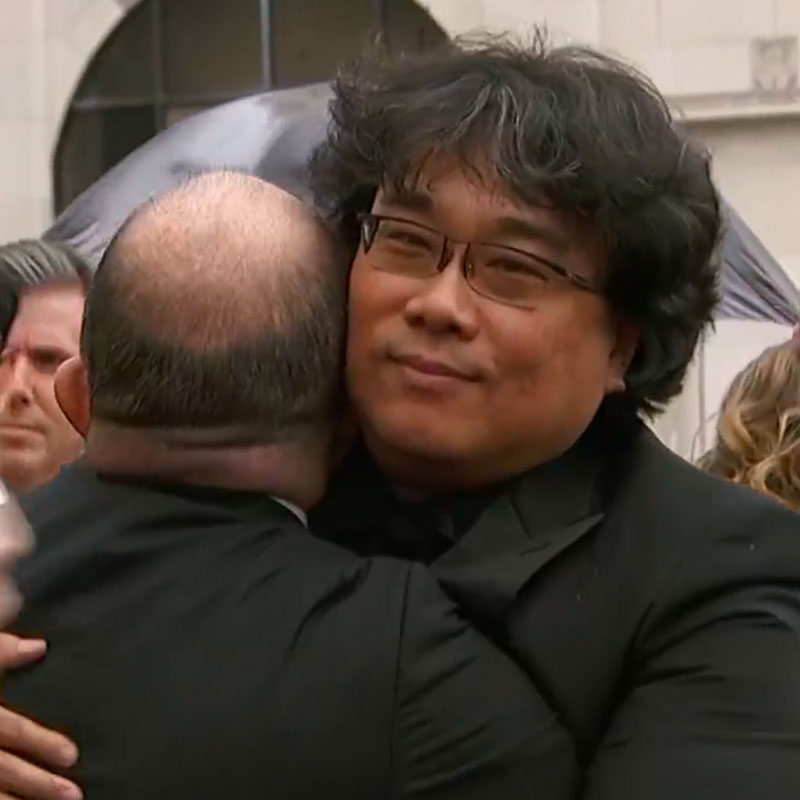
MUMBAI: The Academy of Motion Pictures Arts & Sciences sprang a few surprises at the Oscar Awards today. For starters, it rechristened the foreign language film category to best international feature film. It took that renaming pretty seriously by showering the South Korean film Parasite with oodles of major awards: best picture, best screenplay, best international feature film, and best director (Bong Joon-ho).
For the South Korean entry, it was history in the making as it is the first international film to win an Oscar for best feature. Joon-ho will go down in the history books: he is the second director of Asian descent to take home an Oscar; Ang Lee was the first with English language films Brokeback Mountain and Life of Pi. He is also the second helmer of a foreign language film to be accorded that honour; the first being Alfonso Cuarón for Roma. “I will be drinking in the after party,” he said to the merriment of all the Hollywood stars present at the Dolby Theatre in Los Angeles.
Another surprise was the near total shunning of Netflix’s entries. Estimates are that the streaming giant spent nearly $70 million (ref: The Verge) in its campaign for the Oscar. It was nominated in 24 categories, but it could get its hands on only two of the statuettes: that for American Factory (Best Documentary produced by the former president and first lady Barack Obama and Michelle Obama’s production company) and Laura Dern (best supporting actress for her role in Marriage Story).

The other big winners: Brad Pitt (best supporting actor in Once Upon a Time in Hollywood), Taiki Waititi (best adapted screenplay for Jojo Rabbit), and Renee Zellweger (best actress for her portrayal of Judy Garland in Judy), Joaquin Phoenix (for his near-perfect performance as the lead actor in the billion-dollar plus grossing Joker), best film editing and sound editing (Ford vs Ferrari), original score (Joker, Hildur Guðnadóttir), Best animated feature (Toy Story4), best visual FX (1917), Sound Mixing (1917).
Phoenix spoke about how we need to live responsibly, respect nature, our resources, and how compassion and love can go a long way in his acceptance speech, in a departure from most other speeches which consisted of thanking the academy or peers or the technical, cast and crew of the film.
The Oscar ceremony was telecast on Hotstar and Star World in India earlier this morning with advertisers like Kia Motors, Cred, Amazon Prime Video's Hunters, Lenovo, Dyson, Jack Daniels coming on board.
The full list of 2020 Oscar winners
Best picture
Parasite- Winner
1917
The Irishman
Jojo Rabbit
Joker
Little Women
Marriage Story
Once Upon a Time…in Hollywood
Ford v Ferrari
Best actor
Joaquin Phoenix, Joker -Winner
Leonardo DiCaprio, Once Upon a Time…in Hollywood
Antonio Banderas, Pain and Glory
Adam Driver, Marriage Story
Jonathan Pryce, The Two Popes
Best actress
Renée Zellweger, Judy- Winner
Cynthia Erivo, Harriet
Scarlett Johansson, Marriage Story
Charlize Theron, Bombshell
Saoirse Ronan, Little Women
Best director
Bong Joon-ho, Parasite- Winner
Sam Mendes, 1917
Todd Phillips, Joker
Martin Scorsese, The Irishman
Quentin Tarantino, Once Upon a Time…in Hollywood
Best supporting actress
Laura Dern, Marriage Story-Winner
Florence Pugh, Little Women
Margot Robbie, Bombshell
Kathy Bates, Richard Jewell
Scarlett Johansson, Jojo Rabbit
Best supporting actor
Brad Pitt, Once Upon a Time…in Hollywood- Winner
Al Pacino, The Irishman
Joe Pesci, The Irishman
Anthony Hopkins, The Two Popes
Tom Hanks, A Beautiful Day in the Neighborhood
International feature film
South Korea, Parasite-Winner
France, Les Misérables
North Macedonia, Honeyland
Poland, Corpus Christi
Spain, Pain and Glory
Documentary short feature
Learning to Skateboard in a Warzone (If You're a Girl)- Winner
In the Absence
Life Overtakes Me
St. Louis Superman
Walk Run Cha-Cha
Documentary feature
American Factory-Winner
The Cave
The Edge of Democracy
For Sama
Honeyland
Animated feature film
Toy Story 4-Winner
How to Train Your Dragon: The Hidden World
I Lost My Body
Klaus
Missing Link
Music (original song)
"(I'm Gonna) Love Me Again" from Rocketman-Winner
"I'm Standing With You" from Breakthrough
"Into The Unknown" from Frozen II
"Stand Up" from Harriet
"I Can't Let You Throw Yourself Away" from Toy Story 4
"Glasgow" from Wild Rose
Music (original score)
Joker- Winner
Little Women
Marriage Story
1917
Star Wars: The Rise of Skywalker
Visual effects
1917- Winner
Avengers: Endgame
The Irishman
The Lion King
Star Wars: The Rise of Skywalker
Best film editing
Ford v Ferrari- Winner
The Irishman
Jojo Rabbit
Joker
Parasite
Best cinematography
Roger Deakins, 1917- Winner
Rodrigo Prieto, The Irishman
Lawrence Sher, Joker
Jarin Blaschke, The Lighthouse
Robert Richardson, Once Upon a Time…in Hollywood
Best sound mixing
1917-Winner
Ad Astra
Joker
Ford v Ferrari
Once Upon a Time…in Hollywood
Best sound editing
Ford v Ferrari-Winner
1917
Joker
Once Upon a Time…in Hollywood
Star Wars: The Rise of Skywalker
Makeup and hairstyling
Bombshell- Winner
Joker
Judy
Maleficent: Mistress of Evil
1917
Best costume design
Jacqueline Durran, Little Women-Winner
Sandy Powell & Christopher Peterson, The Irishman
Mark Bridges, Joker
Arianne Phillips, Once Upon a Time…in Hollywood
Mayes C. Rubeo, Jojo Rabbit
Best production design
Once Upon a Time…in Hollywood-Winner
The Irishman
1917
Jojo Rabbit
Parasite
Live-action short film
The Neighbors' Window-Winner
Brotherhood
Nefta Football Club
Saria
A Sister
Best adapted screenplay
Taika Waititi, Jojo Rabbit-Winner
Steven Zaillian, The Irishman
Greta Gerwig, Little Women
Anthony McCarten, The Two Popes
Todd Phillips & Scott Silver, Joker
Best original screenplay
Bong Joon-ho, Parasite-Winner
Rian Johnson, Knives Out
Noah Baumbach, Marriage Story
Sam Mendes & Krysty Wilson-Cairns, 1917
Quentin Tarantino, Once Upon a Time…in Hollywood
Animated short film
Hair Love- Winner
Dcera (Daughter)
Kitbull
Memorable
Sister





International
Russia-India cinematic spectacle Persimmon of My Love set for grand Moscow debut
Hindi cinema style musical revives Indo-Soviet cinema ties for today

MUMBAI: A new chapter in cross-border storytelling is set to unfold as Persimmon of My Love gears up for its premiere in Moscow on 1 April 2026, marking the first large-scale cinematic collaboration between Russia and India in decades.
Positioned as a modern nod to the cultural exchange that once brought Indian classics to Soviet audiences, the film blends Hindi cinema flair with Russian storytelling, aiming to rekindle a long-standing cinematic friendship.
Directed by Marius Weisberg, the musical comedy follows two brothers navigating a lively world of music, family and romance. The lead roles are played by Demis Karibidis and Mikhail Galustyan, with Karibidis also contributing as a screenwriter.
Shot entirely in India, the production leans heavily into Hindi cinema style spectacle. Filming took place across Mumbai studios and the cities of Udaipur and Jodhpur, whose architecture was used to create the fictional setting of Khurmada. A crew of over 350 worked on the project, with large-scale sequences featuring up to 1,000 extras.
The film also brings Indian creative talent into the mix. Dance sequences are choreographed by Jay Kumar, while music by Zurab Matua features songs in both Hindi and Russian, adding to its cross-cultural appeal.
Backed by TNT channel, MyWayStudio and the Russian Cinema Fund, the project reflects a broader push to strengthen cultural ties between the two countries.
With its mix of colour, comedy and cross-border collaboration, Persimmon of My Love is not just a film release but a reminder that cinema, much like music, travels well across borders.






