iWorld
OpenSignal too finds Airtel better than Jio in 4G speed, latter tops in reach

MUMBAI: Bharti Airtel is the top performer among the mobile service providers in India in terms of 4G data speed, concluded a report by OpenSignal, a provider of insights into coverage and performance of mobile operators worldwide.
OpenSignal said its survey was based on 1.3 billion measurements from 93,464 customers on the major wireless networks between December 2016 and February 2017. It stated that Airtel’s average 4G speeds came in at 11.5 Mbps. In second slot was Vodafone at 8.59 Mbps and Idea was the next with speeds of 8.34 Mbps. Jio was fourth, with speeds down to 3.92 Mbps. This clearly showed that Airtel still continues to be the best network of India.
All the carriers were found to be below the current 17.4 Mbps global average for 4G download speeds.

However, Jio customers were able to get an 4G signal from its network 91.6 per cent of the time. Idea came in second place at 59.45 per cent, Vodafone was third at 59.05 per cent, and Airtel came in fourth in this category with 54.72 per cent.
Global internet speed test platform Ookla, based on web and app platforms, had recently shown Airtel as the top 4G high-speed internet provider in India. But, the report was questioned by Jio. Earlier this week, TRAI released a report suggesting Jio was the fastest 4G high-speed internet provider, while Airtel was the third-fastest.
Also Read: Airtel does not agree with ASCI’s ‘conclusion’ on misleading ad
Jio freebies: TDSAT puts off Airtel-Idea hearing to May
Jio says Ookla has admitted to flaws in speed measurement system







Gaming
Nodwin Gaming partners with Runestone for esports data and integrity solutions
South Asian esports leader joins forces with Czech tech firm to enhance tournament operations.
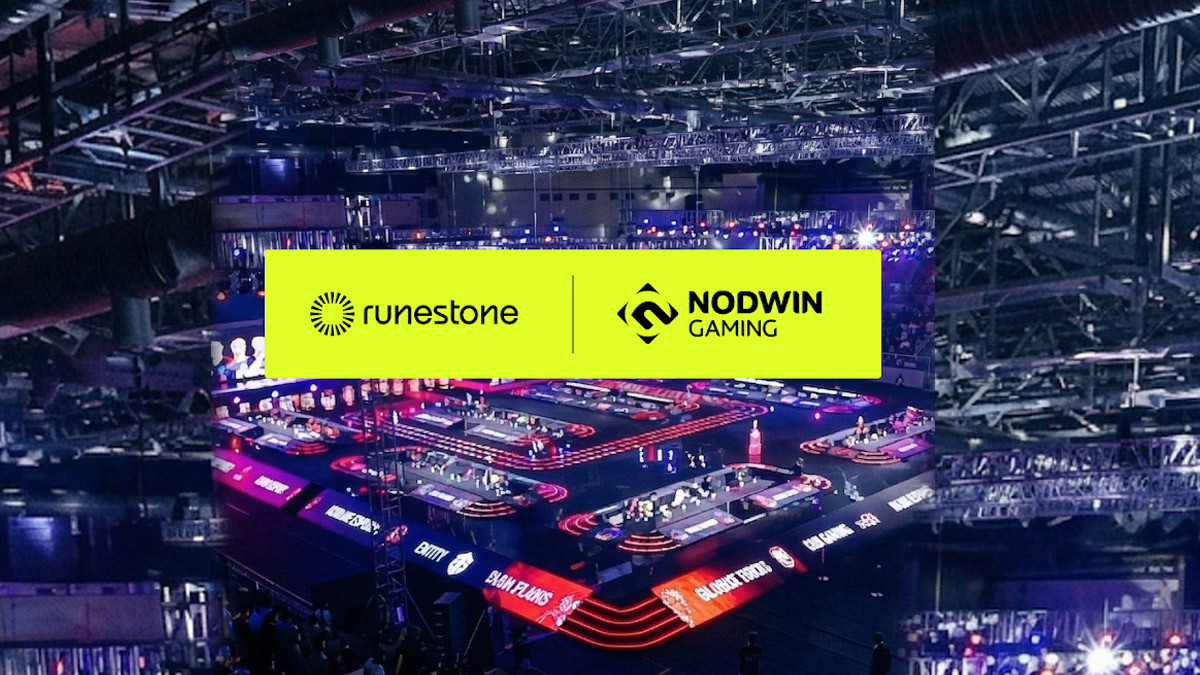
MUMBAI: Nodwin Gaming has just levelled up its game by bringing in a specialist to keep the scoreboard honest and the fans fully engaged. The leading South Asian esports and gaming company has announced a strategic partnership with Runestone, a Prague-headquartered esports technology firm specialising in real-time data and engagement solutions for tournament organisers and publishers.
The collaboration aims to strengthen competitive integrity, improve operational oversight, and deliver more interactive viewing experiences across Nodwin’s properties. It will initially focus on the Nodwin Clutch Series for Counter-Strike 2, a Tier 2 tournament that provides emerging teams with consistent competitive opportunities and helps build the talent pipeline.
The latest edition of the series recently concluded with Big defeating ECSTATIC 2–1 in the grand final of the $50,000 online event.
Nodwin Gaming chief business officer at MENA and global head of data monetization Teemu Koski said, “Integrity and transparency are fundamental to sustainable esports ecosystems, especially in Tier 2 competition where the next generation of talent emerges. Runestone’s expertise complements our experience in building scalable esports IPs.”
Runestone head of partnerships Michael Schwartz added, “Nodwin Gaming has built one of the most dynamic esports ecosystems across emerging markets. We’re thrilled to collaborate on supporting tournaments with greater transparency, deeper fan interaction, and scalable tools.”
Both companies are exploring opportunities to extend the partnership across additional titles, including mobile-first competitive ecosystems, and to develop new products for publishers, tournament operators, and event promoters.
In the rapidly growing world of esports, where fair play and fan excitement are equally crucial, Nodwin Gaming and Runestone are teaming up to ensure every match is not only competitive but also transparent and engaging. This alliance could well become a game-changer for Tier 2 tournaments across South Asia and beyond.







