News Broadcasting
Ofcom registers plaint against ‘Joanna Lumley’s India’ as ‘materially misleading’


MUMBAI: The UK’s communications regulator Ofcom recently registered a complaint against “Joanna Lumley’s India” to be ‘materially misleading’. It has been registered under the “Complaints assessed, not investigated” section of Ofcom. Ofcom has decided not to pursue complaints recorded between 1 and 20 August 2017 because they did not raise issues warranting investigation. “Complaints assessed” fall under the procedures for investigating breaches of content standards for television and radio.
TV show ‘Joanna Lumley’s India’ has been alleged in a section of the UK media for airbrushing history. Lumley had returned to the place of her birth to celebrate India and walk in her ‘family’s footsteps’. However, her show alleged overlooked British oppression in the former colony. In the final instalment of Lumley’s three-part travelogue adventure across India, she explored Rajasthan, Delhi and the mountainous North West ending in Kashmir, the place of her birth.
Joanna Lumley’s India, shown on ITV, promise to “celebrate” modern India and “walk in my family’s footsteps”. Within minutes of the beginning of the first episode, there was reportedly an omission. Walking through Kolkata, then called Calcutta, Lumley notices the British-inspired architecture. She however fails to mention that the first Anglican cathedral on the subcontinent St John’s Church was built by James Agg, her great-grandfather and the first of her ancestors to arrive in India in 1777. She probably is unaware of the lineage, the Guardian reported.

But. it was not hard to trace it. Or, it could be because of those four chilling words — British East India Company – the trading corporation turned “aggressive colonial power”, as the historian William Dalrymple pointed out, the activities of which brought the word “loot” (from the Hindustani ‘lut’) into the English dictionary, and from which Agg may have made his fortune.
The Brit EIC was not just a group of merchants, but a military force that plundered India throughout the 18th and early 19th centuries. In Bengal, the first of the regions to fall to the British Raj, the immediate outcome was full pockets for the Westerners and poverty for the citizens. Indians were stopped from trading, were forced off their land by harsh taxes, and saw their world-renowned textile industry destroyed.
The poverty of this great city, Lumley says, was down to “conflict and politics”. Or, did she say: “conquest and policies” – such as the 50 per cent tax on income, the extraction of which was routinely helped along by torture. Defaulters could expect to be caged and left in the burning sun. Or, at worst, to quote Edmund Burke’s 1795 testimony in the Parliament about the horrors inflicted upon Bengali women, “they were dragged out, naked and exposed to the public view, and scourged before all the people … they put the nipples of the women into the sharp edges of split bamboos and tore them from their bodies,” the Guardian wrote.
As Lumley’s camera crew panned over a child beggar, it began to feel like the presenter was in denial. Take the segment on the Dalits, or “untouchables”. It is hard to imagine, purrs a moralising Lumley, how “this modern country” can “tolerate such discrimination”. Yet, as Shashi Tharoor outlined in his new book “Inglorious Empire,” the British helped to entrench caste prejudice, giving a final shape to it as a means of control. “We had castes,” Tharoor says, “but we did not have the caste system.”
Also Read:
UK’s TV & online habits revealed, 40 mn watch episodes back-to-back
84 U.K. channels required to provide access services in 2018
Fox-Sky deal: UK to assess implications by 29 June






News Broadcasting
Kamlesh Singh receives Haldi Ghati Award from MMCF
India Today Group editor honoured for three decades of journalism at Udaipur ceremony.
MUMBAI- Kamlesh Singh just turned a lifetime of sharp words into a shiny shield because when journalism wakes up a society, even the Maharana of Mewar wants to pin a medal on it.
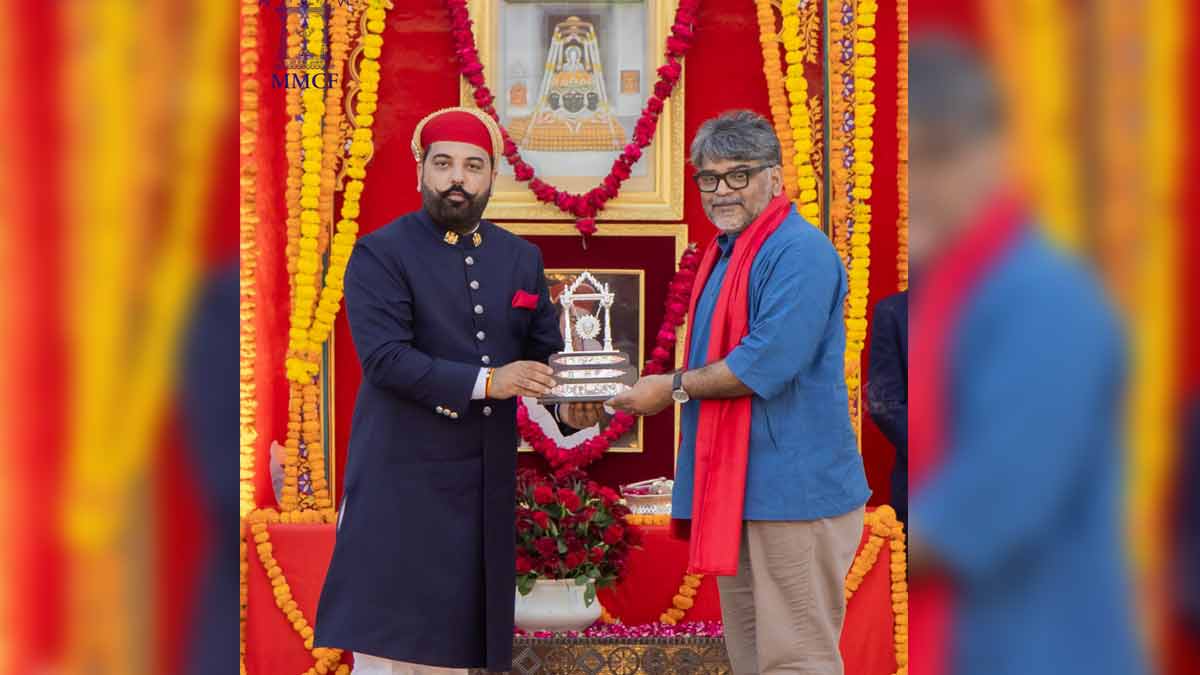
The Maharana of Mewar Charitable Foundation (MMCF) conferred its prestigious Haldi Ghati Award on Kamlesh Singh, a senior editor at the India Today Group, during a ceremony in Udaipur on 15 March 2026. The national award, instituted in 1981-82, recognises “work of permanent value that initiates an awakening in society through the medium of journalism.”
Singh, who leads several editorial initiatives including Aaj Tak Radio, the Teen Taal community and The Lallantop, was presented the honour by Lakshyaraj Singh Mewar, Managing Trustee of MMCF. The citation highlighted his three decades of contributions to Indian media, innovations in digital journalism, mentoring young reporters, and his popular podcast persona “Tau” on Teen Taal, which fosters thoughtful public discourse.
The Haldi Ghati Award, named after the historic Battle of Haldighati symbolising valour and resilience, is one of four national awards given annually by MMCF. Past recipients include Tavleen Singh, Piyush Pandey and Raj Chengappa.
Other honourees this year included Padma Vibhushan Pt Hari Prasad Chaurasia, Vedamurti Devvrat Rekhe, Treeman of India Marimuthu Yoganathan, Vir Chakra Capt Rizwan Malik, and US-based researcher Molly Emma Aitken, who received the Colonel James Tod Award for contributions to understanding Mewar’s spirit and values.
In an era where headlines often shout louder than substance, the MMCF quietly reminded everyone that real journalism isn’t about noise, it’s about the quiet, persistent work that stirs society awake, one thoughtful story at a time.







