News Broadcasting
NRSC forms new technical body; schemes NRS 2004

MUMBAI: A meeting of the National Readership Studies Council (NRSC) held on 24 September in Mumbai has elected The Times of India Group president Pradeep Guha as the chairman. Guha succeeds Krishan Premnarayen of the Mumbai-based Prem Associates Advertising and Marketing.
NRS council also commissioned the NRS 2004 by appointing a single research agency namely, AC Nielsen ORG-MARG Pvt. Ltd. to undertake this study, informs an official release.
The specialities of NRS 2004 include an increase in sample size by 30 per cent and an increase of over 120 per cent in the number of locations. All adults over 12 years of age across all states in India (Except J & K, Andaman & Nicobar and Lakshadweep islands) will be included in the coverage. Other highlights of the survey include:
All districts to be covered.
All Towns above 1 lakh population to be covered.
Coverage of Number of villages covered more than doubled for higher spread of the sample as compared to NRS 2003.
Readership Estimates by editions.
Readership of supplements in 35 metros.
Section-wise readership.
Psychographic profiling parameters.
100 per cent dedicated Team of the Research Agency to supervise the entire project.
Quality checks by reputed External Audit firm.
Incidence of Internet usage from Mobile & SMS usage.

An enlarged technical committee has been constituted, headed by Madison CEO Sam Balsara CEO MADISON, as its chairman. Group M managing director Ashutosh Srivastava will be the deputy chairman. The members of the technical committee include Media agencies: Arpita Menon (Lodestar), Jasmin Sorabji (Mediacom), Karthik Sharma (Madison) and V Balasubramaniam (Group M). Publications: Ashish Bagga (Living Media Group), Conrad Saldanah (Times of India), Vargese Chandy (Malyala Manorama), Girish Aggarwal (Dainik Bhaskar), Vikas Joshi (Dainik Jagran), Mitrajit Bhattacharya (Chitralekha) and Suresh Balakrishanan (Hindustan Times), Rajmohan (Hathway Investments), Girish Agarwal (Dainik Bhaskar), Mitrajit Bhattacharya (Chitralekha) and Vikas Joshi (Dainik Jagran). Advertisers: Rajesh Kumar (Tata Motors), Soumitra Sengupta (Cadbury’s), Shyam Motwani (Godrej Appliances), Manoj Vidhwans (Star India) and V Chandramouli (Onida). Well-known Research professional Dr Sridhar has been appointed as advisor.
The additional steps taken by the NRSC council to ensure the robustness of the findings include appointing of only one research agency to ensure accountability, appointment of a full time and qualified research professional at ABC, solely dedicated to NRSC, appointment of a reputed external auditing firm. NRSC has also appointed a renowned research professional Dr. Sridhar as advisor.
The project has already been initiated and is in the process of being rolled out. The findings are expected to be released in March 2005, the release added.






News Broadcasting
CNN-News18 to host Fury in the Gulf conclave on West Asia crisis
Three-hour summit to unpack geopolitical fallout and impact on India
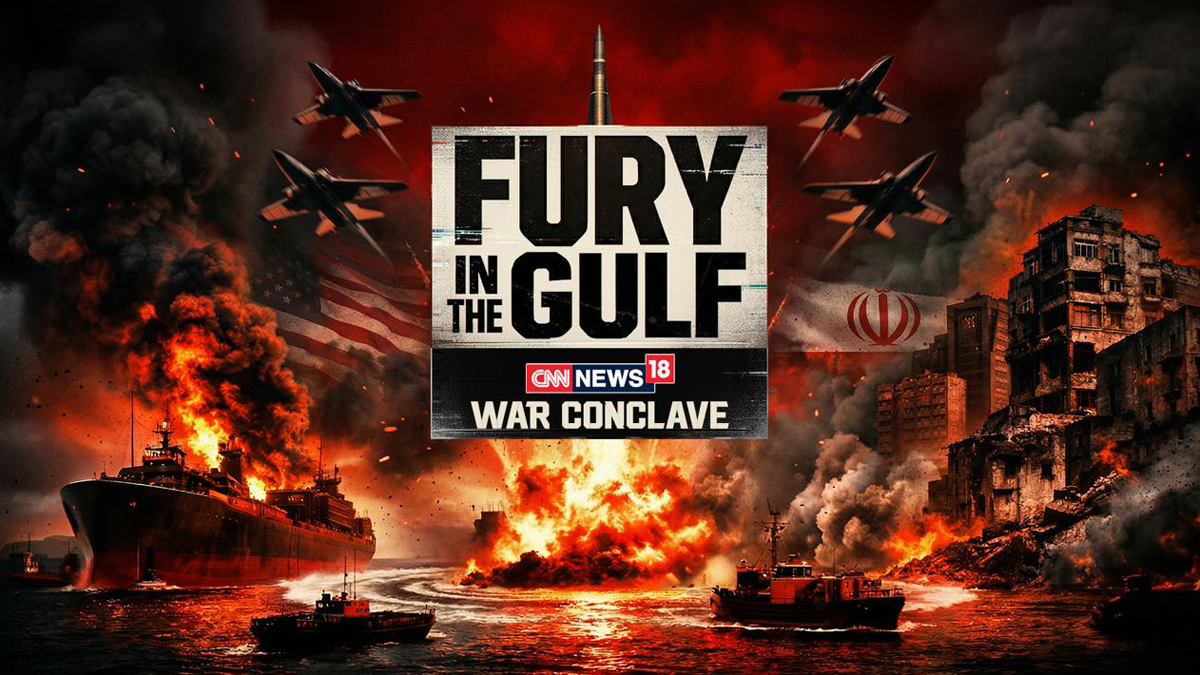
MUMBAI: CNN-News18 is set to host a special three-hour broadcast, Fury in the Gulf – War Conclave, on April 7, aiming to decode the escalating West Asia crisis and its far-reaching implications for India.
Scheduled from 4:00 PM to 7:00 PM, the conclave comes at a time when tensions between Iran and the United States are reshaping global geopolitics and triggering economic uncertainty. With India’s deep energy ties, trade links and large diaspora in the Gulf, the developments carry significant domestic relevance.
Built around the theme ‘Conflict, Consequences, and The Future,’ the programme will feature six curated sessions combining one-on-one interviews and panel discussions. The focus is to cut through the clutter and offer viewers a clearer understanding of the fast-evolving situation.
Key sessions include ‘Diplomacy in Times of War’ featuring Shashi Tharoor, and ‘World After the Iran Conflict’ with voices such as Ram Madhav, Reuven Azar, representatives from the European Union and the Iranian Deputy Envoy. Another session titled ‘Another Dunkirk?’ will bring together K. J. S. Dhillon and Jitin Prasada among others.
CNN-News18 editorial affairs director Rahul Shivshankar said, “In times of war, clarity becomes the most powerful tool. Fury in the Gulf – War Conclave brings together credible voices to address the questions and confusion that arise amid an overwhelming influx of information.”
He added that the initiative is aimed at delivering “facts, perspective, and insight” at a time when misinformation can easily cloud public understanding.
Echoing the sentiment, CNN-News18 CEO– English and business news Smriti Mehra said the conflict marks a defining global moment, with consequences that extend well beyond the region. She noted that the conclave seeks to present the crisis with “depth, nuance and responsibility” so audiences can better grasp its real-world impact.
As geopolitical tensions continue to dominate headlines, the conclave positions itself as an attempt to bring order to the noise, offering viewers a structured, insight-led look at a complex and rapidly shifting global situation.






