News Headline
Now ‘Mahabharat’ on Star Pravah

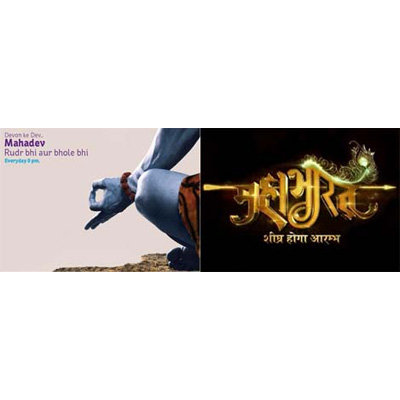
MUMBAI: Marathi GEC viewers are set to be taken back into time. Marathi viewers will soon be introduced to two popular mythological shows for the first time. Come 21 October, between 6:00 pm and 7:00 pm, a new slot has been created on Star Pravah called Mahaparv that will start airing two of Star India’s biggest properties in this genre – Star Plus’s magnum opus Mahabharat and Life OK’s Devon Ke Dev… Mahadev. The difference being both the shows will be telecast, dubbed in Marathi.
“The Marathi space has been missing this genre and these two shows are the network’s prime properties. The whole idea behind spending so much is that the whole network gets to share it,” explains Star Pravah programming head Jayesh Patil, pointing out that the astronomical costs involved in producing such shows was the very reason they hadn’t been tapped so far by the Marathi GEC space.

Mahaparv will also serve as an experiment in how well (or otherwise) mythology is received by the Marathi audience. The question however remains whether Marathi GECs will be willing to spend several times more on original mythological shows.
“We are spending a lot on dubbing to establish them. Once the market is open for mythology, we can shell out more,” replies Patil, adding that there’s a lot of scope for showcasing mythological tales from Marathi literature. As it is, each episode of either of the two shows takes nearly a day for dubbing in Marathi, with costs ranging between Rs 1.5 to Rs 2 lakh per episode, according to industry sources.
According to Patil, 6:00 -7:00 pm is a good time to air these shows however Madison Media COO Karthik Lakshminarayan feels prime time would have been more suitable.
So will these shows work for the Marathi audience? Life OK GM Ajit Thakur believes that mythological shows are universal so they will work everywhere. Mahadev has already been aired on the Star network’s Kannada, Oriya, Malayalam and Tamil channels, he points out.
Lakshminarayan however feels Mahadev might fare better in the Marathi space. “Mahabharat has been treated like a movie and Marathi audiences are unused to such grandeur on TV shows. In terms of set and costumes, it may just be a bit too much for them,” he opines.
Star Pravah is in the midst of negotiations to get advertisers on board and Lakshminarayan feels that shouldn’t be a problem considering both the shows are established.
Will this time travel work for the Marathi audiences?





NEW DELHI: Hamdard Laboratories gathered a cross-section of India’s achievers in New Delhi on Friday, handing out the Hakeem Abdul Hameed Excellence Awards to figures who have left their mark across healthcare, education, sport, public service and the arts.
The ceremony, attended by minister of state for defence Sanjay Seth and senior officials from the ministry of Ayush, celebrated individuals whose work blends professional success with a sense of public purpose. It was as much a roll call of achievement as it was a reminder that influence is not measured only in profits or podiums, but in people reached and lives improved.
Among the headline awardees was Alakh Pandey, founder and chief executive of PhysicsWallah, recognised for turning affordable digital learning into a mass movement. On the sporting front, Arjuna Awardee and kabaddi player Sakshi Puniya was honoured for her contribution to the game and for pushing women’s participation onto bigger stages.
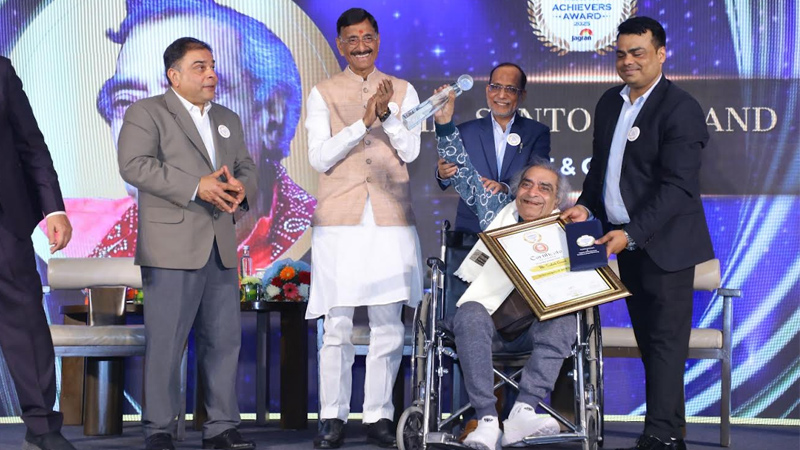
The cultural spotlight fell on veteran lyricist and poet Santosh Anand, whose songs have echoed across generations of Hindi cinema. At 97, Anand accepted the honour with characteristic humility, reflecting on a life shaped by perseverance and hope.
Healthcare honours spanned both modern and traditional systems. Manoj N. Nesari was recognised for strengthening Ayurveda’s place in national and global health frameworks. Padma shri Mohammed Abdul Waheed was honoured for his research-backed work in Unani medicine, while padma shri Mohsin Wali received recognition for his long-standing contribution to patient-centred care.
Education and social development also featured prominently. Padma shri Zahir Ishaq Kazi was honoured for decades of work in education, while former Meghalaya superintendent of Police T. C. Chacko was recognised for public service. Goonj founder Anshu Gupta received an award for his dignity-centred rural development initiatives, and the Hunar Shakti Foundation was honoured for empowering women and young girls through skill development.
The Lifetime Achievement Award went to former IAS officer Shailaja Chandra for her long career in public healthcare and governance, particularly in the traditional systems under Ayush.
Speaking at the event, Hamdard chairman Abdul Majeed said the awards were a tribute to those who combine excellence with empathy. “These awardees reflect Hakeem Sahib’s belief that healthcare, education and public service must ultimately serve humanity,” he said.
Minister Seth struck a forward-looking note, saying India’s young population gives the country a unique opportunity to become a global destination for learning, health and wellness by 2047.
The ceremony also featured the trailer launch of Unani Ki Kahaani, an upcoming documentary starring actor Jim Sarbh, set to premiere on Discovery on 11 February.
Instituted in memory of Unani scholar and educationist Hakeem Abdul Hameed, the awards have grown into a national platform that celebrates those building a more inclusive and resilient India. For one evening at least, the spotlight was not just on success, but on service with substance.






