Hindi
Noted filmmaker Mani Kaul passes away

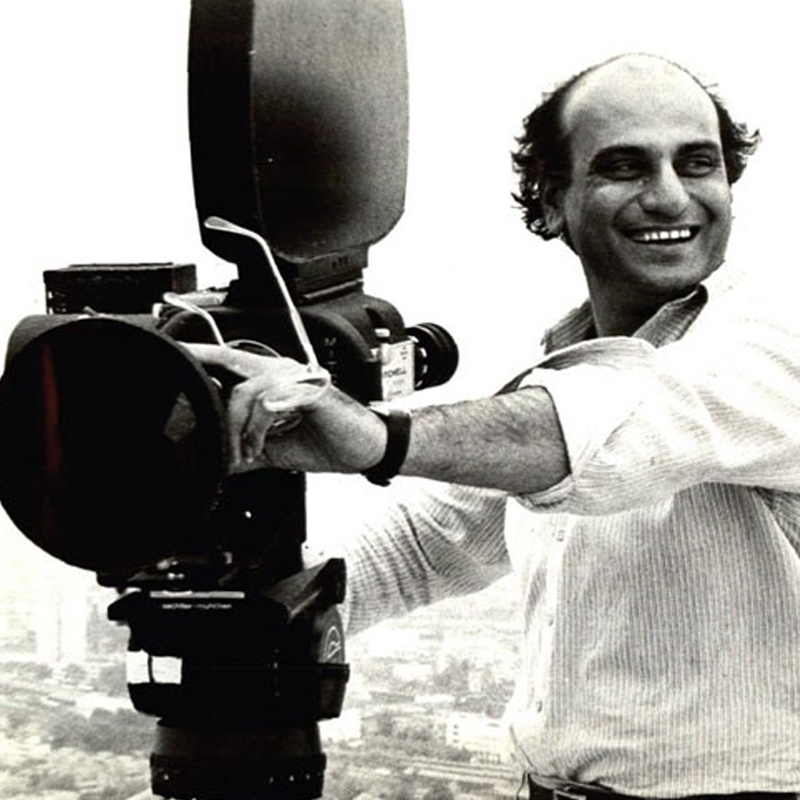
NEW DELHI: Noted filmmaker Mani Kaul, who was considered one of the pioneers of new Indian cinema that emerged in the late sixties and early seventies, died here early this morning after prolonged illness. He was 67.
Kaul is survived by two sons and two daughters.
A cancer patient, he breathed his last at 1 am at his home here after he was discharged from a hospital last night, his family said.
Kaul, born in Jodhpur in Rajasthan to a Kashmiri family, was nephew of the well-known actor-director Mahesh Kaul.
Mani Kaul began his career with “Uski Roti” in 1969 which won him the Filmfare Critics Award for best film.
Ashad Ka Ek Din (1971), Duvidha (1973), Satab Se Uthata Admi (1976), Ghashiram Kotwal (1979), Dhrupad (1982), Mati Manas (1984), Siddheshwari (1989), Nazar (1989), Idiot (based on the masterpiece by Dostoeivsky) (1991) and Naukar Ki Kameez (1999) are among other films and many of them won awards. He also acted in the film ‘Saara Akash’ by Basu Chatterjee.
A graduate from the Film and Television Institute of India (FTII), Pune, Kaul got the National Film Award for Best documentary film “Siddheshwari” in 1989.
Maker of a large number of documentaries, he is remembered for a film on Kashmir where he flew in a large balloon over some of the most beautiful spots of the valley and filmed them. The film only had music and no commentary. It was screened at the Mumbai International Film Festival for short films in a special section on Kashmir.
Kaul also headed the Osian’s Cinefan Festival of Asian and Arab Cinema in 2009.
A versatile painter, Kaul was also a dhrupad singer. He was also a great teacher of the best in Indian cinema.
Renowned filmmaker Mike Pandey, President of the Indian Documentary Producers Association which earlier this year presented a Lifetime Achievement award to Kaul, described Kaul as a filmmaker with rare sensitivity.
After graduating from FTII in 1966, he along with K Hariharan and Saeed Mirza as well as some others set up the Yukt Film Cooperative in 1976.
Kaul, like Kumar Shahani, succeeded in radically overhauling the relationship of image to form, of speech to narrative, with the objective of creating a “Purely cinematic object” that is above all visual and formal.
In 1976, he was co-director, along with Saeed Mirza, K Hariharan and others–of a remarkable “avant-grade” film “Ghasiram Kotwal” in Marathi on the eternal theme of politicians conspiring to create corrupt and evil forces in order to use them against their enemies.The film has contemporary ramifications, as it explores metaphorically the “Emergency” period of the ‘70s.
The next film was “Mati Manas” (Man of Clay) made in 1985 which was above the documentary form with its powerful and refined images of the legends which explain the development of ceramic art in the sub-continent through the ages.



Hindi
Remembering Gyan Sahay, the lens behind film, television and advertising
From a puppet rabbit selling poppadums to Hindi cinema, he framed it all.
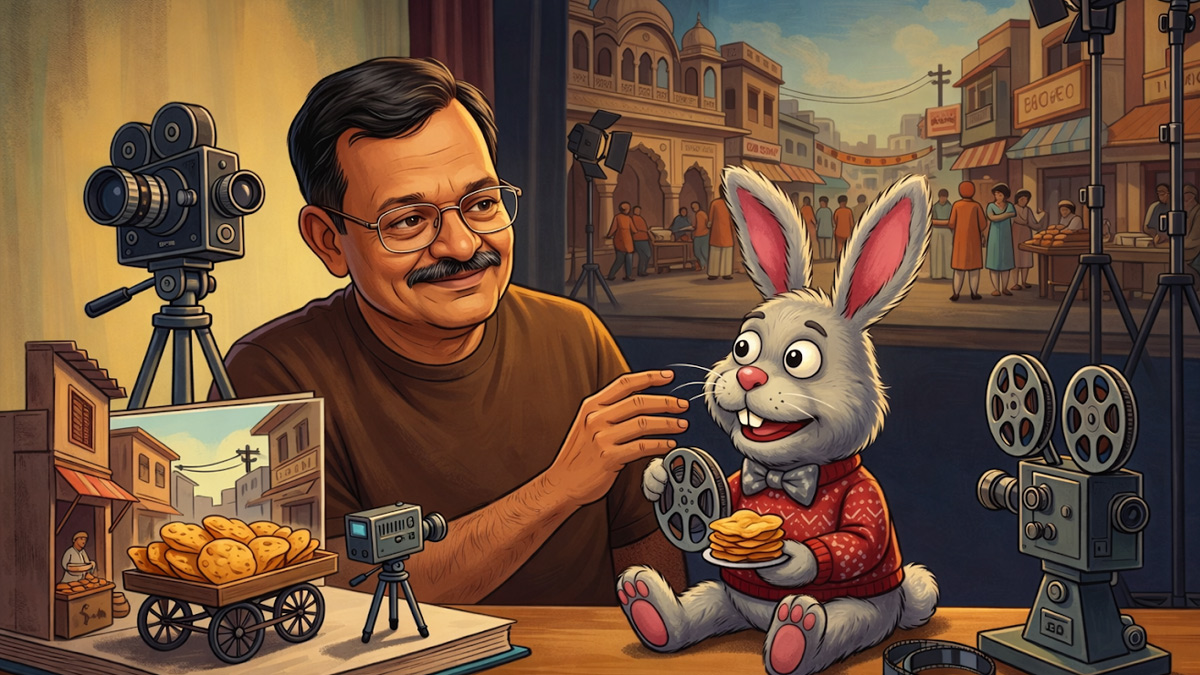
MUMBAI: There are careers, and then there are canvases. Gyan Sahay, the veteran cinematographer, director, and producer who passed away on 10 March 2026 in Mumbai, had one of the latter. Over several decades in the Indian film and television industry, he turned lenses, lights, and the occasional puppet rabbit into something approaching art.
A graduate of the Film and Television Institute of India (FTII) in Pune, Sahay built his reputation as a director of photography across a career that stretched from the early 1970s all the way to the digital age. He was the kind of craftsman who understood that a well-composed shot is not merely a technical achievement but a quiet act of storytelling.
For most Indians of a certain age, however, Sahay will forever be the man behind the rabbit. His direction of the iconic long-running television commercial for Lijjat Papad, featuring its now-legendary puppet bunny, gave the country one of its most cheerfully persistent advertising images. It was the sort of work that sneaks into the national subconscious and takes up permanent residence.

His big-screen credits as cinematographer include Anokhi Pehchan (1972), Pagli (1974), Pas de Deux (1981), and Hum Farishte Nahin (1988). In 1999, he stepped behind a different kind of camera altogether, making his directorial debut with Sar Ankhon Par, a drama that featured Vikas Bhalla and Shruti Ulfat, with a cameo by Shah Rukh Khan for good measure.
On television, Sahay was particularly prized for his command of multi-camera production setups, a skill that made him a go-to technician for large-scale shows and reality programmes. In an industry that has never been especially patient with complexity, he was the calm hand on the rig.
In later life, Sahay turned teacher. He participated regularly in masterclasses and Digi-Talks, often hosted by organisations such as Bharatiya Chitra Sadhna, sharing hard-won wisdom on cinematography, the comedy of timing in a shot, and the sweeping changes brought by the shift from celluloid to digital. He was also said to have been involved in a project concerning a biographical film on Infosys co-founder N.R. Narayana Murthy.
Tributes from the film industry poured in following the news of his passing, with colleagues remembering him as a senior cameraman who served as a rare bridge between two entirely different eras of Indian cinema. That is, perhaps, the finest thing one can say of any craftsman: he kept up, and he brought others along with him.