News Broadcasting
Not quite cricket? Hathway, MEL continue sparring


MUMBAI: For those who thought the spat between Hathway and Modi Entertainment Network Limited had ended; think again.
Although both parties claim to have reached an ‘understanding’ and Hathway put the MEN distributed DD Sports back on air on Thursday morning, Hathway retaliated today through the same medium that MEL has employed over the past few days – print.
In what is obviously an attempt to clear its turf, the MSO released an ad in the Times of India today, accusing MEL of anti customer attitude. “Only a fraction of the money collected from all the customers reaches Prasar Bharati /DD. The majority of the money goes to the pockets of MEL including the alleged recent price hike effected before the India/West Indies cricket series,” the ad says. Countering MEL’s allegation that Hathway ‘turned down’ DD Sports, the MSO questions the wisdom of such a move, since the series is being sponsored by Exide, a Hathway/WIN Cable associate company.

Taking on MEL’s allegation that Hathway refrains from showing DD Sports although it charges the viewers for it, Hathway has responded with a charge that MEL is forcing cable ops to carry TEN Sports, FTV and Hallmark, which it carries.
The dispute began on 11 October with the MSO’s refusal to accept DD Sports’ recent monthly subscription price hike from Rs 7.15 to Rs 8.95, when MEN switched off its feed in Mumbai and some other parts of Maharashtra.
For the last three days, MEL placed advertisements in The Times Of India defining its stand on the matter and accusing Hathway of denying its viewers the pleasure of watching Indian cricket even though it costs ‘less than a cup of tea’. It went on to urge viewers to ‘give their verdict’.
The icing to the cake , however, is Hathway’s declaration that “Hathway /Win cable is proud to carry India/ WI series ( Exide Cup) telecast on DD Sports” at the end of the ad.





News Broadcasting
CNN-News18 to host Fury in the Gulf conclave on West Asia crisis
Three-hour summit to unpack geopolitical fallout and impact on India
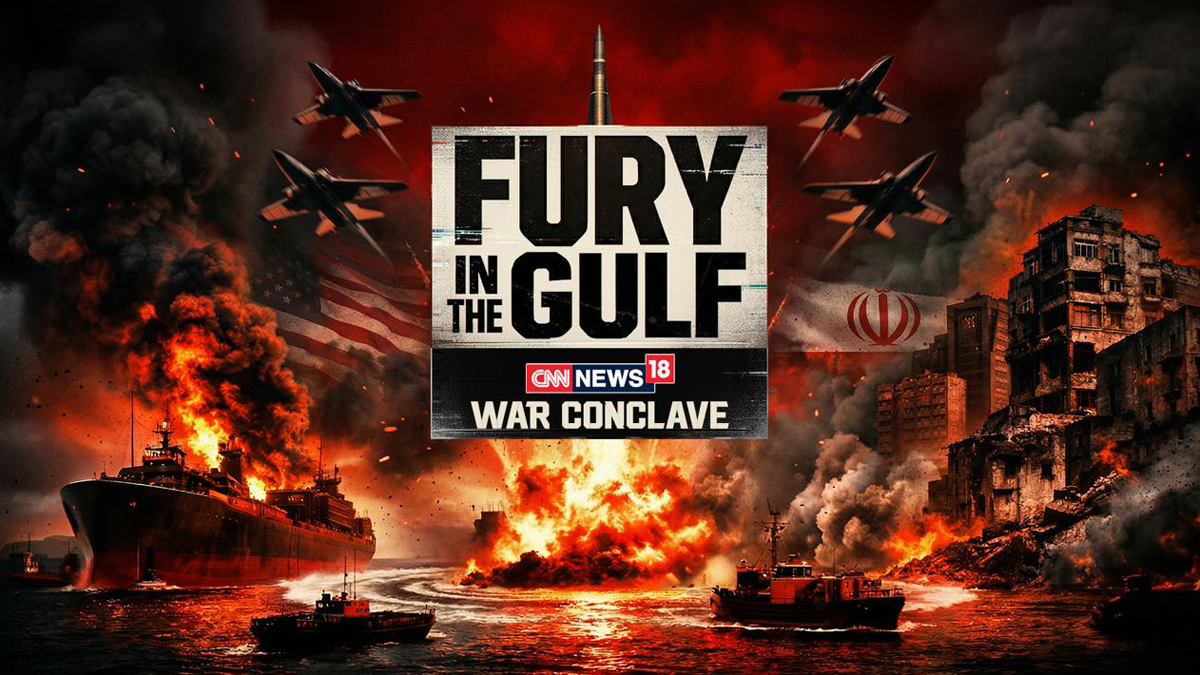
MUMBAI: CNN-News18 is set to host a special three-hour broadcast, Fury in the Gulf – War Conclave, on April 7, aiming to decode the escalating West Asia crisis and its far-reaching implications for India.
Scheduled from 4:00 PM to 7:00 PM, the conclave comes at a time when tensions between Iran and the United States are reshaping global geopolitics and triggering economic uncertainty. With India’s deep energy ties, trade links and large diaspora in the Gulf, the developments carry significant domestic relevance.
Built around the theme ‘Conflict, Consequences, and The Future,’ the programme will feature six curated sessions combining one-on-one interviews and panel discussions. The focus is to cut through the clutter and offer viewers a clearer understanding of the fast-evolving situation.
Key sessions include ‘Diplomacy in Times of War’ featuring Shashi Tharoor, and ‘World After the Iran Conflict’ with voices such as Ram Madhav, Reuven Azar, representatives from the European Union and the Iranian Deputy Envoy. Another session titled ‘Another Dunkirk?’ will bring together K. J. S. Dhillon and Jitin Prasada among others.
CNN-News18 editorial affairs director Rahul Shivshankar said, “In times of war, clarity becomes the most powerful tool. Fury in the Gulf – War Conclave brings together credible voices to address the questions and confusion that arise amid an overwhelming influx of information.”
He added that the initiative is aimed at delivering “facts, perspective, and insight” at a time when misinformation can easily cloud public understanding.
Echoing the sentiment, CNN-News18 CEO– English and business news Smriti Mehra said the conflict marks a defining global moment, with consequences that extend well beyond the region. She noted that the conclave seeks to present the crisis with “depth, nuance and responsibility” so audiences can better grasp its real-world impact.
As geopolitical tensions continue to dominate headlines, the conclave positions itself as an attempt to bring order to the noise, offering viewers a structured, insight-led look at a complex and rapidly shifting global situation.






