I&B Ministry
North-East plan: DD channel Arun Prabha launch in early Jan; 90% subsidy for community radio


NEW DELHI: Information and Broadcasting Minister M Venkaiah Naidu announced that a new dedicated Doordarshan channel Arun Prabha would be launched in the first half of January 2017.
The channel would showcase richness, variety and diversity of local culture and would seamlessly integrate North East with the entire country.
In a scenario where the number of operational community radio stations remains 191 after more than a decade of launch of the scheme, the government today said those setting up community radios can now get a subsidy of 75% in all states except the north eastern states where it will be 90%.

Naidu made this announcement towards the conclusion of the first session of the 28th State Information Ministers Conference (SIMCON) here. He said the community radio station is an extraordinary medium which disseminates information in localised content.
A total of 235 entities have signed the grant of permission agreement for community radio and indiantelevision’s sister concern radioandmusic.com reported in March this year that a total of 272 applications were still under the consideration of the government from educational institutions, non-governmental organisations, Krishi Vigyan Kendras and state agricuture universities. Some of these date back to 2011.
Though the scheme was announced more than a decade earlier, the reach of CRs was extended in 2006 to include NGO and community-based organisations with at least three years legal existence.
A total of 115 community radio stations recently received interim renewal of their Grant of Permission Agreement (GOPA) till 31 December 2016. An announcement by the ministry had said that the renewal till 31 December 2016 is till the renewal of GOPA on regular basis, whichever is earlier.





I&B Ministry
IT Rules tweaks are clarificatory, not expansion of powers: MeitY
Govt signals flexibility as platforms push for clarity on user content rules
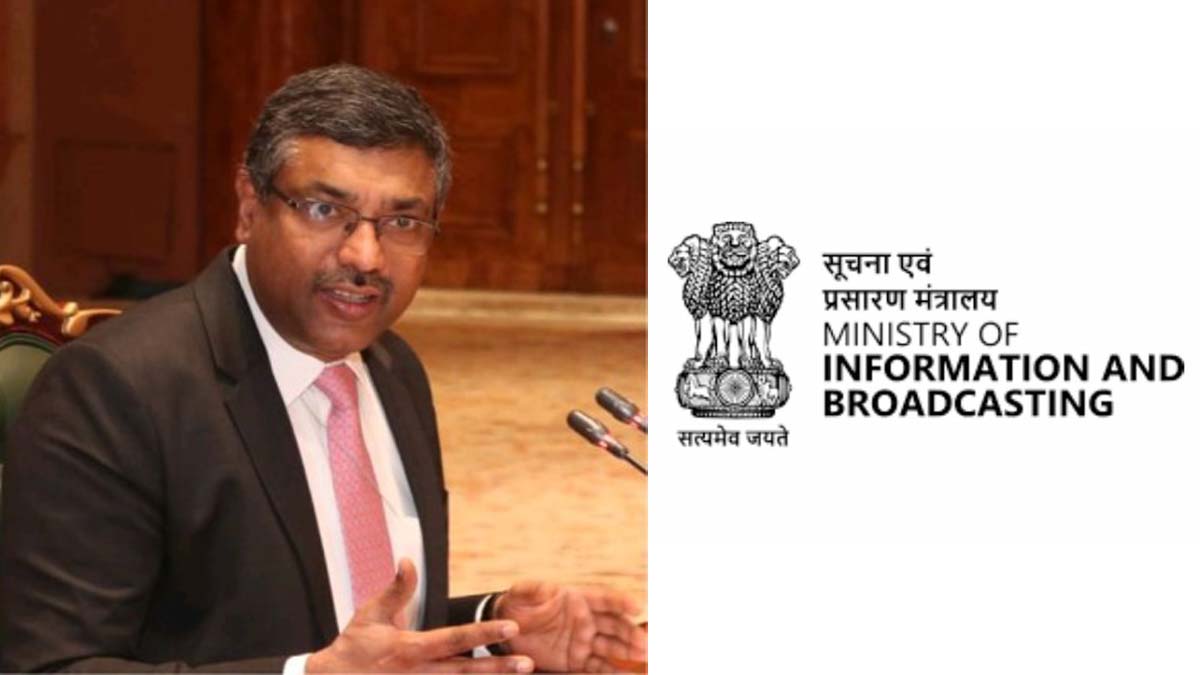
NEW DELHI: The Centre has sought to dial down concerns over its proposed amendments to the IT Rules, with Ministry of Electronics and Information Technology secretary S Krishnan asserting that the changes are intended as clarifications rather than an expansion of regulatory powers.
Pushing back against criticism from platforms and civil society, S Krishnan said the amendments “do not in any way actually give us wider powers” and are meant to remove ambiguity in how existing provisions are applied. He added that the trigger came largely from within the ecosystem, with intermediaries themselves seeking clearer guidance on compliance, takedowns and record preservation.
At the heart of the debate is the growing friction between platforms and policymakers over responsibility for user-generated content. Intermediaries have argued that they should not be treated on par with publishers, particularly when content is created and uploaded by users. Krishnan acknowledged this concern, noting that “a sharper distinction” between user content and publisher content is needed and is currently under examination.
The issue becomes more complex in enforcement scenarios. While registered publishers can be directly asked to modify or remove content, intermediaries often lack control over the original creator. “In such cases, the intermediary cannot direct those changes,” Krishnan explained, underlining the need for procedural nuance.
Another key proposal under discussion is to bring user-generated news and current affairs content within a more unified regulatory ambit, potentially under the Ministry of Information and Broadcasting. The move follows suggestions that a single authority should handle such content, regardless of whether it originates from a publisher or an individual user.
Even as the government frames the amendments as a tidy-up exercise, fault lines remain. Industry players have flagged concerns over compliance burdens, especially for smaller businesses, and questioned whether advisories could effectively become binding without explicit legislative backing. Krishnan said the government is mindful of these risks and is exploring ways to ease obligations, including possible relaxations under certain provisions.
The ministry is also considering consolidating multiple advisories and guidelines into a more structured framework, a step widely seen as addressing long-standing confusion over what platforms are expected to follow.
On takedowns, the government has reiterated that due process will remain unchanged. Krishnan stressed that actions will continue to be governed by established procedures, with reasons recorded and review mechanisms in place. He also pointed to the surge in deepfakes and synthetic media as a factor behind rising content disputes, calling it a “scale challenge” for regulators.
Interestingly, Krishnan also framed social media platforms as commercial entities rather than pure vehicles of free expression, hinting at a broader shift in regulatory thinking as platform economics come into sharper focus.
With stakeholders seeking more time and, in some cases, a rollback of the proposals, the government has kept the consultation process open-ended. Krishnan said further revisions remain on the table, signalling a willingness to adapt the draft based on feedback.
For now, the message from MeitY is clear: the rules may not be tightening in intent, but the effort to define them more clearly is well underway.






