News Broadcasting
No biz, it’s English news & current affairs channel for Times

MUMBAI: After keeping everyone on tenterhooks, the picture is now clearer. The second channel from The Times of India Group will be an English news and current affairs channel. Rumours were rife that the Old Lady of Boribunder was all set to roll out a broadcast version of the group’s lead financial daily The Economic Times. The same had also been reported recently by one of the pink publications.
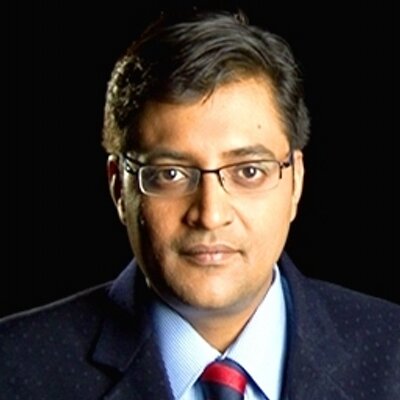
Being an English news and current affairs channel, Times’ new baby will be taking market leader NDTV 24×7 head on. Also noteworthy is the fact that Television Eighteen along with Rajdeep Sardesai’s new venture Broadcast News is looking at entering the general news channels’ space. TV Today’s English news channel Headlines Today has also seen a considerable improvement lately. But that doesn’t perturb vice president news and editor television division Arnab Goswami.
Speaking exclusively to Indiantelevision.com, Goswami said the channel would launch only when they felt completely ready, technically and otherwise. Goswami, however, refused to be drawn into revealing a date of launch.

As far as news programming is concerned, the channel will be looking at building in-house competence rather than outsourcing programming at this stage.
“We are not overly concerned about competition. We believe that more competition is always welcome. It’s just that people should be aware of where their core competence lies. The core competence of The Times of India Group is in news of all kinds and news cannot be defined or closed into one segment alone. News has a different language and on this channel, we are not going to try and limit the definition of news to any one space. We look at ourselves as a news, current affairs and business channel encompassing the broad spectrum,” he says.
“We will not be involved in over the top reporting or what one would call the least common denominator reporting. Ethics is extremely important and we want to define the ‘Lakshman Rekha’ of journalism,” he added.
Interestingly, Goswami is of the opinion that sensational news and crime shows are not channel drivers and hence The Times channel will not be delving into this area. “The core loyalty of viewers is to news and not to the market definition of news. We will be looking at creating loyalty by giving a definition to what comprises news,” he says. The channel will also be laying emphasis on global news.
While other news channels may have shows that focus on parties and crime, The Times of India group does not believe that these are formats that necessarily have great relevance to the news viewer or the space on a news channel. Hence the Times’ channel will abstain from such programming. “You can always raise the level of your reporting, but that does not mean that you make a news channel risqué in its content. People remember news channels for the way stories are covered and for journalistic ethics and not necessarily for over the top programming,” Goswami says.
Refusing to share information of the channel’s programming, Goswami however, said they were not going to try and change the definition of news like some channels have done. “Hence, it does not mean that if you’re targeting young viewers, you have to fill your space with only Britney Spears and Formula 1. In the past, several other players have been a bit presumptuous in trying to change the appetite of the viewers. The viewer wants unadulterated news. Yes, the viewer might be absorbing these things but I don’t see any content differentiation on any of the news channels that are on air currently. Most channels are beginning to look and sound more or less similar,” he says.
The Mumbai and Delhi bureaus of the channel will be treated as dual news centres of the channel. “Our news centres will talk a lot to each other. Both will hold equal importance and it’s not that Mumbai will be treated as a desk hub and Delhi as a reporting hub. We will have news gathering teams in both places. Neither will be the adjunct of each other. We may have more people in Mumbai as most of the production work will take place here. There will be a fairly independent team working from Delhi and both news centres will be talking to our 14 bureaus across the country,” he says.
He is confident that the market for the Times Group will never be cluttered. “When we launch, we will be welcomed by the viewers because of our association with the Group. It is not easy for all players to get core competence over news. News is not something in which you can build competence overnight,” he says.
The group more or less has its core team in place with former Sony hand Sunil Lulla as the business head of the channel and Arnab Goswami as vice president news and editor television division. Quite a few key appointments have also been made in the recent past. The group will have news studios in Mumbai and Delhi and 14 bureaus across the country in cities like Patna, Bangalore, Hyderabad, Jaipur, Chandigarh, Jammu, Kolkata, Trivandrum, Bhopal, Guwahati, Ahmedabad, Lucknow, Srinagar and Chennai.
While there has been a lot of speculation regarding Reuters picking up a 26 per cent stake in the Times news channel, Goswami was not forthcoming about details regarding the same. “At this stage I cannot comment on this. But I can tell you that we will synergise our content as best as we can from The Times of India Group,” he says.
The team will be moving into their new studios in Mumbai in a couple of weeks. The Delhi office is being built and the bureaus across the country are being staffed. Close to 150 appointments in various departments have already been made.
Though the Times group has roped in many professionals from existing news channels, not much is known about the “faces” of the channel. When queried on this, Goswami said they were not ready to reveal the channel’s anchors’ names as of now. “We have done fantastic recruitments across the country, some of which are known and several of which we are not talking about right now. But we have been able to get well over half our team without going through the mass recruitment route, which I think is happening for the first time in the news broadcasting space. People are joining us not for the money but because they want to be a part of the start up from The Times of India Group. The team is young and energetic and in about a month we will be buzzing with the first batch of our recruits,” says a buoyant Goswami.
Speaking of ex-colleague and journalist-turned-entrepreneur Rajdeep, who set up Broadcast News in association with Television Eighteen with an aim to launch an English news channel, Goswami says, “Rajdeep and I have been very good friends and we’ve done journalism hand in hand together for almost 10 years. I wish him well and all the luck in what he does. We will continue to remain the best of friends and we have a lot of mutual respect for each other.”
Throwing light on what he thought of TV18 entering the space that Times was also entering, he says, “The Times of India Group is associated with news, which may not necessarily be the case for all other players who are there in the market. An organisation is not built by an individual alone. It is built by the credibility of the group in the space into which it is getting.”




News Broadcasting
Kamlesh Singh receives Haldi Ghati Award from MMCF
India Today Group editor honoured for three decades of journalism at Udaipur ceremony.
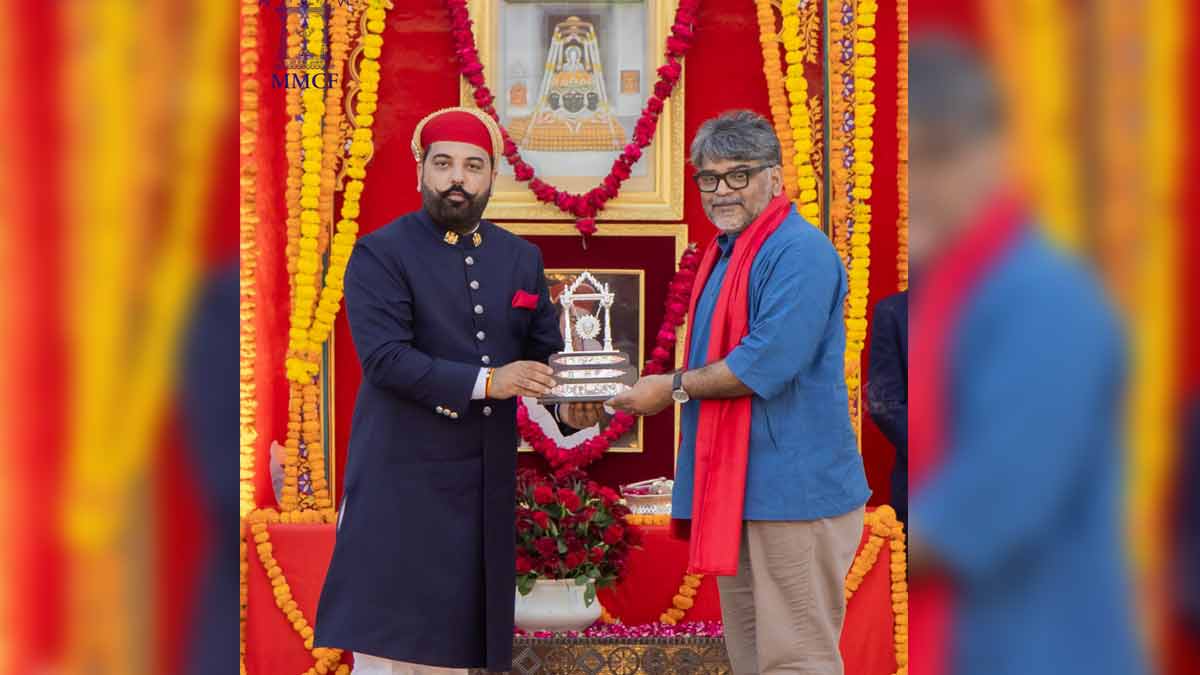
MUMBAI- Kamlesh Singh just turned a lifetime of sharp words into a shiny shield because when journalism wakes up a society, even the Maharana of Mewar wants to pin a medal on it.
The Maharana of Mewar Charitable Foundation (MMCF) conferred its prestigious Haldi Ghati Award on Kamlesh Singh, a senior editor at the India Today Group, during a ceremony in Udaipur on 15 March 2026. The national award, instituted in 1981-82, recognises “work of permanent value that initiates an awakening in society through the medium of journalism.”
Singh, who leads several editorial initiatives including Aaj Tak Radio, the Teen Taal community and The Lallantop, was presented the honour by Lakshyaraj Singh Mewar, Managing Trustee of MMCF. The citation highlighted his three decades of contributions to Indian media, innovations in digital journalism, mentoring young reporters, and his popular podcast persona “Tau” on Teen Taal, which fosters thoughtful public discourse.
The Haldi Ghati Award, named after the historic Battle of Haldighati symbolising valour and resilience, is one of four national awards given annually by MMCF. Past recipients include Tavleen Singh, Piyush Pandey and Raj Chengappa.
Other honourees this year included Padma Vibhushan Pt Hari Prasad Chaurasia, Vedamurti Devvrat Rekhe, Treeman of India Marimuthu Yoganathan, Vir Chakra Capt Rizwan Malik, and US-based researcher Molly Emma Aitken, who received the Colonel James Tod Award for contributions to understanding Mewar’s spirit and values.
In an era where headlines often shout louder than substance, the MMCF quietly reminded everyone that real journalism isn’t about noise, it’s about the quiet, persistent work that stirs society awake, one thoughtful story at a time.