Hardware
Nikon Z5II goes full throttle on video with N-RAW, low-light beast mode, and blazing autofocus

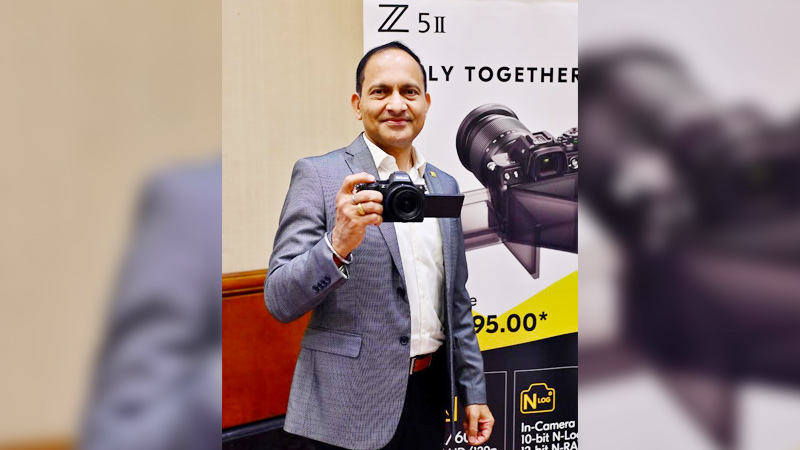
MUMBAI: Nikon just gave creators a reason to ditch the tripod and hit record. At a buzzing launch event held at New Delhi’s Eros Hotel on 23 April, Nikon India pulled the wraps off the Z5II—a full-frame mirrorless camera that aims to put professional-grade video in more hands without frying budgets.
The Z5II brings to the table a 24.5 MP BSI CMOS sensor, 4K/60p video, and full HD 120p slow motion—ticking every box for filmmakers, wedding shooters, and street-style documentarians alike. But its real claim to fame lies under the hood: blazing 3.5x faster autofocus and low-light AF down to -10EV, which means your shoot doesn’t have to stop when the lights go out.
“With the introduction of the Z5II, Nikon is once again elevating the standards of professional-grade photography, making top-tier innovation more accessible to all creators,” said Nikon India Pvt. Ltd MD Sajjan Kumar.

Armed with in-camera 12-bit N-RAW and 10-bit N-Log, the Z5II caters to video pros who love tinkering in post-production. The EXPEED 7 engine drives intelligent autofocus, while a 5-axis in-body vibration reduction system ensures every handheld take looks like it was shot on rails.
Its vari-angle touchscreen helps shooters nail tricky angles, and a bright 3,000 cd/m² EVF outshines the competition. For run-and-gun creators, the Z5II’s high-speed burst at 14 fps, paired with 3D-tracking AF, is a ticket to freeze-frame wizardry.
“‘Truly Together’, the Z5II is crafted for hybrid creators who demand flexibility and performance in every frame,” Kumar added.
The camera also features AI-driven subject detection, capable of spotting nine types-from pets to sports cars. It seamlessly works with Nikon’s Z Mount lens ecosystem and supports USB-C, HDMI, and Picture Control customisation, giving creators more control without the learning curve.
Priced at Rs 1,49,995 (body only), the Nikon Z5II hits stores on 24 April 2025. As hybrid creators blur the lines between filmmaker and photographer, Nikon seems ready to roll.




Hardware
India clears Rs 1.6 lakh crore semiconductor projects under Semicon India
Ten projects cleared as production begins and design ecosystem gathers pace

NEW DELHI: India’s push to become a global electronics powerhouse is gaining momentum, with the Semicon India Programme driving the creation of a full-fledged semiconductor ecosystem from design to manufacturing.
Launched in 2022, the programme aims to build capabilities across the entire value chain, including chip design, fabrication, assembly, testing and packaging. In just four years, the government has approved 10 semiconductor projects with a combined investment commitment of around Rs 1.6 lakh crore.
Two of these facilities have already begun commercial production, including units led by Micron Technology Inc. and Kaynes Technology India Limited. Two more plants are expected to go live later this year, signalling that India’s chip ambitions are moving from blueprint to factory floor.
The broader electronics manufacturing story has also seen sharp growth over the past decade. Production has jumped from roughly Rs 1.9 lakh crore in 2014-15 to about Rs 12 lakh crore in 2024-25, while exports have surged nearly eightfold. Mobile phone manufacturing, once heavily import-dependent, now meets almost all domestic demand and has become a major export driver.
Alongside manufacturing, the government is investing heavily in design capabilities. Through access to advanced chip design tools provided free to 315 universities, students and researchers have clocked over 200 lakh hours of usage. This effort has already resulted in 211 chip tape-outs from 75 institutions.
Support for startups is also picking up pace. Twenty-four chip design projects have been approved, targeting sectors such as surveillance, energy, communications and IoT. Of these, 14 companies have collectively raised over Rs 650 crore in venture funding, while several designs have progressed to fabrication, including at advanced nodes.
To strengthen supply chains, India has also signed semiconductor cooperation agreements with countries including the United States, Japan, the European Union, Singapore and the Netherlands. These partnerships aim to reduce global dependencies while boosting domestic capabilities.
The employment impact is equally significant. The electronics sector now supports an estimated 25 lakh jobs, with mobile manufacturing alone accounting for nearly half. As more semiconductor units come online under the India Semiconductor Mission, indirect job creation across supply chains is expected to rise further.
Sharing these updates in Parliament, Ministry of Electronics and Information Technology minister of state Jitin Prasada underscored the government’s focus on building a resilient, end-to-end semiconductor ecosystem.
With factories taking shape, designs moving to silicon and investments flowing in, India’s semiconductor story is steadily shifting gears from ambition to execution.






