News Broadcasting
News should be a ‘paid’ asset


BENGALURU: Whether it’s the political battle that’s unraveling in the country, or it’s a terrorist attack, news always interests people. But is news as interesting as a gossip piece about a celebrity? This and a lot of other points were raised at the first day of the FICCI MEBC (Media and Entertainment Business Conclave) that saw a session that discussed the news genre. The discussion brought up several points including viewership data, content that is being broadcast and the current situation of the genre as a whole.
The panellists included BBC World News India COO Preet Dhupar, Udayvani group editor Ravi Hegde, Suvarna News editor Anantha Chinivar, Former CNN IBN journalist Veeraraghav, columnist Aakar Patel, NDTV resident editor Maya Sharma and IIM Bangalore dean Dr S Raghunath. The session was moderated by journalist Prakash Belawadi.
After the entire discussion, the panelists concluded that the genre relies heavily on advertising, thus restricting the kind of content that can be produced. At the same time, viewership data such as TAM (Television Audience Measurement) is needed because advertisers depend on such data to pool their money where they want to. “Producing news is expensive and that is why all channels have panel discussions in their primetime slot. It is cheaper than sending an OB van to some far off place and spend huge amount,” said Sharma.

Another point brought up during the discussion was about “sensationalising news”. The reason why many times news is sensationalised is because entertainment is more prominent than news. So, news journalists need to adapt to the entertainment form of style in order to grab eyeballs. But at the same time just getting viewers will not help because everyone is also looking for credibility of news, including the people watching it and the ones dispersing the news. Channels keep a close watch on other channels to know what they are reporting.
However, Hegde differed as he remarked that “media was not entertainment but a serious job”. Hegde, who comes from a print background, said that it’s a newspaper’s job to clear the confusion that channels have created the previous night for the viewers.
Talking about the revenue generated through advertising, Hegde said that most of the advertisements to newspapers come for the editions in the metros, making it difficult to distribute papers in the rural areas.
To this, Chinivar pointed that in order to beat entertainment news, the need to sensationalise news comes up.
Columnist Patel thinks that the standard of journalism in India is poor because of lack of good training and low salaries.
Veeraghav brought to fore the speculative nature of the Indian viewers that the channels have to continuously face. He remarked how many people question news channels’ nature to delve into the future, but they always want to know the future not what has happened. “If I tell a viewer that elections are going to happen, the first thing he will ask me is can you tell me who is going to win?” he said.
Although many channels have taken a strong stand against the TAM accusing it of fudging data to benefit advertisers, all the panellists agreed that there needs to be some kind of tracking to know the viewership for channels and newspapers because it is ultimately a business.
The fact that news is free is what makes it so volatile. “When you have to pay for your news, it will be taken seriously and that’s when the kind of news you get will also become better,” said Sharma. With digitisation coming in, they hope that some system will come in to place to help them get more revenues. News will become a paid asset in the future. “As long as news is free you cannot live without TAM or IRS,” Veerraghav ended.



News Broadcasting
CNN-News18 to host Fury in the Gulf conclave on West Asia crisis
Three-hour summit to unpack geopolitical fallout and impact on India
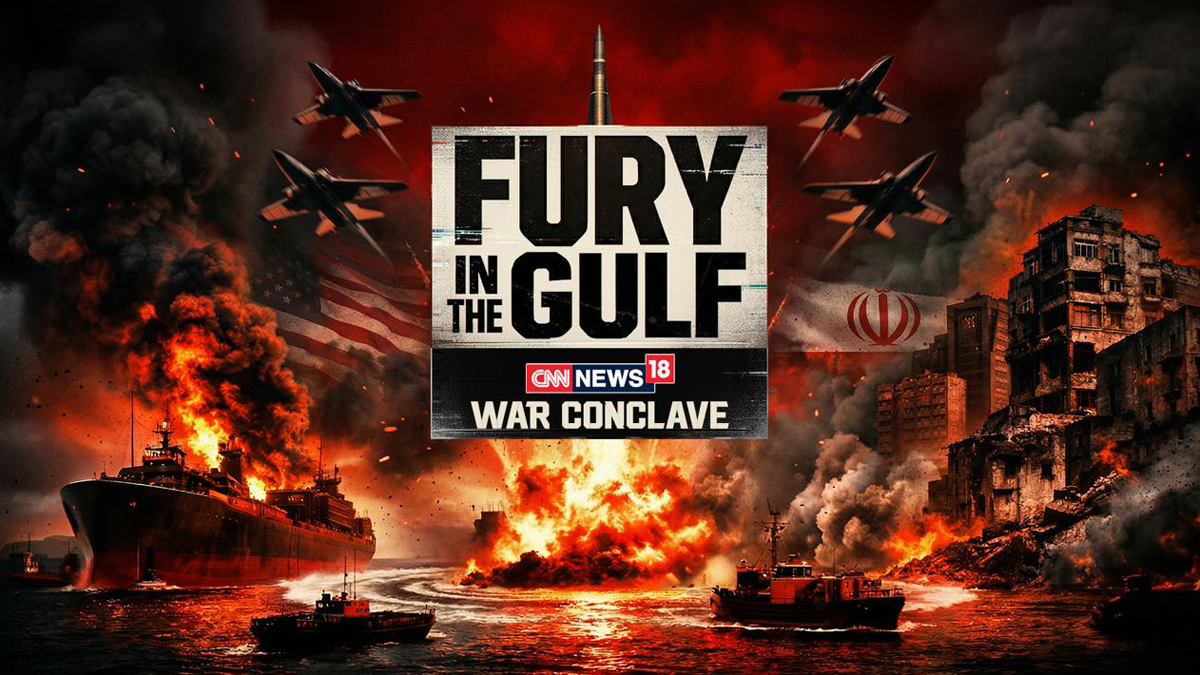
MUMBAI: CNN-News18 is set to host a special three-hour broadcast, Fury in the Gulf – War Conclave, on April 7, aiming to decode the escalating West Asia crisis and its far-reaching implications for India.
Scheduled from 4:00 PM to 7:00 PM, the conclave comes at a time when tensions between Iran and the United States are reshaping global geopolitics and triggering economic uncertainty. With India’s deep energy ties, trade links and large diaspora in the Gulf, the developments carry significant domestic relevance.
Built around the theme ‘Conflict, Consequences, and The Future,’ the programme will feature six curated sessions combining one-on-one interviews and panel discussions. The focus is to cut through the clutter and offer viewers a clearer understanding of the fast-evolving situation.
Key sessions include ‘Diplomacy in Times of War’ featuring Shashi Tharoor, and ‘World After the Iran Conflict’ with voices such as Ram Madhav, Reuven Azar, representatives from the European Union and the Iranian Deputy Envoy. Another session titled ‘Another Dunkirk?’ will bring together K. J. S. Dhillon and Jitin Prasada among others.
CNN-News18 editorial affairs director Rahul Shivshankar said, “In times of war, clarity becomes the most powerful tool. Fury in the Gulf – War Conclave brings together credible voices to address the questions and confusion that arise amid an overwhelming influx of information.”
He added that the initiative is aimed at delivering “facts, perspective, and insight” at a time when misinformation can easily cloud public understanding.
Echoing the sentiment, CNN-News18 CEO– English and business news Smriti Mehra said the conflict marks a defining global moment, with consequences that extend well beyond the region. She noted that the conclave seeks to present the crisis with “depth, nuance and responsibility” so audiences can better grasp its real-world impact.
As geopolitical tensions continue to dominate headlines, the conclave positions itself as an attempt to bring order to the noise, offering viewers a structured, insight-led look at a complex and rapidly shifting global situation.






