News Broadcasting
News channels in new organization to promote ethical journalism

NEW DELHI: A number of Indian television news channels have tied up with the government and various agencies to put together a unified platform for ensuring ethical journalism and to look at a collective solution for ridding the industry of the various problems that continue to plague it without a workable solution in sight.
S.K. Gupta (from Uttarakhand and Himachal Pradesh’s channel TV100) is the chairman of the All India News Broadcasters Association, while I.D. Garg (of Khabarein Abhi Tak) and Vikram Nevar (Tazaa TV, Kolkata) are the vice chairmen.

The new organization, comprising heads and owners of small and medium news channels, held its election meeting under the interim chairmanship of Anil Gaba of Total TV.
The first committee, with a two-year tenure, was elected and put in place to take the agenda of the association further.
The other members of the new committee are:
General Secretary – Patiala based Channel 2’s Tejinder Pal Singh
Secretary – SMBC Insight’s Dr. Prakash Sharma
Treasurer – Khabarein Abhi Tak’s I.D. Garg
Member-Working Committee – Khabar Fast’s A.K. Samaa, Azad News’ MS Walia
An interim committee was formed in June 2014. The elections followed the formal process of applying to the government for the registration of the association, and getting the association formally registered by the registrar of societies.
Speaking on the Association, secretary Prakash Sharma said, “The association will work towards creating a level playing field in the country at par with the national news channels. Apart from focusing on the problems of the industry, the association will work towards ensuring clean and ethical journalism, and work towards curbing paid news and ensuring guidelines for self-regulation. The association will also work towards creating a platform for news syndication and exchange amongst member organisations, collective marketing and distribution.”
The All India News Broadcasters association will also act as a unified body working in conjunction with the government and representing the views, issues and concerns of the broadcasting industry, and play an exemplary role in finding workable solutions.




News Broadcasting
CNN-News18 to host Fury in the Gulf conclave on West Asia crisis
Three-hour summit to unpack geopolitical fallout and impact on India
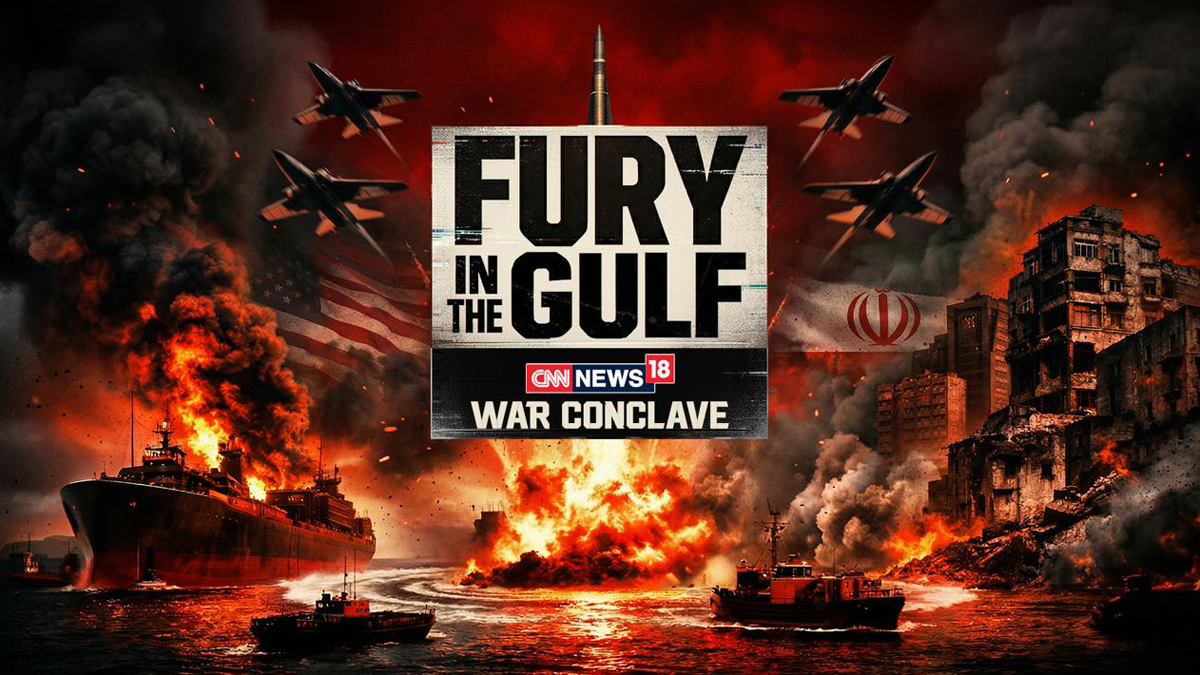
MUMBAI: CNN-News18 is set to host a special three-hour broadcast, Fury in the Gulf – War Conclave, on April 7, aiming to decode the escalating West Asia crisis and its far-reaching implications for India.
Scheduled from 4:00 PM to 7:00 PM, the conclave comes at a time when tensions between Iran and the United States are reshaping global geopolitics and triggering economic uncertainty. With India’s deep energy ties, trade links and large diaspora in the Gulf, the developments carry significant domestic relevance.
Built around the theme ‘Conflict, Consequences, and The Future,’ the programme will feature six curated sessions combining one-on-one interviews and panel discussions. The focus is to cut through the clutter and offer viewers a clearer understanding of the fast-evolving situation.
Key sessions include ‘Diplomacy in Times of War’ featuring Shashi Tharoor, and ‘World After the Iran Conflict’ with voices such as Ram Madhav, Reuven Azar, representatives from the European Union and the Iranian Deputy Envoy. Another session titled ‘Another Dunkirk?’ will bring together K. J. S. Dhillon and Jitin Prasada among others.
CNN-News18 editorial affairs director Rahul Shivshankar said, “In times of war, clarity becomes the most powerful tool. Fury in the Gulf – War Conclave brings together credible voices to address the questions and confusion that arise amid an overwhelming influx of information.”
He added that the initiative is aimed at delivering “facts, perspective, and insight” at a time when misinformation can easily cloud public understanding.
Echoing the sentiment, CNN-News18 CEO– English and business news Smriti Mehra said the conflict marks a defining global moment, with consequences that extend well beyond the region. She noted that the conclave seeks to present the crisis with “depth, nuance and responsibility” so audiences can better grasp its real-world impact.
As geopolitical tensions continue to dominate headlines, the conclave positions itself as an attempt to bring order to the noise, offering viewers a structured, insight-led look at a complex and rapidly shifting global situation.






