News Broadcasting
News Broadcasting Standards Authority issues advisory on coverage of Ayodhya dispute verdict


MUMBAI: While the Supreme Court ended the daily hearings of the Ayodhya dispute case on Wednesday, the News Broadcasting Standards Authority (NBSA) has issued a special advisory for reporting of the sensitive issue. News broadcasters have been advised to conform strictly to subserving the public interest of maintaining communal harmony and preservation of the secular ethos of the country while telecasting news related to the matter.
“You will appreciate that the reporting of the Ayodhya issue being heard by the Hon’ble Supreme Court is one such matter in which extra care and caution needs to be exercised to ensure that the telecast of any news relating to it should not be sensational, inflammatory or provocative,” the organisation said in the advisory.
The advisory also added that in view of the sensitive nature of the Ayodhya issue, reporting requires adherence to the Code of Ethics and Broadcasting Standards and certain specific guidelines issued from time to time in this regard.

“It is, therefore, necessary that all news broadcasters should not only ensure strict compliance of the guidelines but should also ensure that no occasion arises for any speculation about the accuracy, neutrality and impartiality of the content,” it added.
Additional specific guidelines:
1. No broadcast should be made in any speculative manner in respect of the present proceedings before the Hon’ble Supreme Court nor of the judgement before it is pronounced; and of its likely consequence thereafter which may be sensational, inflammatory or provocative.
2. No news in relation to the present proceedings pending before the Hon’ble Supreme Court shall be broadcast unless the reporter and/or editor have adequately ascertained the accuracy, authenticity and correctness of what is reported, preferably from Court records, or at the very least, by being personally present during such proceedings.
3. For clarity and adherence it is emphasized that programmes/telecast should not speculate on issues relating to the Ayodhya judgement or its repercussions.
4. No footage of the demolition of the Babri Masjid is to be shown in any news item relating to the Ayodhya matter.
5. No visuals need be shown depicting celebration or protest by persons in respect of the Ayodhya matter.
6. In view of the sensitivity of news reporting on this issue, extra care should be taken to ensure accuracy by vetting and clearance at the highest editorial level.
7. Telecast of any news/programme must not give any impression of bias or prejudice in favour of, or against any community.
8. Care should be taken to ensure that no opportunity is given to anyone to express any extreme view, including in debates in order to influence the viewers.
9. Debates which are provocative and inflammatory and likely to create tension in the public should be avoided.





News Broadcasting
News18 India launches Command Centre war explainer with Arya
New show shifts from debates to decoding global conflicts and impacts
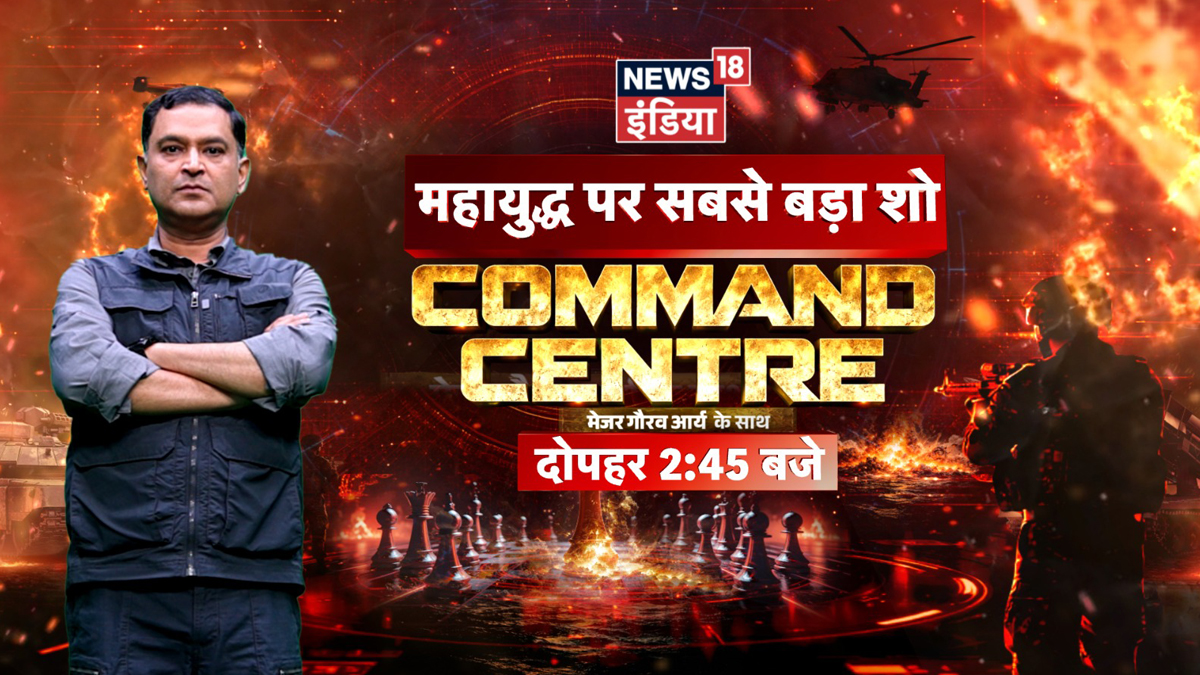
MUMBAI: News18 India has rolled out a new war-focused programme, Command Centre, featuring Gaurav Arya, as it looks to offer viewers a sharper, more grounded take on global conflicts amid rising tensions in West Asia.
Positioned as an “insider war room”, the show moves away from conventional panel debates and instead focuses on explaining military developments, decoding strategy and connecting global events to their everyday impact, from fuel prices to economic shifts.
The format leans heavily on visuals and data. The studio has been designed like a command hub, complete with large LED war maps, real-time graphics and an alert system to track developments as they unfold.
At the centre of it all is Arya, who brings his military background to simplify complex war strategies for viewers. His signature line, “Seedhi baat samjhiye”, anchors the show’s promise of clarity over noise.
News18 India managing editor Jyoti Kamal said, “Command Centre, featuring Major Gaurav Arya is designed to deliver accurate insights and a clear perspective on how evolving conflicts impact everyday life, from household budgets to national security. With expert voices analysing every development in real time, the show goes beyond headlines to decode what’s happening now, what it means, and what could come next.”
Echoing the intent, Gaurav Arya added, “In times of war, confusion is the biggest threat. With News18 India’s Command Centre, we are bringing viewers inside the war room, decoding strategies, tracking every escalation, and explaining, in the simplest terms, what it means for India and for every household. Seedhi baat samjhiye, this is where you understand not just what is happening, but what happens next.”
The weekday show will air in the afternoon slot and will also feature Gaurav Shukla, adding to its editorial depth.
With its mix of analysis, visuals and a clear focus on impact, the show reflects a broader shift in news consumption. Viewers are no longer just watching events unfold, they are looking to understand what those events mean for them.






