News Broadcasting
News Broadcasters Federation welcomes SC order on fake news

MUMBAI: The News Broadcasters Federation has welcomed the Supreme Court order against the menace of fake news. The apex court in its order on Tuesday, 31 March , made observations on the “menace of fake news either by electronic, print or social media” and has put the onus on the media to ensure unverified panic inducing news is not circulated.
The NBF, which is the largest body of news broadcasters pan-India, not just acknowledges but welcomes the Supreme Court Order which states “we expect the Media (print, electronic or social) to maintain a strong sense of responsibility and ensure that unverified news capable of causing panic is not disseminated.” In the midst of India’s current battle against the novel coronavirus, the NBF recognises that there is a great need to be vigilant against fake news that is being proliferated both on certain media platforms, as well as on social media, said the federation in a release.
NBF president Arnab Goswami said in a statement that the NBF stands in solidarity and supports completely the proactive initiatives undertaken by the Government of India to contain, control and defeat the COVID-19 pandemic whose grave impact spans over 199 nations and over 8.5 lakh individuals, at present. The NBF believes the nationwide lockdown to contain the COVID-19 threat needs to be upheld, and any fake news that deters this national fight needs to be debunked at the earliest. In light of this, the NBF strives to uphold it's national duty and stands by the Supreme Court intervention to curb rampant fake news.

He added that the battle against the novel-coronavirus is and must remain a national effort, with each pillar of our democracy doing its part to ensure the social distancing norms are maintained, the lockdown rules are followed, and the concerted efforts to spread fear and mistrust amongst the people by a handful in detriment to this effort are defeated. The NBF believes that it's fundamental duty “to defend the country and render national service when called upon to do so”, in the present times, includes being an active participant in fighting fake news.
“India is at the cusp of its battle against the pandemic, and has rapidly increased efforts to flatten the curve and delay the onset of Stage-3, that is, community transmission. The nature of the infection and the person-to-person spread means there is a need for restriction of movement in our nation of 1.3 billion, and any fake news to defeat this effort needs to be curtailed at the earliest,” he points out.
Goswami notes that the NBF acknowledges that this fight requires a united effort by all sections of society, all organisations and all groups need to come together. The NBF pledges its complete support to our frontline warriors and stands behind the Supreme Court order to curb fake news during the extraordinary situation currently faced by the nation and the world.






News Broadcasting
CNN-News18 to host Fury in the Gulf conclave on West Asia crisis
Three-hour summit to unpack geopolitical fallout and impact on India
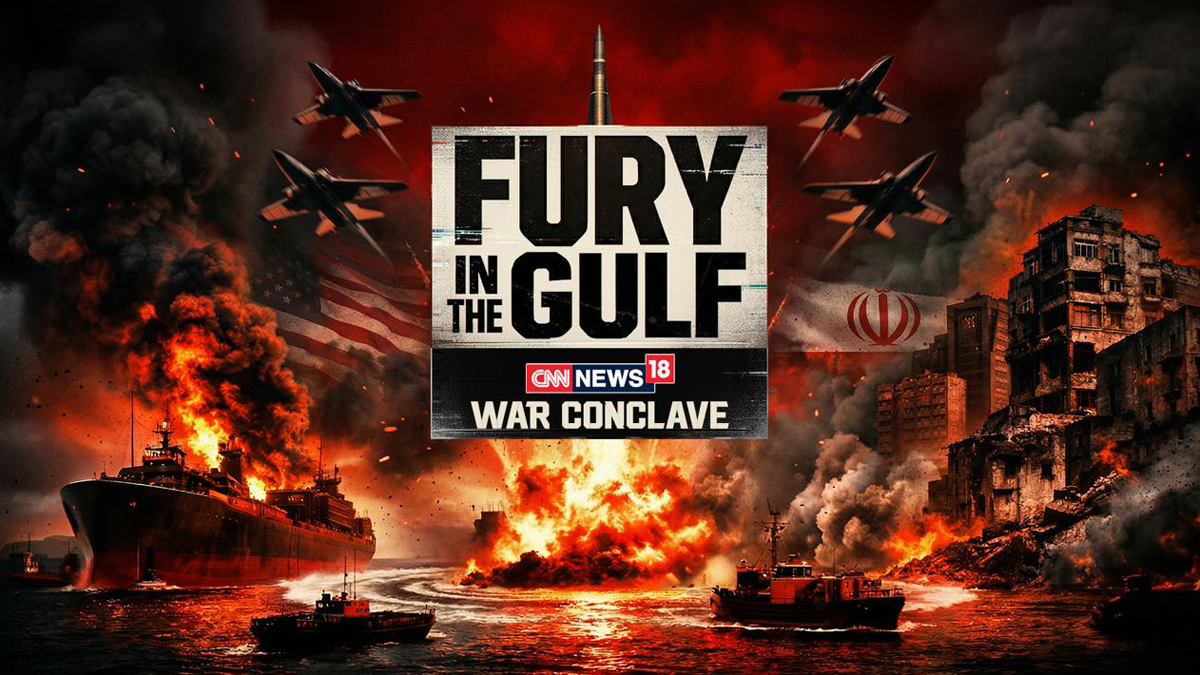
MUMBAI: CNN-News18 is set to host a special three-hour broadcast, Fury in the Gulf – War Conclave, on April 7, aiming to decode the escalating West Asia crisis and its far-reaching implications for India.
Scheduled from 4:00 PM to 7:00 PM, the conclave comes at a time when tensions between Iran and the United States are reshaping global geopolitics and triggering economic uncertainty. With India’s deep energy ties, trade links and large diaspora in the Gulf, the developments carry significant domestic relevance.
Built around the theme ‘Conflict, Consequences, and The Future,’ the programme will feature six curated sessions combining one-on-one interviews and panel discussions. The focus is to cut through the clutter and offer viewers a clearer understanding of the fast-evolving situation.
Key sessions include ‘Diplomacy in Times of War’ featuring Shashi Tharoor, and ‘World After the Iran Conflict’ with voices such as Ram Madhav, Reuven Azar, representatives from the European Union and the Iranian Deputy Envoy. Another session titled ‘Another Dunkirk?’ will bring together K. J. S. Dhillon and Jitin Prasada among others.
CNN-News18 editorial affairs director Rahul Shivshankar said, “In times of war, clarity becomes the most powerful tool. Fury in the Gulf – War Conclave brings together credible voices to address the questions and confusion that arise amid an overwhelming influx of information.”
He added that the initiative is aimed at delivering “facts, perspective, and insight” at a time when misinformation can easily cloud public understanding.
Echoing the sentiment, CNN-News18 CEO– English and business news Smriti Mehra said the conflict marks a defining global moment, with consequences that extend well beyond the region. She noted that the conclave seeks to present the crisis with “depth, nuance and responsibility” so audiences can better grasp its real-world impact.
As geopolitical tensions continue to dominate headlines, the conclave positions itself as an attempt to bring order to the noise, offering viewers a structured, insight-led look at a complex and rapidly shifting global situation.






