News Headline
News Broadcasters Association challenges new IT rules in High Court


New Delhi: Over a month after the new IT rules came into effect, the News Broadcasters Association (NBA) has filed a plea in the Kerala high court challenging the new rules stating that they give government authorities “excessive powers” to “unreasonably and impermissibly restrict” the freedom of speech and expression of the media.
In a detailed statement, the NBA said the Information Technology (Intermediary Guidelines & Digital Media Ethics Code) Rules, 2021, are ultra vires to the Information Technology (IT) Act, 2000 apart from being violative of Article 14 (equality before law) and 19(1)(g) (right to freedom to practise any profession, or to carry on any occupation, trade or business) of the Constitution. It also stated the challenge is to Part III (Code of Ethics and Procedure and Safeguards in relation to Digital Media) of the IT rules as they create an “oversight mechanism giving the executive unfettered, unbridled and excessive powers to regulate the content of digital news media”.
“The grievance redressal mechanism created and the powers delegated have a ”chilling effect” on the content of the media. The writ petition also states that the executive by creating such a structure, has made inroads into judicial power and vested itself with powers reserved exclusively for the judiciary and such exercise of power is without jurisdiction,” the statement read.

The News Broadcasters Association (NBA) represents the private television news & current affairs broadcasters, and currently has 25 leading news and current affairs broadcasters (comprising 78 news and current affairs channels) as its members. According to NBA, the IT Act also does not contain any provision for dealing with the “content” of any programme and therefore, the rules are ultra vires the parent Act.
The rules violate Article 14 as there is neither any parity nor any valid exercise of classification in the rules as ‘intermediaries’ have been equated with ”digital news media”, it said. The Programme Code contains vague, imprecise, and ambiguous terms concerning “content” such as “good taste”, “snobbish attitude” and therefore, does not align with the judgment of the Supreme Court.
Meanwhile, the Centre has recently approached the Supreme Court seeking to transfer all pleas regarding the new IT rules to itself. Several digital news media platforms have already challenged the 2021 IT rules in various lower court courts.
The new rules notified on 25 February, came into effect on 26 May recommend a three-tier mechanism for the regulation of all online media portals and publishers, over-the-top (OTT) platforms, and social media intermediaries. Under the new rules, the digital publishers are required to take urgent steps for appointing a grievance officer, if not done, and place all relevant details in the public domain. “They also need to constitute self-regulatory bodies through mutual consultation so that the grievances are addressed at the level of publishers or the self-regulating bodies themselves,” according to the ministry.
In June, Digital News Publishers Association (DNPA), composed of digital arms of 13 leading media companies of the country had also moved the high court against the rules, which it said: “violate the fundamental right of equality (Article 14) and freedom of speech and expression (Article 19(1)(a)”. According to DNPA, the online news portals of traditional media houses, which run newspapers and TV channels, do not come within the purview of IT Rules
The Foundation of Independent Journalism (the non-profit company that publishes The Wire) and legal website, LiveLaw has also filed petitions against the new rules.







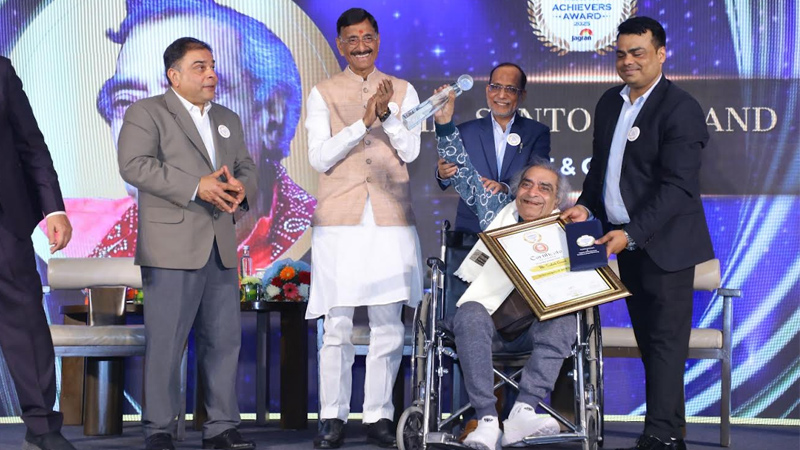
NEW DELHI: Hamdard Laboratories gathered a cross-section of India’s achievers in New Delhi on Friday, handing out the Hakeem Abdul Hameed Excellence Awards to figures who have left their mark across healthcare, education, sport, public service and the arts.
The ceremony, attended by minister of state for defence Sanjay Seth and senior officials from the ministry of Ayush, celebrated individuals whose work blends professional success with a sense of public purpose. It was as much a roll call of achievement as it was a reminder that influence is not measured only in profits or podiums, but in people reached and lives improved.
Among the headline awardees was Alakh Pandey, founder and chief executive of PhysicsWallah, recognised for turning affordable digital learning into a mass movement. On the sporting front, Arjuna Awardee and kabaddi player Sakshi Puniya was honoured for her contribution to the game and for pushing women’s participation onto bigger stages.
The cultural spotlight fell on veteran lyricist and poet Santosh Anand, whose songs have echoed across generations of Hindi cinema. At 97, Anand accepted the honour with characteristic humility, reflecting on a life shaped by perseverance and hope.
Healthcare honours spanned both modern and traditional systems. Manoj N. Nesari was recognised for strengthening Ayurveda’s place in national and global health frameworks. Padma shri Mohammed Abdul Waheed was honoured for his research-backed work in Unani medicine, while padma shri Mohsin Wali received recognition for his long-standing contribution to patient-centred care.
Education and social development also featured prominently. Padma shri Zahir Ishaq Kazi was honoured for decades of work in education, while former Meghalaya superintendent of Police T. C. Chacko was recognised for public service. Goonj founder Anshu Gupta received an award for his dignity-centred rural development initiatives, and the Hunar Shakti Foundation was honoured for empowering women and young girls through skill development.
The Lifetime Achievement Award went to former IAS officer Shailaja Chandra for her long career in public healthcare and governance, particularly in the traditional systems under Ayush.
Speaking at the event, Hamdard chairman Abdul Majeed said the awards were a tribute to those who combine excellence with empathy. “These awardees reflect Hakeem Sahib’s belief that healthcare, education and public service must ultimately serve humanity,” he said.
Minister Seth struck a forward-looking note, saying India’s young population gives the country a unique opportunity to become a global destination for learning, health and wellness by 2047.
The ceremony also featured the trailer launch of Unani Ki Kahaani, an upcoming documentary starring actor Jim Sarbh, set to premiere on Discovery on 11 February.
Instituted in memory of Unani scholar and educationist Hakeem Abdul Hameed, the awards have grown into a national platform that celebrates those building a more inclusive and resilient India. For one evening at least, the spotlight was not just on success, but on service with substance.







