International
New Oscar venue Dolby Theatre opens

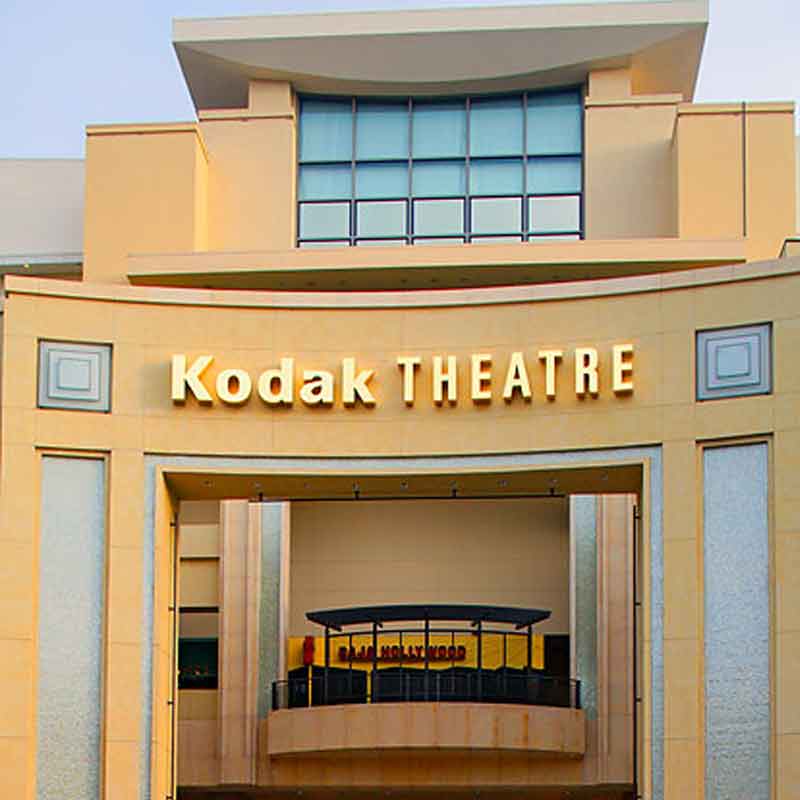
MUMBAI: The venue for the Oscars has been renamed. The 3,400-seat theatre, formerly known as the Kodak Theatre, re-opened on Monday with a new audio-visual system and new signage as the Dolby Theatre.
Dolby Laboratories Inc. announced a 20-year deal with Hollywood & Highland Center owner CIM Group last month to rename the theatre that has hosted the Academy Awards since 2002.
The audio-visual technology company outfitted the four-level venue with its Dolby 3D and Dolby Atmos projection and audio systems. Besides the Oscars, the Hollywood theatre is home to the Cirque du Soleil production Iris and will host the world premiere next Monday of the Disney-Pixar film Brave, which will be the first feature film released utilizing the Dolby Atmos technology.

“It‘s an incredible day for us,” sDolby President Kevin Yeaman has reportedly said after a demonstration Monday of the theatre‘s new audio-visual systems. “We‘ve been hard at work coming up with Dolby Atmos and Dolby 3D and looking for a way to tell that story and connect with audiences around the world. When this opportunity came up, we couldn‘t pass it up,” he added.
CIM Group dropped the Kodak name from the theatre ahead of the Oscars earlier this year after a bankruptcy court judge approved the early exit of 131-year-old Eastman Kodak Co. from a 20-year naming rights deal it signed with them in 1999.
The 85th annual Academy Awards is scheduled to be held at the Dolby Theatre on 24 February next year.







International
Russia-India cinematic spectacle Persimmon of My Love set for grand Moscow debut
Hindi cinema style musical revives Indo-Soviet cinema ties for today

MUMBAI: A new chapter in cross-border storytelling is set to unfold as Persimmon of My Love gears up for its premiere in Moscow on 1 April 2026, marking the first large-scale cinematic collaboration between Russia and India in decades.
Positioned as a modern nod to the cultural exchange that once brought Indian classics to Soviet audiences, the film blends Hindi cinema flair with Russian storytelling, aiming to rekindle a long-standing cinematic friendship.
Directed by Marius Weisberg, the musical comedy follows two brothers navigating a lively world of music, family and romance. The lead roles are played by Demis Karibidis and Mikhail Galustyan, with Karibidis also contributing as a screenwriter.
Shot entirely in India, the production leans heavily into Hindi cinema style spectacle. Filming took place across Mumbai studios and the cities of Udaipur and Jodhpur, whose architecture was used to create the fictional setting of Khurmada. A crew of over 350 worked on the project, with large-scale sequences featuring up to 1,000 extras.
The film also brings Indian creative talent into the mix. Dance sequences are choreographed by Jay Kumar, while music by Zurab Matua features songs in both Hindi and Russian, adding to its cross-cultural appeal.
Backed by TNT channel, MyWayStudio and the Russian Cinema Fund, the project reflects a broader push to strengthen cultural ties between the two countries.
With its mix of colour, comedy and cross-border collaboration, Persimmon of My Love is not just a film release but a reminder that cinema, much like music, travels well across borders.








